



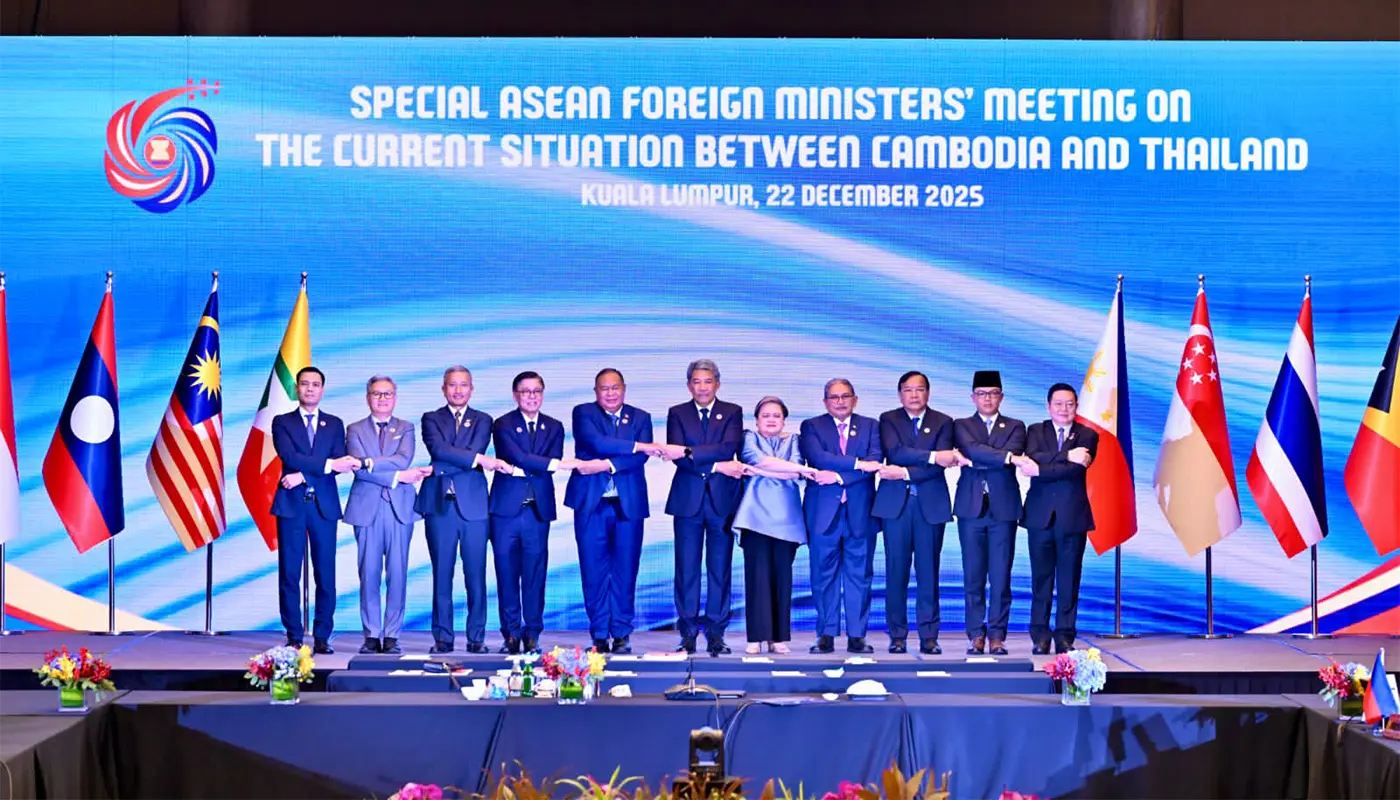
ASEAN foreign ministers convened in Kuala Lumpur this week in an urgent bid to halt escalating violence along the Thailand-Cambodia border.

The special meeting, chaired by Malaysia, comes after two weeks of deadly clashes that have left dozens dead and displaced hundreds of thousands.
The conflict, which reignited on 8 December, has seen heavy exchanges of fire between the two nations, including reports of air strikes and artillery bombardments.
According to regional officials, at least 60 people have been killed, with more than half a million forced to flee their homes.
In a joint statement released after the meeting, ASEAN ministers urged both sides to “exercise maximum restraint” and welcomed renewed discussions on resuming a ceasefire.
Malaysia’s Prime Minister Anwar Ibrahim, acting as ASEAN chair, has played a central role in mediating the talks, alongside international partners including the United States and China.
Thai Foreign Minister Sihasak Phuangketkeow confirmed that defence officials from both countries will meet on 24 December in Chanthaburi province, near the border, under the framework of the General Border Committee.
“We are committed to finding a peaceful resolution,” he said, stressing that dialogue remains the only viable path forward.
Cambodia’s Defence Ministry, however, accused Thailand of escalating the situation by deploying fighter jets and using “toxic gas” during recent clashes.
Thai officials denied the allegations, but acknowledged that exchanges of heavy weapons had damaged homes and infrastructure in border districts.
ASEAN’s chair statement highlighted the humanitarian toll of the conflict, noting the urgent need for aid to displaced civilians.
Relief efforts are underway in provinces such as Buriram and Sa Kaeo, where temporary shelters have been set up to house families uprooted by the fighting.
This week’s meeting marks the first face-to-face engagement between Thai and Cambodian leaders since hostilities resumed.
Analysts say ASEAN’s credibility as a regional peace broker is at stake, with member states under pressure to demonstrate unity and effectiveness in resolving disputes among themselves.
The bloc has previously struggled to enforce ceasefires, with a short-lived truce collapsing earlier this year.
Observers argue that stronger monitoring mechanisms and international support may be necessary to ensure compliance.
As the year draws to a close, the Kuala Lumpur talks represent a critical moment for ASEAN diplomacy. Whether the ceasefire discussions scheduled for Christmas Eve can deliver lasting peace remains uncertain, but regional leaders insist that dialogue must continue.
