



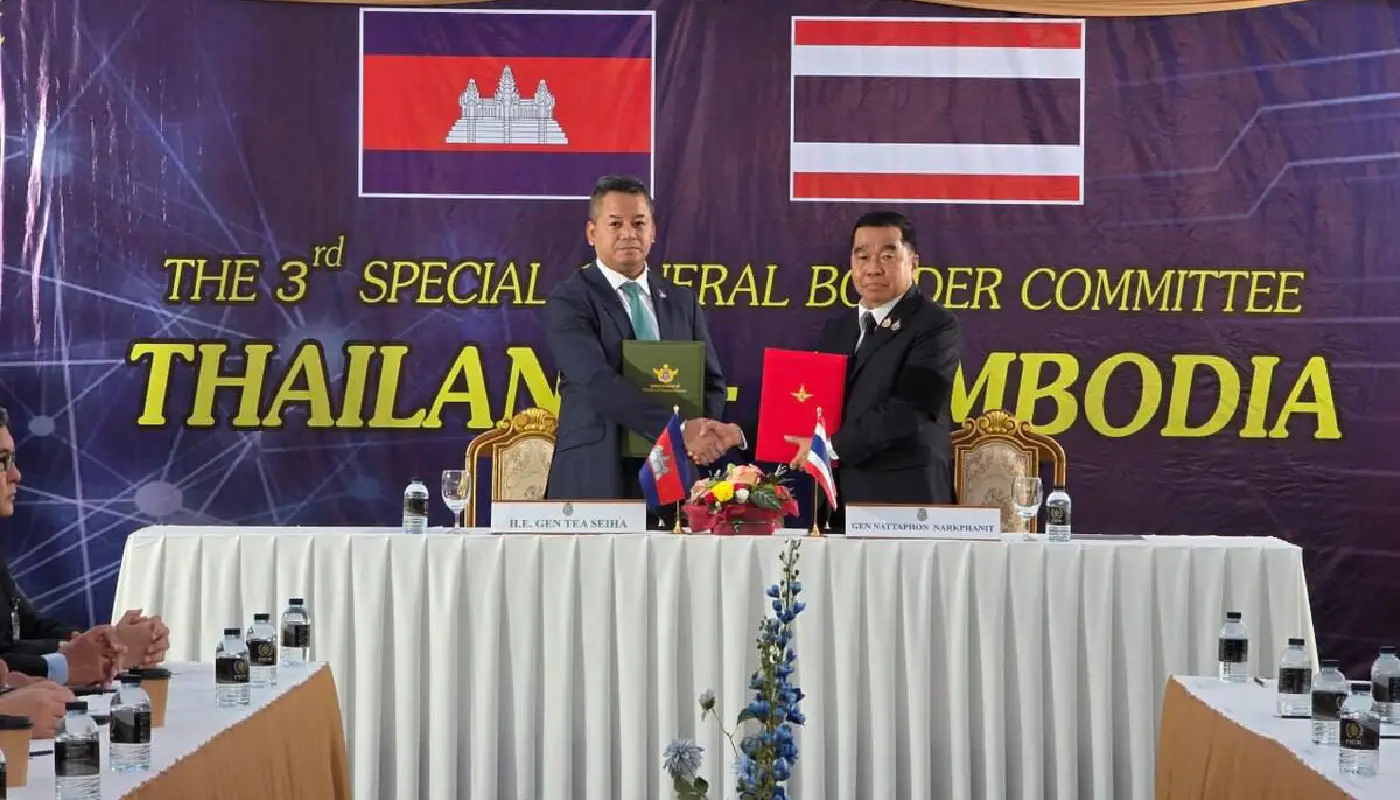
The Malaysian Prime Minister, Datuk Seri Anwar Ibrahim, has formally expressed his approval regarding a newly established ceasefire between Cambodia and Thailand.

The agreement, which officially commenced at midday (UTC+7) on Saturday, represents a significant diplomatic breakthrough for the region as Malaysia prepares to conclude its tenure as the ASEAN Chair.
The truce requires both nations to immediately halt all military hostilities and maintain their current positions on the ground.
This move is seen as a vital step in preventing further escalation in long-standing territorial frictions. According to regional observers, the decision to implement a “stand-still” order suggests a mutual prioritisation of humanitarian concerns, specifically the safety and well-being of civilians living near the border zones.
Central to the success of this peace initiative is a comprehensive Joint Statement that outlines several operational safeguards. A primary component of this agreement is the deployment of the ASEAN Observer Team, which will be tasked with monitoring the border to verify that both sides are adhering to the terms of the ceasefire.
Additionally, a direct line of communication has been established between the respective ministries of defence to ensure that any potential misunderstandings can be resolved through dialogue rather than armed confrontation.
While addressing the development, the Malaysian leader noted that these practical measures provide a robust framework for long-term stability.
Anwar Ibrahim indicated his optimism that both Phnom Penh and Bangkok would remain committed to the spirit of the agreement, stressing that the faithful execution of these terms is essential for the region’s collective security.
The timing of this ceasefire is particularly noteworthy as it coincides with the final days of Malaysia’s leadership of the Association of Southeast Asian Nations (ASEAN).
At the stroke of midnight on 1 January 2026, Malaysia is scheduled to officially transfer the ASEAN Chairmanship to the Philippines. This transition comes at a time when the bloc is under pressure to prove its efficacy in managing internal disputes and maintaining regional harmony.
Historically, the border between Cambodia and Thailand has been a flashpoint for tension, particularly regarding the land surrounding the ancient Preah Vihear temple. While the International Court of Justice has issued rulings on the matter in the past, sporadic skirmishes have continued to challenge diplomatic relations. This latest ceasefire, brokered under the auspices of ASEAN mediation, is viewed as a testament to the “ASEAN Way” of non-interference combined with constructive engagement.
The Malaysian government has pledged its ongoing support for the ceasefire even after its chairmanship concludes. By ensuring that these diplomatic commitments are upheld, Malaysia aims to bolster the credibility of ASEAN as a force for peace.
The stability of the Thai-Cambodian border is not only a local concern but is also crucial for the ASEAN Economic Community, as regional trade routes rely heavily on peaceful co-existence between member states.
As the Philippines prepares to take the lead in 2026, the successful implementation of this truce will likely serve as a benchmark for the bloc’s ability to navigate complex geopolitical challenges. For now, the focus remains on the ground, where the ASEAN Observer Team will begin its critical work in maintaining the silence of the guns.
