



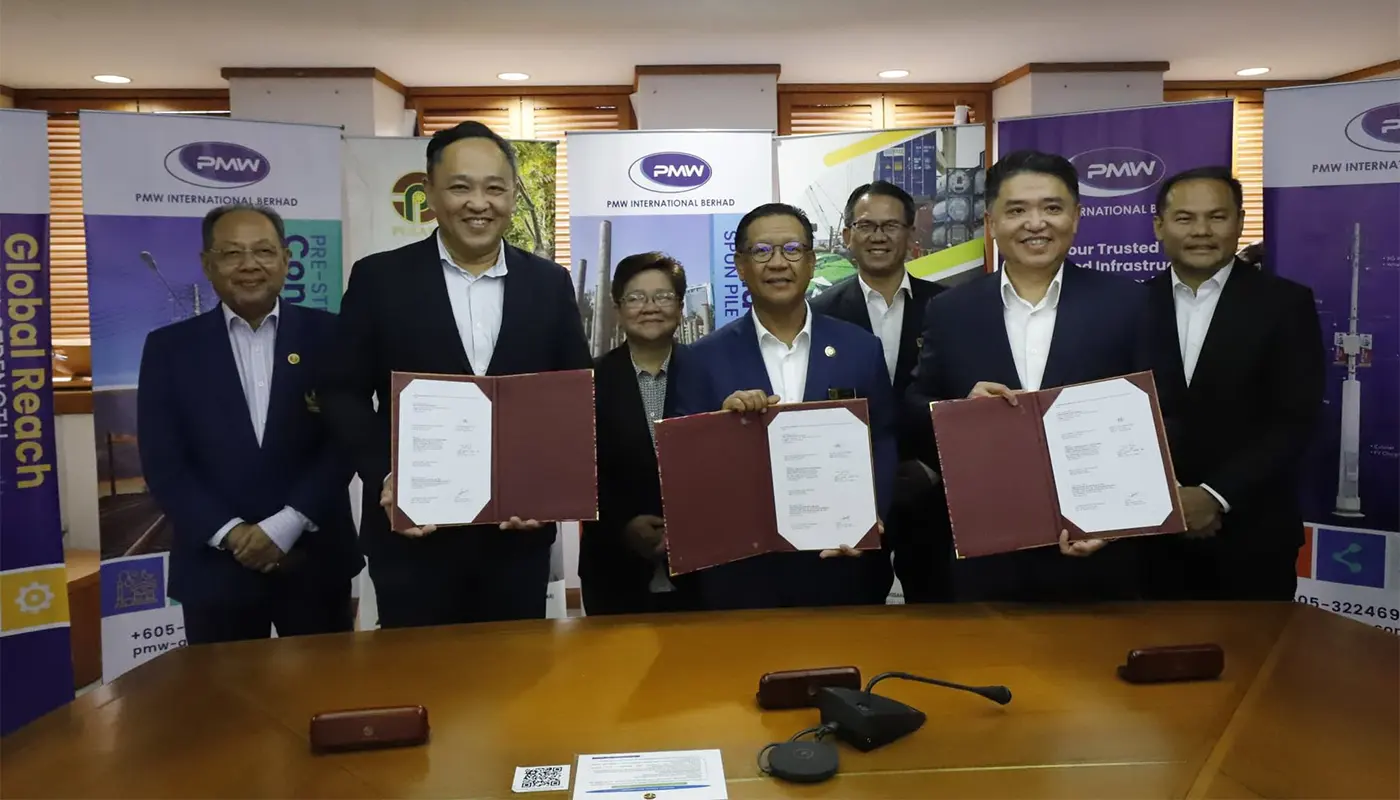
The Sarawak Timber Industry Development Corporation (STIDC) has formalised a strategic partnership with PMW International Sdn Bhd through the signing of a Shareholders Agreement, marking a significant step forward for the Tanjung Manis Economic Growth Area (T-MEGA).

The collaboration is expected to transform Tanjung Manis into a leading industrial hub, with the establishment of a factory dedicated to producing high-quality spun piles and poles.
These products, manufactured locally in Sarawak, will support infrastructure projects across the telecommunications and renewable energy sectors.
According to STIDC General Manager Datu Haji Zainal Abidin bin Haji Abdullah, the agreement sends a clear signal to investors that Tanjung Manis is open for business.
He emphasised that the partnership reflects Sarawak’s commitment to industrial growth while aligning with the Post-COVID Development Strategy 2030 (PCDS2030).
The new facility, scheduled to be operational by late 2027, is expected to generate employment opportunities for the local community.
Beyond job creation, the project will also focus on skill development, ensuring that residents of Tanjung Manis benefit directly from industrial expansion.
Industry observers note that the deal strengthens Sarawak’s position in the green economy. By producing foundation piles and poles locally, contractors will have easier access to essential materials, reducing reliance on imports and supporting sustainable practices.
The partnership also highlights Sarawak’s broader ambition to attract more industrial players to T-MEGA. With its strategic location and growing infrastructure, Tanjung Manis is being positioned as a gateway for investment, particularly in sectors linked to renewable energy and sustainable development.
The agreement between STIDC and PMW International is seen as a milestone in Sarawak’s industrial journey, combining economic growth with inclusivity and sustainability.
It reflects the state’s determination to build a resilient industrial landscape that benefits both local communities and the wider economy.
