



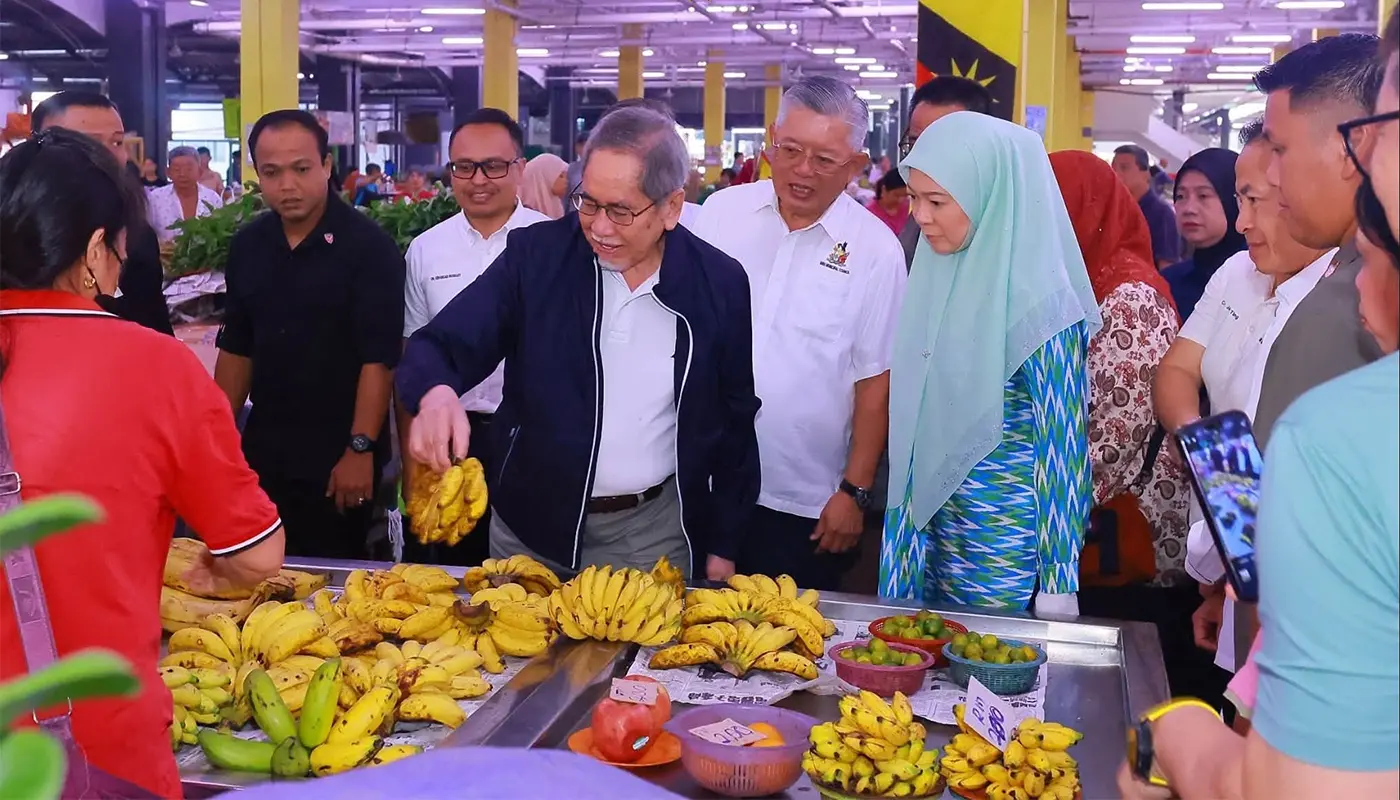
SIBU – The Yang di-Pertua Negeri of Sarawak, Tun Pehin Sri Dr Haji Wan Junaidi bin Tuanku Jaafar, accompanied by Toh Puan Datuk Patinggi Hajjah Fauziah binti Mohd Sanusi, conducted an official visit to the Sibu Central Market on the morning of 23 July.

The tour highlighted the state leadership’s continued focus on supporting local enterprises and engaging with the grassroots community in one of the region’s most vibrant commercial hubs.
Joining the royal couple for the engagement was YB Dato Sri Haji Abdul Karim Rahman Hamzah, who serves as the Minister of Tourism, Creative Industries and Performing Arts, as well as the Minister of Youth, Sports and Entrepreneur Development.
He was accompanied by his spouse, YBhg Datin Sri Hajah Zuraini binti Abdul Jabbar. The presence of senior cabinet ministers underscored the strategic importance of the market not just as a trading post, but as a key component of the state’s tourism and entrepreneurial ecosystem.
Upon arrival, the distinguished guests were received by local administrative leaders. YBrs Cr Clarence Ting, the Chairman of the Sibu Municipal Council (SMC), led the welcoming committee alongside YBrs Encik Superi bin Awang Said, the Sibu Division Resident.
Also present to greet the party were Cr Mohammed Abdullah Izkandar Roseley, the Deputy Chairman of the SMC, and Encik Henry Jalin Watt, the Council Secretary, along with various council officers.
The Sibu Central Market is widely recognised as one of the largest and most comprehensive public markets in Sarawak. It stands as a significant landmark in Sibu town, attracting both daily shoppers and tourists from across the state.
During the walkthrough, Tun Wan Junaidi and Toh Puan explored numerous stalls, observing the wide array of goods on offer.
The market is renowned for its extensive selection of fresh agricultural produce, including seafood, fruits, vegetables, and traditional items that reflect the rich cultural heritage of the local multi-racial community.
A significant portion of the visit was dedicated to personal interaction with the traders. The Governor and Toh Puan took the time to shake hands with stall owners, enquire about their business operations, and pose for photographs.
These interactions provided an opportunity for the state leadership to gauge the current sentiment among small and medium enterprise operators, who form the backbone of the local economy.
The visit served as a tangible demonstration of the government’s appreciation for the contributions of micro and small businesses.
These entrepreneurs play a critical role in ensuring food security and meeting the daily needs of the population. By engaging directly with them, the leadership aimed to reinforce the message that their efforts are valued and essential to the broader economic stability of the division.
Minister Abdul Karim’s presence further linked the market’s activities to the state’s broader goals in tourism and youth entrepreneurship.
The market is not merely a place for transactional commerce; it is a cultural destination that offers visitors an authentic taste of Sarawakian life.
The variety of traditional foods and unique local products available makes it a preferred stop for tourists seeking to experience the genuine culture of the region.
Throughout the tour, expressions of satisfaction were noted regarding the vibrancy and diversity of the market offerings. However, the leadership also emphasised the need for sustained maintenance and orderliness.
Tun Wan Junaidi expressed his hope that the Sibu Central Market would continue to be managed as a clean, organised, and conducive environment for trade.
Maintaining high standards of hygiene and organisation is vital for the market to retain its status as an icon of pride for the Sibu Division.
A well-managed market not only benefits the traders but also enhances the visitor experience, thereby contributing positively to the tourism sector and the overall economic development of Sarawak.
The visit concluded with prayers for the continued prosperity of the traders and the market itself. As Sibu continues to grow, landmarks like the Central Market remain pivotal in preserving local identity while driving economic activity.
The engagement by the highest office in the state signals a committed approach to nurturing these community assets, ensuring they remain viable and vibrant for future generations.
