



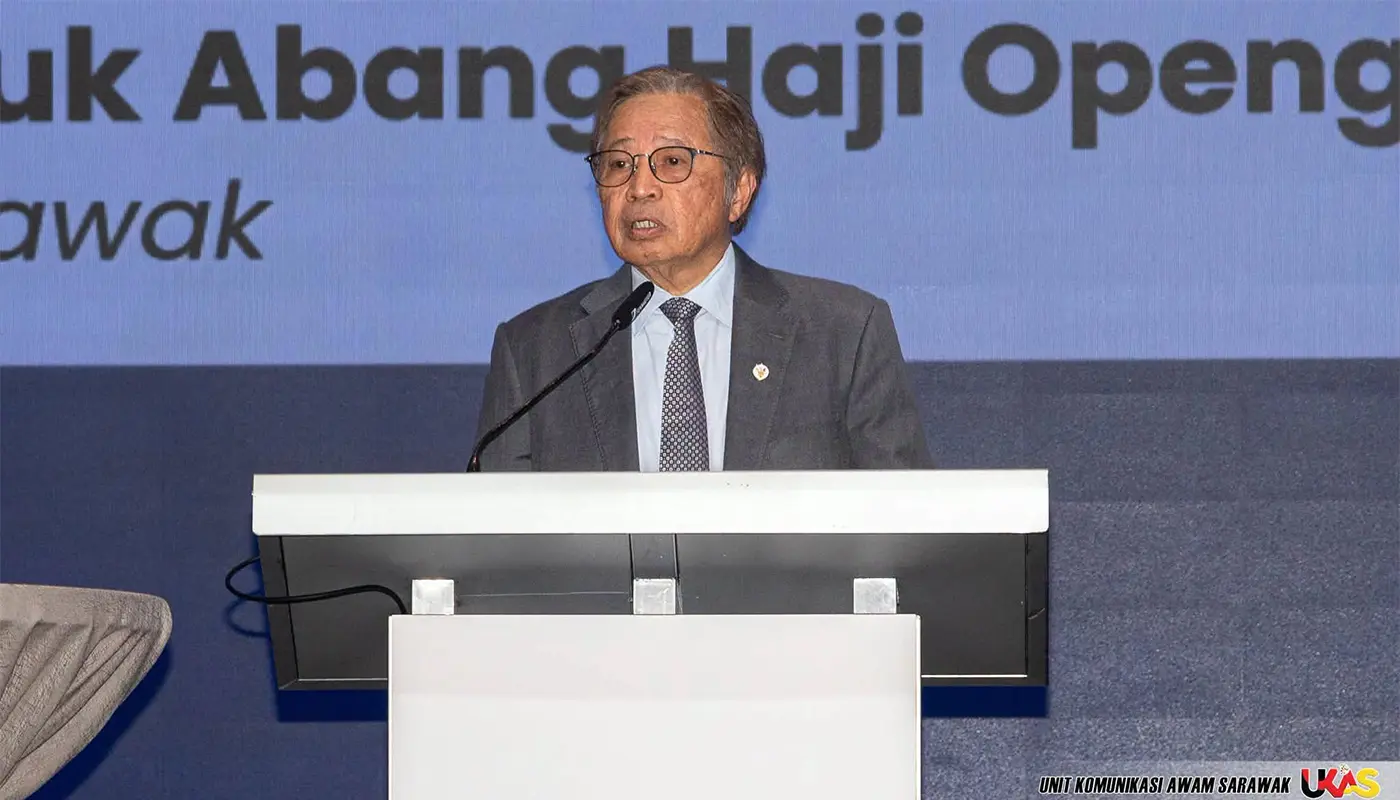
KUCHING – The Premier of Sarawak has called upon the state’s scientific and academic communities to accelerate innovation, ensuring that technological advancements directly benefit consumers and the middle-income workforce.

Datuk Patinggi Tan Sri (Dr) Abang Abdul Rahman Zohari Tun Datuk Abang Openg emphasised that collaboration between researchers and industry players is essential for driving sustainable economic growth.
Speaking during the second day of the Borneo International Halal Showcase (BIHAS) 2026, the Premier highlighted the need for practical applications of research.
He argued that scientific inquiry should not remain confined to laboratories but must translate into tangible products that improve daily life and meet global market demands.
A key example cited by Dr Abang Jo was the development of perennial rice paddies in Miri. He expressed interest in cultivating Basmati rice varieties that offer lower starch content, presenting a healthier alternative for consumers, particularly those managing diabetes.
This initiative reflects a broader strategy to utilise agricultural technology to address health concerns while boosting local production.
“Ari peragaman we pumped the soil to engkeman engkeman endur buami padi, reti nya, we ulih rotate the rice paddy to the nyadi of the Asian community, the abundance of mantu rotate the paddy to diabetic patients,” he explained, illustrating the potential for crop rotation and soil management to enhance food security and health outcomes.
The Premier also stressed the importance of halal certification in expanding market reach. He noted that confirming products as halal opens doors to a vast global consumer base.
By integrating technology with strict adherence to halal standards, Sarawak can position itself as a leading hub for ethical and high-quality goods.
“Fortunately, the manager said that the product was both halal and halal, so I closed the matter and took all of us to the beggar to use technology,” he remarked, underscoring the seamless integration of religious compliance and modern innovation.
Artificial intelligence (AI) was identified as a critical tool in this transformation. Dr Abang Jo pointed to the use of Large Language Models (LLMs) and semiconductor technology as means to refine production processes and create new inventions.
He urged authorities and researchers to harness these digital tools to ensure Sarawak remains competitive in the global economy.
The Premier revealed that significant investment has already been directed towards medical research. Over RM300 million has been allocated for the Tropical Diseases Centre, fostering collaboration between local scientists and international partners.
This funding aims to develop new treatments for tropical illnesses, leveraging Sarawak’s rich biodiversity.
“Borneo is one of the most tropical honey harvesting villages in the world, with a rich biodiversity and an understanding of the original compounds that should be discovered and analyzed for new medicines,” he stated.
He encouraged researchers to explore native flora and fauna for potential pharmaceutical breakthroughs. The discovery of new compounds could lead to novel therapies for emerging diseases, thereby improving public health and creating high-value export products.
“If we are fortunate enough to find a new inventor, we will be able to find a new medicine to treat a new disease or to change our lifestyle,” Dr Abang Jo said.
He also touched upon lifestyle changes, noting the popularity of processed foods and beverages like bubble tea. He suggested that scientific research should focus on mitigating the health risks associated with modern diets, developing cures or preventive measures for related conditions.
“In order to enhance the biodiversity in our fields and scientific research, we are looking for drugs to fight against new bacteria in the future,” he added.
The Premier’s remarks serve as a clear directive to the academic sector. By aligning research goals with industrial needs and consumer health, Sarawak can unlock new economic opportunities. The emphasis on AI, halal integrity, and biodiversity positions the state at the forefront of innovative development in the region.
