



DARO – The Agricultural Community Outreach Programme (AgriCOP) in Nanga Semah has emerged as a vital initiative for empowering rural residents with modern farming techniques.

Designed to enhance productivity and generate sustainable income, the programme focuses on transferring technical knowledge to local communities, thereby supporting the broader agro-food sector.
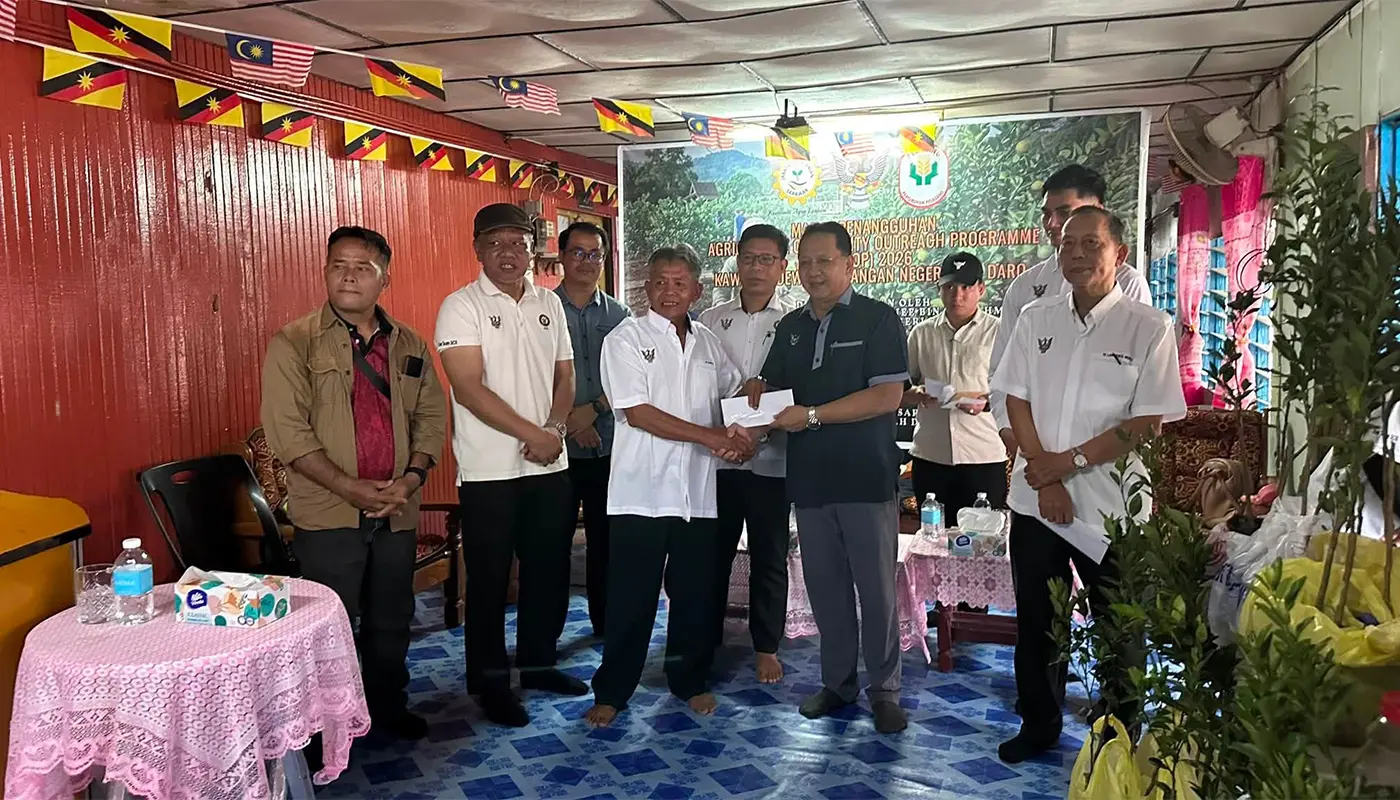
The adjournment ceremony for the Nanga Semah AgriCOP was held on Tuesday at the Lawrence Merka Jamba House.
Officiating the event was the Daro State Assemblyman, Dr Safiee Ahmad, who praised the participants for their dedication.
He highlighted that the programme reflects the Sarawak Government’s steadfast commitment to strengthening community capacity through education and technology transfer.
Dr Safiee emphasised that equipping farmers with advanced skills is crucial for maximising the potential of their land.
By adopting more effective agricultural practices, residents can increase their crop yields and, consequently, improve their family’s economic status.
This approach not only benefits individual households but also contributes to the overall resilience of the rural economy.
“The development of the agricultural sector not only plays a role in ensuring food security, but also acts as a catalyst for rural economic growth through the production of value-added products and sustainable agricultural practices,” he stated.
The assemblyman noted that moving beyond subsistence farming allows communities to produce higher-value goods.
This shift encourages entrepreneurship and creates new revenue streams, reducing reliance on traditional methods that may offer limited financial returns.
Sustainable practices also ensure that the land remains productive for future generations, aligning economic goals with environmental stewardship.
A total of 56 participants from Nanga Semah and the nearby Kampung Penasu completed the training course.
The curriculum was designed to address specific local needs, focusing on practical skills that can be immediately applied.
Key modules included lime cultivation, a high-demand crop in the region, and the production of organic fertilisers.
Learning to produce organic fertiliser locally reduces dependency on expensive commercial inputs, lowering production costs for farmers.
Meanwhile, expertise in lime cultivation opens up opportunities for selling fresh produce and processed derivatives.
These skills are intended to help farmers diversify their income sources and mitigate risks associated with market fluctuations.
The presence of Dr Safiee at the ceremony underscored the government’s focus on human capital development in rural areas.
By investing in people, the state aims to create a self-sufficient agricultural community capable of driving its own growth.
The success of AgriCOP in Nanga Semah serves as a model for similar initiatives across other constituencies. Officials and community leaders gathered to celebrate the achievements of the graduates.
The event provided an opportunity for participants to share their experiences and discuss future plans for their farms.
Many expressed confidence that the new techniques would lead to better harvests and improved livelihoods.
As Sarawak continues to prioritise food security and rural development, programmes like AgriCOP play a pivotal role.
They bridge the gap between scientific research and practical application, ensuring that farmers have access to the latest innovations.
This synergy between government support and community effort is essential for building a robust and sustainable agricultural industry.
The completion of this phase marks the beginning of a new chapter for the farmers of Nanga Semah and Kampung Penasu.
With enhanced skills and a clearer understanding of market demands, they are better positioned to contribute to the state’s agro-food goals.
The government remains committed to providing ongoing support to ensure these initiatives yield long-term benefits for all involved.
