



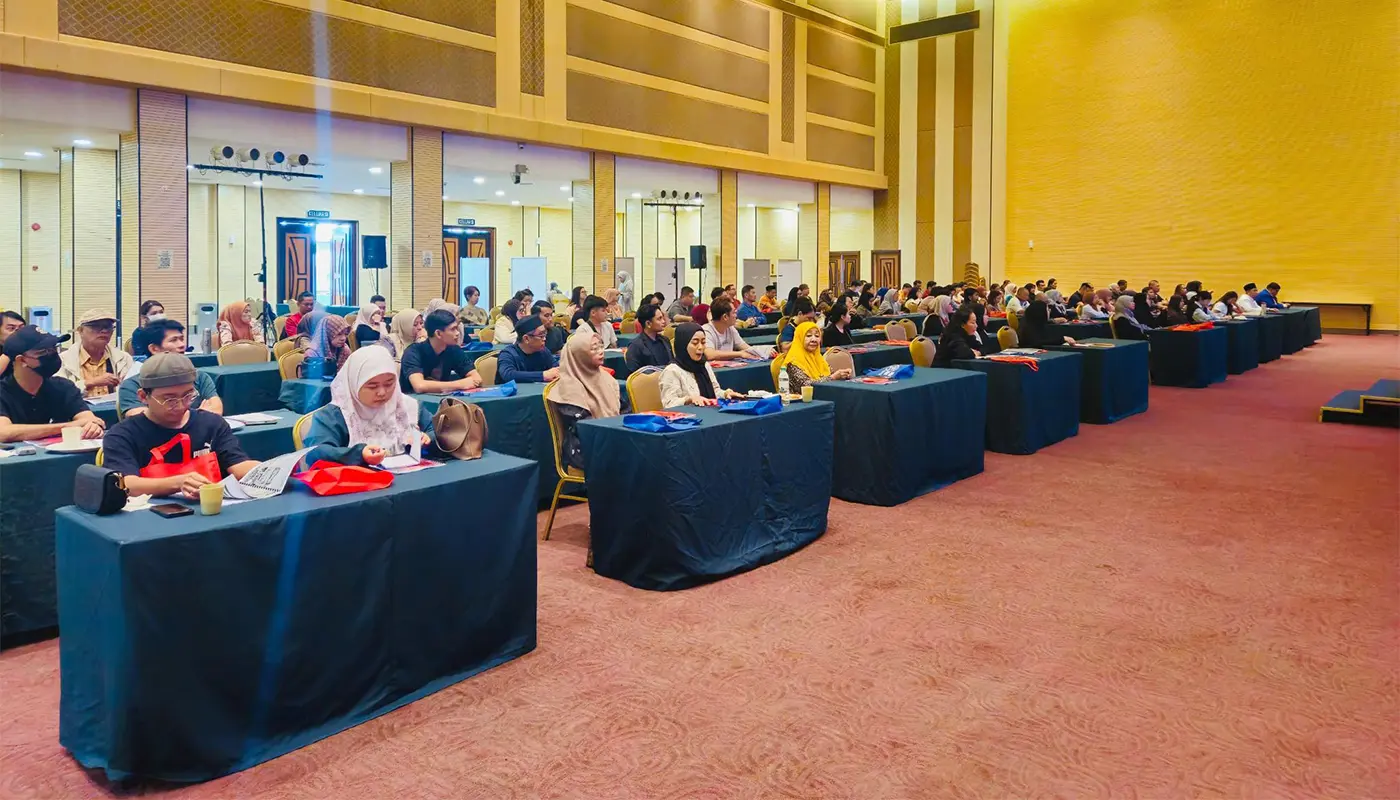
SIBU – The Sarawak Islamic Religious Department’s Halal Management Division, in collaboration with the Sibu Division Islamic Religious Office, successfully organised the Malaysian Halal Management System (MHMS 2020) Central Zone Workshop Series 1 on 14 April 2026.

The event was held at the Sarawak Islamic Complex Hall in Sibu and attracted 105 participants from the halal industry.
The workshop was designed to provide exposure and strengthen participants’ understanding of MHMS 2020 requirements, particularly in documentation, implementation and compliance with halal standards.
Industry players were guided through lecture sessions, practical training and solution-focused discussions aimed at helping them adopt systematic and effective halal management practices.
A guest speaker from Uniti Halal Centre (UHAC) delivered key insights during the programme, highlighting the importance of aligning industry operations with halal certification standards.
The sessions emphasised that compliance not only ensures consumer confidence but also supports the growth of the halal ecosystem in Sarawak.
Organisers explained that the workshop forms part of a broader initiative to enhance halal awareness and industry readiness.
By equipping participants with practical knowledge, the programme aims to reduce compliance gaps and encourage consistent application of halal principles across production and service sectors.
Participants expressed appreciation for the opportunity to gain hands-on experience and engage in discussions that addressed real-world challenges.
Many noted that the workshop provided valuable guidance on how to integrate halal standards into daily operations, thereby improving efficiency and credibility.
The Sarawak Islamic Religious Department reaffirmed its commitment to continuing similar workshops across the state.
Officials stated that strengthening halal compliance is essential for supporting economic growth, promoting sustainable communities and ensuring quality education in line with the United Nations Sustainable Development Goals (SDGs).
Observers highlighted that Sarawak’s halal industry has significant potential for expansion, particularly as global demand for halal products continues to rise.
Programmes such as this workshop are seen as vital in preparing local businesses to compete in both domestic and international markets.
The success of the Sibu workshop reflects growing interest among industry players in adopting halal management systems, reinforcing Sarawak’s position as a proactive state in supporting the halal economy.
