



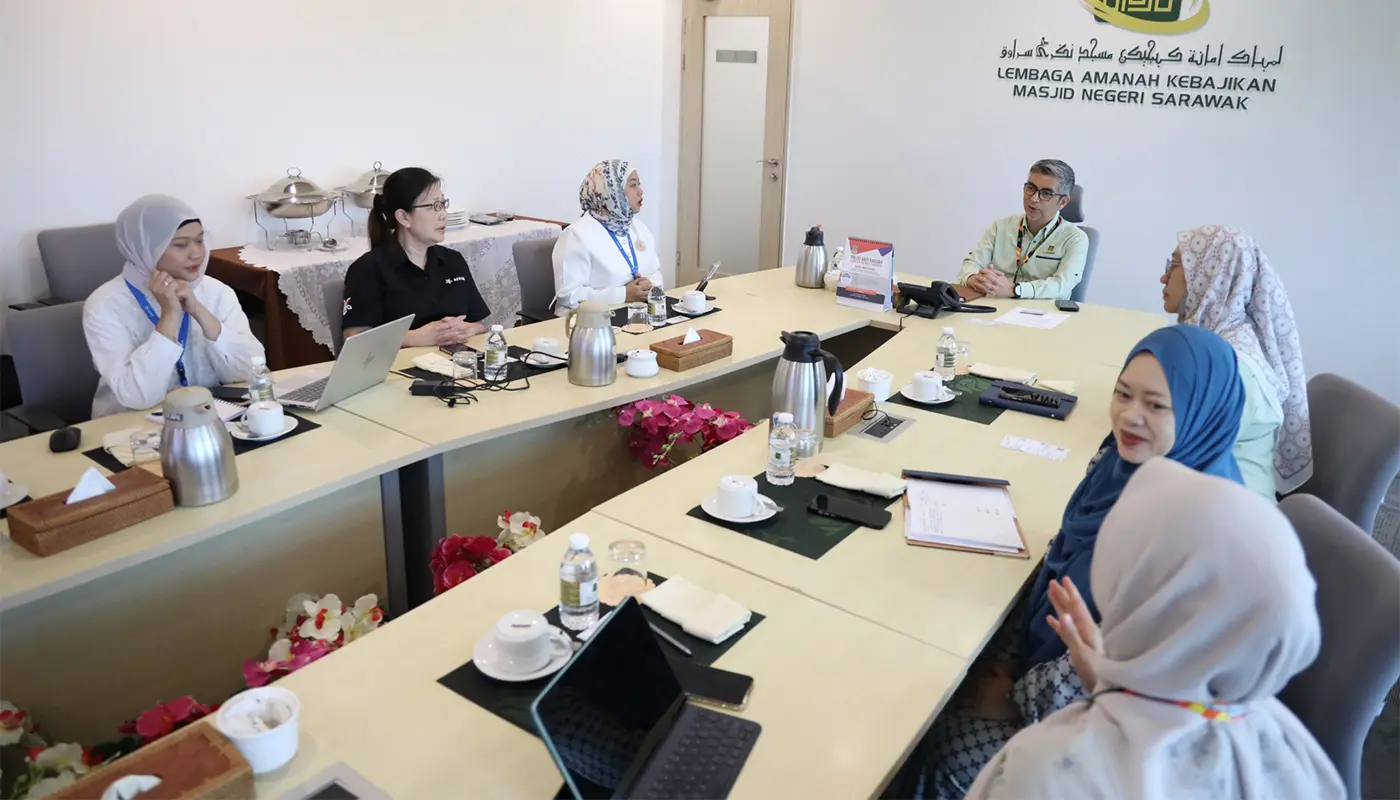
KUCHING – The Sarawak State Mosque Welfare Trust Board (LAKMNS) welcomed a delegation from Affin Bank Berhad’s Sarawak Regional Office on 27 April, with discussions centred on potential areas of collaboration between the two organisations.

The meeting took place at the Lavender Meeting Room, Baitul Makmur I, providing a formal platform for both sides to exchange views on strengthening institutional ties.
The visit was seen as an opportunity to explore cooperative initiatives that could benefit both parties in the long term.
Affin Bank Berhad’s delegation was led by strategic liaison manager Puan Nur Aalyya binti Dusit. She was accompanied by Affinwrkfz Relationship Manager (Payroll Manager), Puan Syafrina binti Mahassan, and Branch Manager, Puan Jong Yin Lin.
Their presence highlighted the bank’s interest in engaging with LAKMNS on matters relating to financial services and workforce management.
Representing LAKMNS was Deputy Chief Executive Officer, Encik Mohamad Feisal bin Said. He was joined by senior officers including Chief Officer of the Finance Department, Puan Hajah Nona Zaharia binti Fadzil; Head of the Human Resources Management Division (Group HR), Puan Noratini binti Sebri; Head of the Finance Division, Puan Azielaa Nadira binti Mohamad@Roslan; and Officer of the Human Resources Management Division (Group HR), Encik Iman bin Shukri.
The meeting underscored LAKMNS’s commitment to strengthening partnerships with financial institutions, particularly in areas that could support its operational and welfare objectives.
Discussions were reported to cover topics such as payroll management, financial planning, and human resource development, reflecting shared interests in efficiency and sustainability.
Officials noted that such engagements are part of LAKMNS’s broader strategy to enhance its institutional capacity while ensuring that welfare and administrative functions are managed effectively.
For Affin Bank, the visit provided an avenue to demonstrate its services and explore opportunities to support LAKMNS’s organisational needs.
The session concluded with both sides expressing optimism about future cooperation. While no formal agreements were announced, the dialogue marked an important step towards building stronger institutional relationships in Sarawak.
