



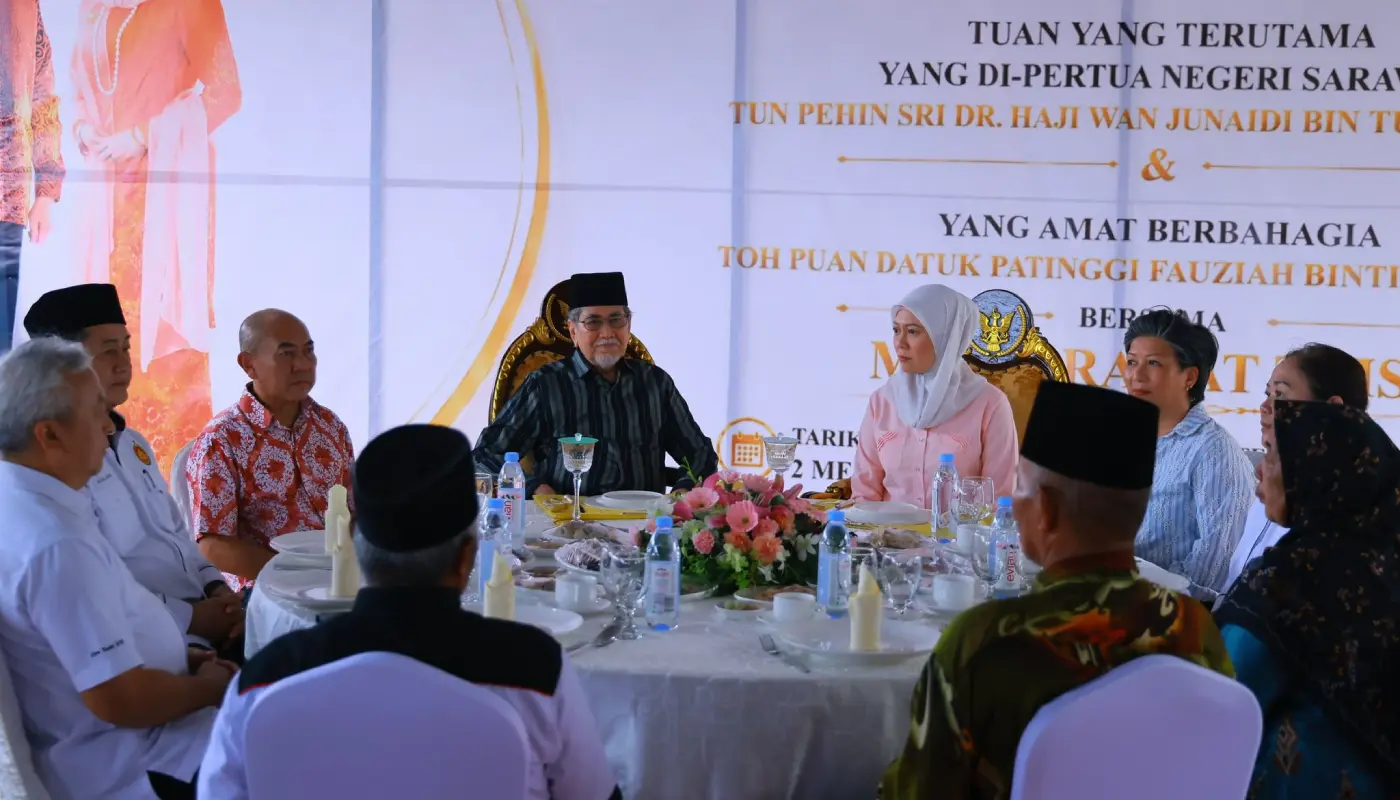
BETONG – His Excellency the Governor of Sarawak, Tun Pehin Sri Dr Haji Wan Junaidi bin Tuanku Jaafar, together with his wife Toh Puan Datuk Patinggi Fauziah binti Mohd Sanusi, joined residents of Kampung Triso for a community lunch on 2 May 2026.

The gathering formed part of the D’Astana Journey Programme to Lingga, which highlights cultural and community connections across Sarawak.
The lunch was hosted at the residence of Encik Awang Mos bin Sulaiman, Head of Kampung Triso, and brought together more than 100 family members and relatives of the governor.
Among those present were descendants of the late Tuanku Anis bin Tuanku Bujang, including Tuanku Jenal bin Tuanku Anis and Sharifah Ebon binti Tuanku Anis, reflecting the strong family ties that remain within the village.
Prior to the meal, the governor performed congregational Zohor and Asr prayers, led by Ustaz Haji Mohammad Ihsan bin Haidzir, Deputy Grand Imam of Sarawak.
The prayers underscored the spiritual dimension of the visit, reinforcing the importance of faith and community unity.
Following the prayers, the governor and his wife joined relatives and villagers for lunch, strengthening bonds with the Kampung Triso community.
The occasion was marked by warmth and hospitality, with residents expressing appreciation for the governor’s presence and engagement.
As part of the visit, Tun Pehin Sri Wan Junaidi also presented a donation to the management of Al-Muhajirin Mosque.
The contribution was made as a gesture of support for the development of local religious institutions, reflecting his concern for the welfare of the community and the sustainability of its spiritual centres.
The stopover concluded with the governor and his entourage departing from Kampung Triso jetty to continue their journey to Sebuyau District, the next destination in the D’Astana ke Lingga series.
The programme aims to foster closer ties between leaders and communities while promoting cultural heritage and local development.
The event at Kampung Triso highlighted the governor’s commitment to maintaining strong connections with Sarawak’s diverse communities.
By combining family reunions, religious observances, and charitable contributions, the visit reinforced values of unity, respect, and care that remain central to Sarawak’s social fabric.
