



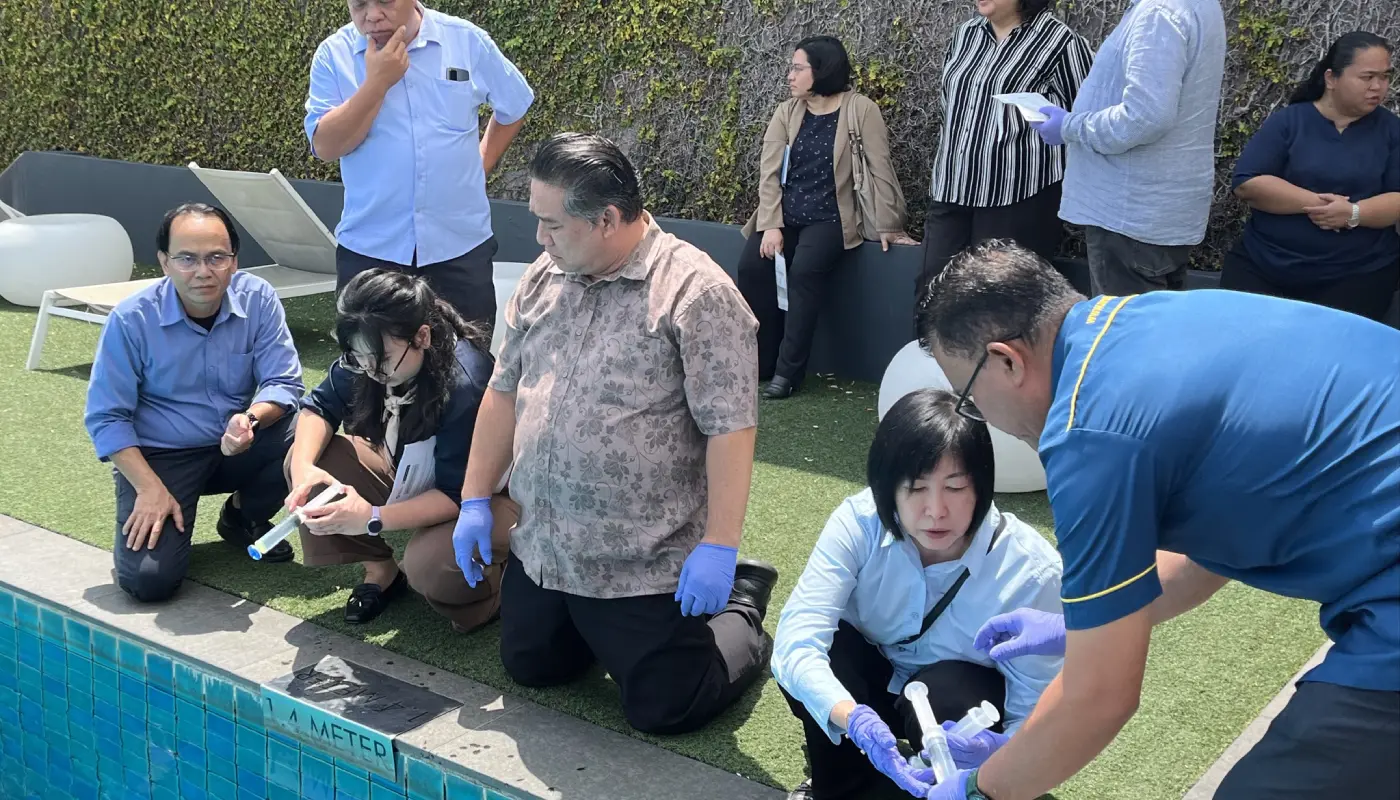
MIRI – The Natural Resources and Environment Board (NREB) Sarawak, in collaboration with Curtin University Malaysia, successfully conducted an environmental DNA (eDNA) training and workshop on 29 April 2026 at the Pullman Waterfront Hotel.

The programme was designed to strengthen the technical expertise of NREB officers in applying eDNA as a modern scientific tool for environmental monitoring, biodiversity assessment, and river ecosystem management.
The workshop featured a series of knowledge-sharing sessions and practical training led by international and local experts.
Prof. Paul Nevill from Curtin University, Perth, Australia, shared his expertise in molecular ecology, conservation genetics, and eDNA-based biomonitoring.
Dr Ahmad Kamal Ghazali of Apical Scientific Sdn. Bhd. provided insights into interpreting eDNA data and detecting species presence.
Prof. Prasanna Mohan Viswanathan from Curtin University Malaysia introduced CHIDAM, a free software designed for water quality and geochemical data interpretation.
Meanwhile, Dr Lee Yih Nin, also from Curtin University Malaysia, guided participants through practical applications of eDNA, covering processes from sample collection to species detection.
Participants were given hands-on training in eDNA sampling techniques and later completed a questionnaire to evaluate their understanding of the importance of eDNA in environmental monitoring.
The interactive format ensured that officers gained both theoretical knowledge and practical skills, enabling them to apply eDNA methods effectively in their work.
NREB highlighted that the training is highly relevant to its environmental management functions, particularly in enhancing biodiversity components within Environmental Impact Assessments (EIA), ecological monitoring, and river health assessments.
The use of eDNA is seen as a valuable complement to conventional field surveys, offering more precise detection of species, strengthening biodiversity baseline data, and providing robust scientific input for environmental decision-making.
The adoption of eDNA technology reflects Sarawak’s commitment to modernising its environmental monitoring practices.
By integrating advanced scientific tools, the state aims to improve its capacity to safeguard ecosystems, protect biodiversity, and ensure sustainable management of natural resources.
The workshop also demonstrated the importance of collaboration between government agencies, academic institutions, and industry experts.
Such partnerships are expected to play a crucial role in advancing Sarawak’s environmental governance and positioning the state as a leader in innovative conservation practices.
