



KUCHING – Sarawak is intensifying its efforts to position itself as a regional hub for clean energy through the development of a green hydrogen economy.

The initiative is being driven under the Sarawak Energy Transition Policy and the Sarawak Hydrogen Economy Roadmap, which aim to build a sustainable energy ecosystem for the future.
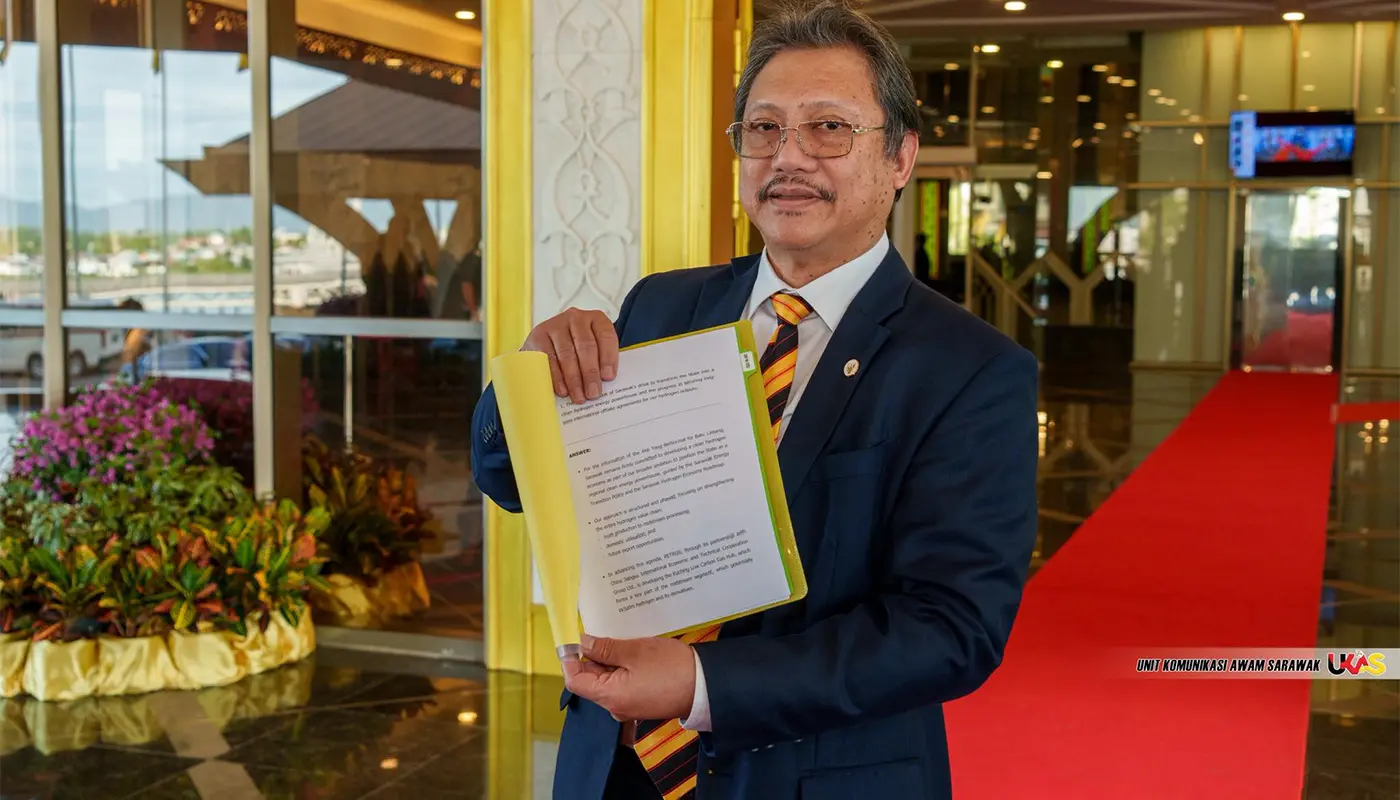
Deputy Minister of Energy and Environmental Sustainability, Datuk Dr Hazland Abang Hipni, explained during the 19th Sarawak State Legislative Assembly (DUN) sitting that the hydrogen industry is being developed comprehensively and in phases.
This includes the entire value chain, from production to domestic consumption, and eventually export potential.
He highlighted that Petroleum Sarawak Berhad (PETROS), in collaboration with China Jiangsu International Economic and Technical Cooperation Group Ltd, is currently developing the Kuching Low Carbon Gas Hub.
This facility will play a central role in advancing low-carbon energy, including hydrogen and its derivative products.
Dr Hazland also pointed to the low-carbon methanol project by Sarawak Petchem as evidence of the state’s readiness to build a sustainable and internationally competitive hydrogen ecosystem.
“This integrated effort has thus increased global confidence in Sarawak’s ability to secure long-term sourcing agreements for the hydrogen products produced,” he said in response to a question from Batu Lintang assemblyman See Chee How.
To strengthen domestic demand, catalytic projects such as the Kuching City Transport System (KUTS) are being implemented. The system will feature Autonomous Rapid Transit (ART) and hydrogen-powered shuttle buses.
Hydrogen usage for the project is expected to reach one tonne per day by the first quarter of 2027, increasing to two tonnes per day in 2029 and five tonnes per day in 2032.
Beyond transportation, green hydrogen is seen as having significant potential in electricity generation, heat production, and the creation of high-value downstream products such as green ammonia, methanol, and synthetic fuels.
Dr Hazland added that hydrogen could also support industrial decarbonisation efforts in sectors such as metal processing and glass manufacturing, aligning with Sarawak’s low-carbon economic agenda.
The state government’s commitment to hydrogen development reflects its broader vision of sustainable growth under PCDS 2030.
By integrating modern technology, international partnerships, and domestic projects, Sarawak aims to secure its place as a leader in clean energy innovation across the region.
