



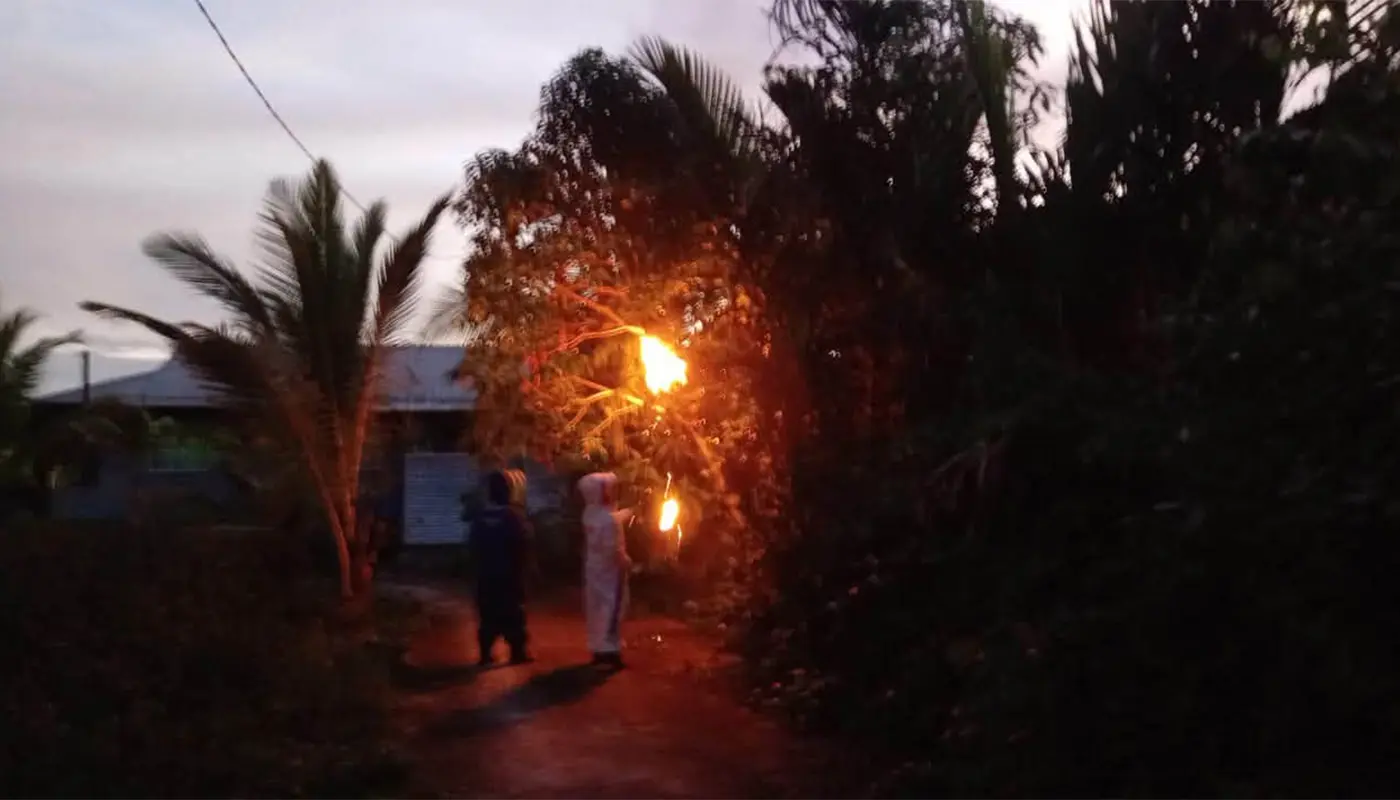
DEBAK – A honeycomb discovered on a tree within a residential compound in Debak prompted swift action from the Malaysian Civil Defence Force (APM) Debak District, following a complaint lodged by a concerned resident.

Authorities confirmed that the honeycomb posed a potential risk to both the occupants of the property and the wider community.
Upon receiving the report, APM personnel immediately deployed to the site to conduct an inspection and assess the level of danger.
Their evaluation determined that the situation required urgent intervention to prevent possible harm. After ensuring the surrounding environment was secure, the team initiated a controlled operation to eliminate the honeycomb.
The procedure involved a carefully managed burning technique, carried out in strict adherence to established safety protocols.
This method is widely recognised for its effectiveness in neutralising bee colonies while minimising risks to people and property.
The operation was completed smoothly, with no injuries or damage reported. The honeycomb was successfully destroyed, removing the immediate threat to the residents.
The complainant was advised to remain vigilant and to monitor the area regularly for any signs of new bee activity.
Officials stressed the importance of promptly reporting similar incidents to ensure community safety is maintained.
Rabies prevention and wildlife management have been ongoing priorities in Sarawak, with local councils and agencies frequently organising awareness programmes and safety campaigns.
The recent honeycomb removal highlights the proactive role of APM in safeguarding neighbourhoods against environmental hazards.
Experts note that bee infestations can pose serious risks, particularly when colonies establish themselves close to human settlements.
While bees are vital pollinators, their presence in residential areas can lead to dangerous encounters, especially for individuals with allergies.
Controlled removal operations, such as the one carried out in Debak, are essential to balance ecological needs with public safety.
Community members are encouraged to take precautionary measures, including avoiding direct disturbance of bee colonies and seeking professional assistance when infestations occur.
The incident in Debak serves as a reminder of the importance of cooperation between residents and local authorities in addressing environmental challenges.
The APM continues to emphasise its readiness to respond to emergencies ranging from wildlife encounters to health-related incidents.
Their swift action in Debak underscores the value of maintaining operational preparedness and fostering public trust in safety institutions.
