



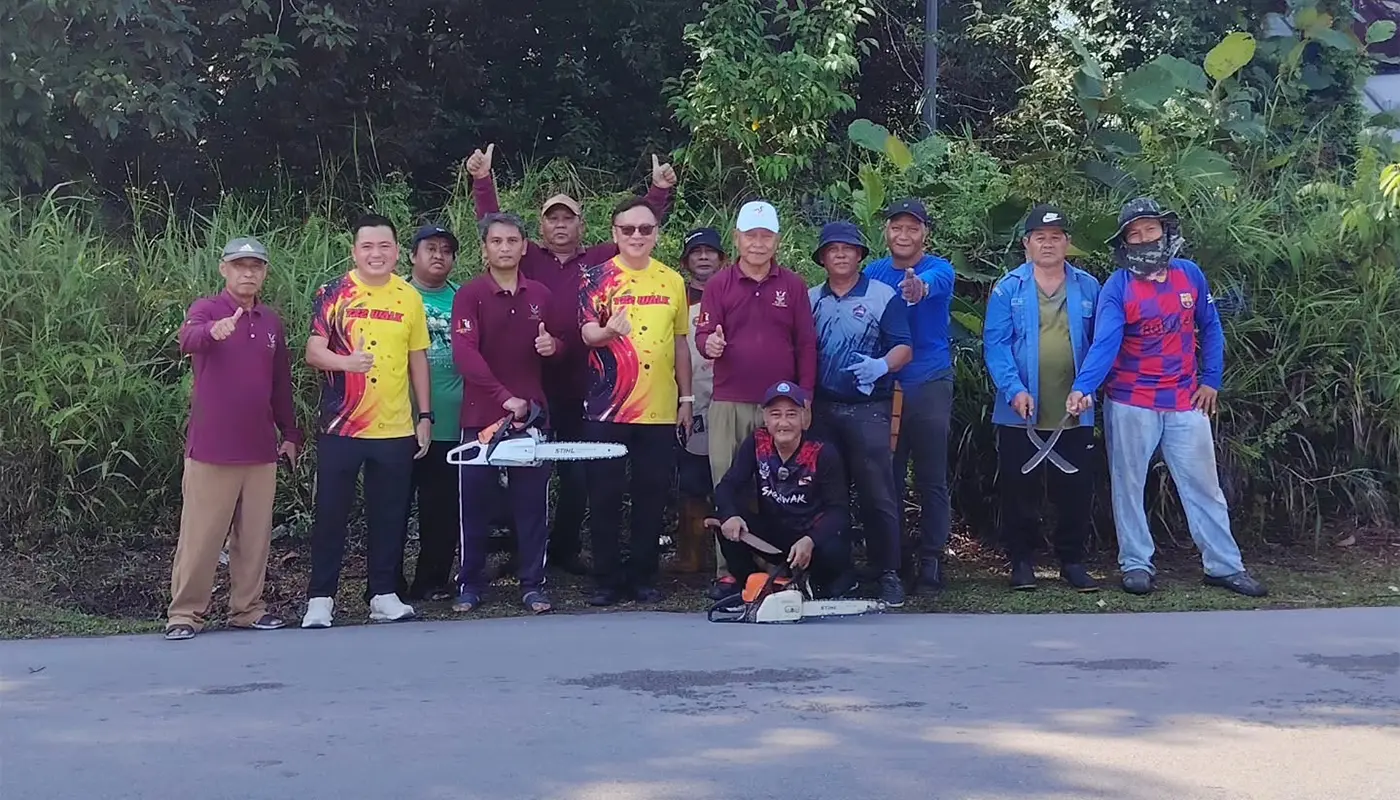
KUCHING – A spirit of communal cooperation was on full display in the Batu Kitang constituency this week as local residents joined hands with their elected representative for a traditional community clean-up initiative.

The event, known locally as gotong-royong, brought together neighbours from Kampung Semaba and Kampung Haji Baki Block B in a collective effort to improve their living environment.
The assemblyman for N13 Batu Kitang, YB Dato Ir Lo Khere Chiang, took an active role in the proceedings, working alongside constituents rather than merely observing from the sidelines.
This hands-on approach underscored the importance of grassroots engagement in maintaining neighbourhood standards and fostering social cohesion within rural and semi-urban communities across Sarawak.
Such initiatives are deeply rooted in Malaysian culture, where the concept of mutual aid serves as a cornerstone of community life.
By participating in physical labour such as clearing drains, trimming vegetation, and removing waste, leaders demonstrate solidarity with the people they serve.
This particular gathering provided an opportunity not only for environmental improvement but also for strengthening interpersonal bonds among residents who might otherwise have limited interaction in their daily routines.
During the course of the day, the assemblyman extended his visit beyond the clean-up sites. He made stops at two local community centres, KK Thomas and KK Basli, where he engaged in informal conversations with attendees.
These interactions allowed for direct feedback from the ground, enabling the representative to gauge public sentiment and address immediate concerns raised by the populace.
Community leaders often emphasise that regular maintenance of shared spaces prevents larger infrastructural issues from developing.
Blocked drainage systems, for instance, can lead to flooding during heavy monsoon rains, a recurring challenge in many parts of Sarawak.
Proactive measures such as these clean-up drives help mitigate such risks while promoting a sense of ownership among residents regarding their immediate surroundings.
Residents expressed appreciation for the direct involvement of their elected official. The presence of a state assemblyman in such activities signals a commitment to accessible governance, where representatives remain visible and approachable.
It also encourages higher participation rates in future civic programmes, as citizens feel their contributions are valued and recognised by those in positions of authority.
The success of the programme relied heavily on voluntary participation from various households in the area. Organisers noted that turnout was robust, reflecting a growing awareness of environmental stewardship and community responsibility.
Such events also serve as platforms for disseminating information about local services, upcoming projects, and government initiatives that may benefit the neighbourhood.
Beyond the immediate aesthetic improvements, these gatherings play a crucial role in social integration. In diverse communities, shared tasks provide neutral ground for interaction across different age groups, ethnicities, and backgrounds.
This fosters mutual understanding and reduces social fragmentation, contributing to long-term harmony within the constituency.
Local authorities have increasingly encouraged such bottom-up approaches to urban and rural management.
By empowering communities to take charge of their environments, the burden on municipal services can be reduced, allowing resources to be allocated to more complex infrastructural challenges.
Moreover, it instils a culture of proactive citizenship, where individuals feel accountable for the well-being of their shared spaces.
As the event concluded, acknowledgements were extended to all participants whose efforts ensured the programme’s smooth execution.
The collaborative nature of the activity highlighted the potential for sustained partnership between elected representatives and their constituents.
Moving forward, similar initiatives are expected to be organised regularly, reinforcing the tradition of collective action that remains vital to community resilience in Sarawak.
The engagement demonstrated by YB Dato Ir Lo Khere Chiang reflects a broader trend among political leaders in the state who prioritise face-to-face interaction with voters.
In an era where digital communication often dominates political discourse, physical presence at community events continues to hold significant value in building trust and maintaining strong constituent relationships.
