



SPAOH – A local gardener in the Tanjung Sebekut area breathed a sigh of relief on Thursday evening after civil defence personnel successfully eliminated a large and potentially dangerous insect colony from his property.

The operation addressed growing concerns regarding the safety of both the property owner and any visitors to the garden.
The incident began when Mr Ashraf, the complainant, noticed a significant nest belonging to night wasps, locally known as kerawai.
Recognising the potential threat posed by these poisonous insects, he immediately contacted the Spaoh District Operations Control Centre of the Malaysian Civil Defence Force.
His prompt action was driven by a desire to prevent accidental stings, which can cause severe reactions in humans.
Upon receiving the report, the control centre classified the situation as an Insect Nest Destruction case. Four members of the Bravo Squad were swiftly deployed to the location.
The team understood the urgency of the matter, as night wasps are particularly active during dusk and nighttime hours, increasing the risk of encounters with residents returning home or working in their gardens.
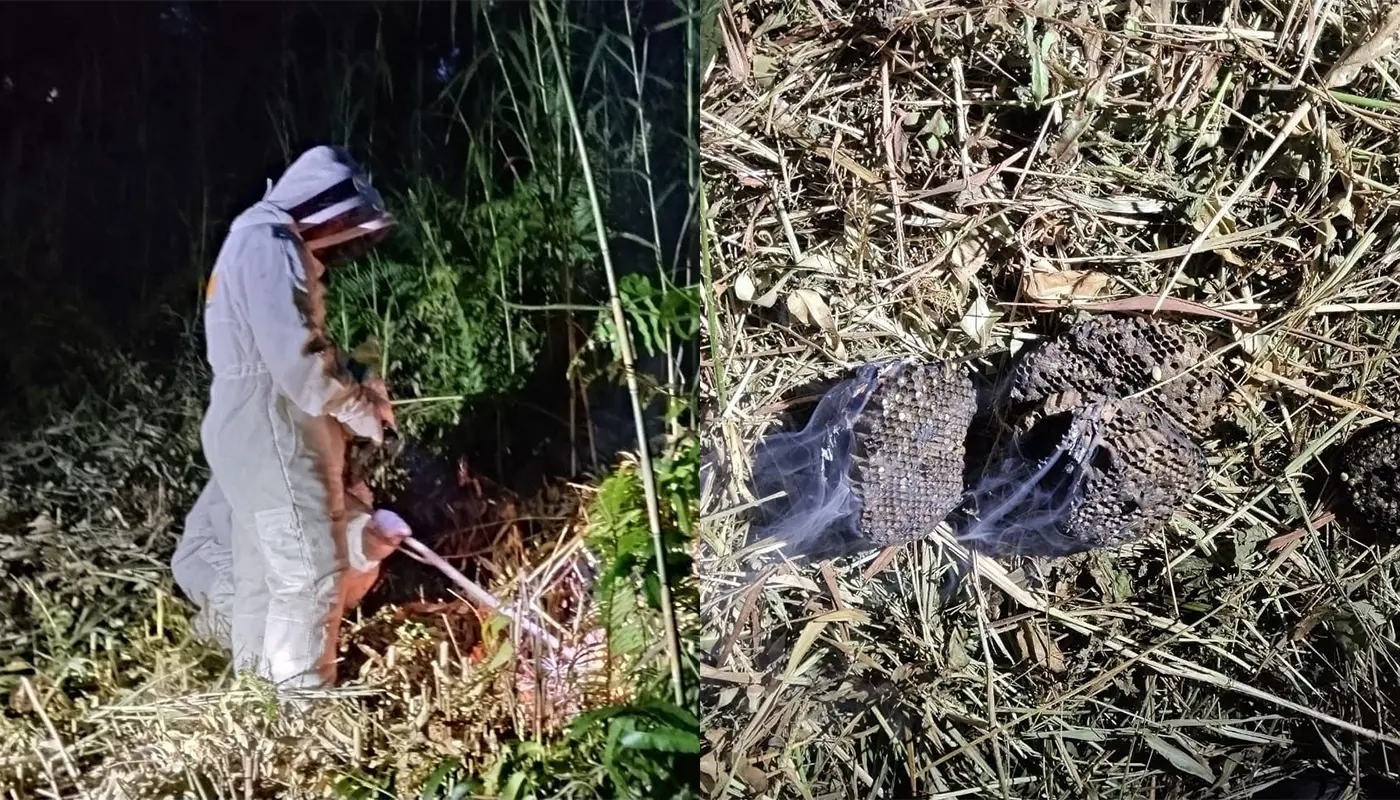
When the rescue team arrived at the scene, they conducted a thorough assessment of the situation. They discovered that the nest had grown to a considerable size, comparable to that of a takraw football.
Such dimensions indicate a well-established colony with a large population of worker wasps, making professional intervention essential.
Attempting to remove a nest of this magnitude without proper training and equipment could provoke a mass attack from the defensive insects.
To ensure the safety of the operatives and the complete eradication of the threat, the team donned specialised Personal Protection Equipment, including full bee suits.
This gear provides a critical barrier against stings, allowing the handlers to work in close proximity to the nest without fear of injury.
The use of appropriate protective clothing is standard protocol for all civil defence operations involving aggressive insect species.
The team employed a controlled burning technique to destroy the nest. This method is highly effective for eliminating entire colonies, including the queen and larvae, thereby preventing the wasps from rebuilding in the same location.
The process was carried out with precision to avoid causing any collateral damage to the surrounding garden vegetation or structures.
The operation proceeded smoothly, demonstrating the squad’s expertise in handling hazardous wildlife situations.
By 7:18 pm, the extermination task was fully completed. The removal of the nest restored a sense of security and peace to Mr Ashraf and his household.
The successful resolution of the case highlights the importance of having accessible emergency services for dealing with everyday hazards that can pose serious risks to public health and safety.
Night wasps, which belong to the genus Provespa, are distinct from other wasp species due to their nocturnal activity patterns. While many wasps are diurnal and search for food during the day, night wasps emerge after sunset to forage.
This behaviour often brings them into closer contact with humans during evening hours when people are relaxing outdoors or completing household chores. Their attraction to light sources can also lead them near residential windows and doors.
The Spaoh Civil Defence Force continues to advise the public to remain vigilant. Residents who discover wasp nests, particularly those of significant size, should not attempt to remove them independently.
Disturbing a nest can trigger aggressive defensive behaviour, leading to multiple stings that may require medical attention. Instead, individuals should contact the authorities immediately for professional assistance.
This incident serves as a reminder of the diverse challenges faced by communities in Sarawak, where rich biodiversity often intersects with human habitation. Effective management of these interactions requires cooperation between residents and emergency services.
By reporting hazards promptly, citizens enable teams like the Bravo Squad to act quickly and efficiently, ensuring that homes and gardens remain safe environments for everyone.
For emergencies related to wildlife or other hazards, the public is encouraged to keep the local civil defence contact number and the national emergency line handy.
Quick reporting remains the most effective strategy for mitigating risks associated with dangerous insects and animals in populated areas.
