



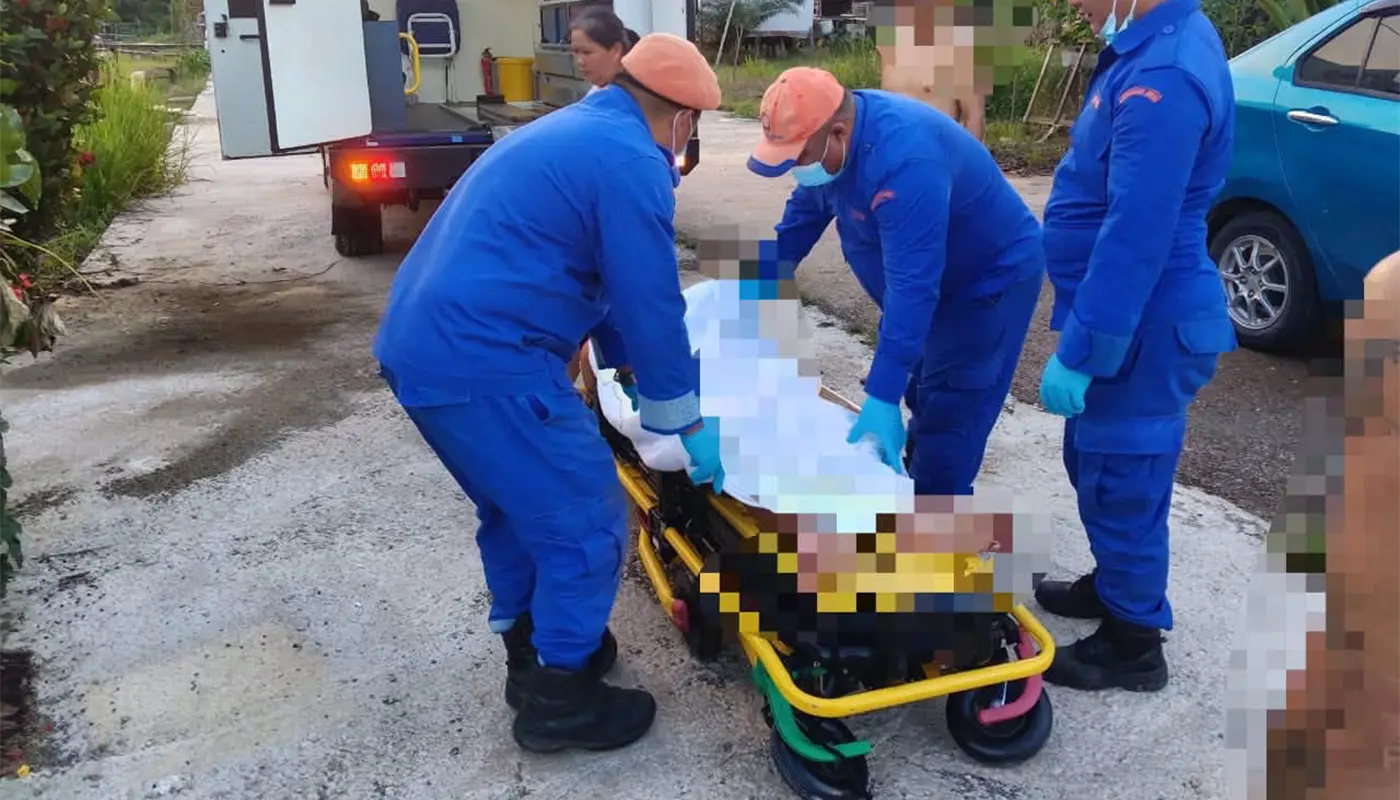
SELANGAU – Civil defence personnel in the Selangau district executed a delicate medical transfer operation on Wednesday, ensuring a patient with severe mobility issues received timely professional care. The incident highlights the critical support role these teams play in remote and rural healthcare logistics.

The Selangau District Operations Control Centre received an urgent request for assistance from a local medical clinic.
The facility reported that a patient residing at Rumah Panjang Lesia in Nanga Sekara was suffering from significant limb weakness and required transportation for further evaluation.
In areas where longhouses are situated far from main roads or medical facilities, such logistical challenges can delay essential treatment if not addressed by specialised responders.
Upon receiving the alert, a squad on duty was immediately dispatched to the location. The team understood that moving a patient with compromised mobility requires specific techniques to prevent further injury.
Upon arrival at the longhouse, the operatives conducted a thorough initial assessment of the patient’s condition.
They confirmed that the individual was experiencing general body weakness and was unable to move independently, necessitating careful handling during the evacuation process.
To ensure the safety and comfort of the patient, the team employed standard medical transfer protocols. They utilised a spinal board to stabilise the individual’s body before transferring him onto a stretcher trolley.
This method minimises movement of the spine and limbs, reducing the risk of aggravating any underlying conditions.
The use of proper equipment demonstrates the high level of training civil defence members receive in basic life support and patient handling.
Once secured on the stretcher, the patient was carefully loaded into an ambulance provided for the transport.
The journey to the nearby clinic was monitored closely by the squad members. Throughout the transit, the patient remained conscious and was able to communicate effectively with the responders.
This positive sign indicated that his vital signs were stable, allowing the team to proceed without needing to divert to a higher-level trauma centre.
The patient was successfully delivered to the clinic, where he was handed over to medical staff for further treatment and diagnosis.
The seamless coordination between the civil defence team and the healthcare providers ensured that there were no gaps in the chain of care.
Such collaboration is essential in maintaining efficient emergency response systems in Sarawak’s interior districts.
This operation underscores the importance of having accessible emergency services in rural communities. Residents in longhouses like Rh. Lesia often faces geographical barriers when seeking medical help.
The presence of dedicated units like the Selangau Civil Defence Force bridges this gap, providing a vital link between isolated communities and healthcare infrastructure.
Their ability to navigate difficult terrain and handle medical emergencies makes them an indispensable resource for the local population.
The Selangau district office continues to emphasise its readiness to assist in various emergencies. Whether it involves wildlife removal, fire response, or medical transfers, their motto of being ready, fast, and acting with integrity guides their operations.
The successful completion of this task without incident reflects their professionalism and commitment to public welfare.
Authorities remind residents that help is available around the clock. The APM Selangau hotline remains open 24 hours a day for any emergencies that may arise.
Prompt reporting allows teams to mobilise quickly, ensuring that critical situations are managed effectively.
Community members are encouraged to save the contact number in their phones for easy access during times of need.
The incident also serves as a reminder of the health challenges faced by ageing populations in rural areas. Limb weakness can be a symptom of various conditions, ranging from stroke to neurological disorders.
Early intervention and proper transport to medical facilities are crucial for accurate diagnosis and effective treatment.
By facilitating this process, civil defence teams contribute significantly to better health outcomes for vulnerable individuals.
As the district continues to develop, the demand for such services may increase. Maintaining well-equipped and trained squads ensures that Selangau remains prepared to handle diverse emergency scenarios.
The cooperation between the community, medical facilities, and civil defence forces creates a robust safety net that protects the well-being of all residents, regardless of their location within the district.
