



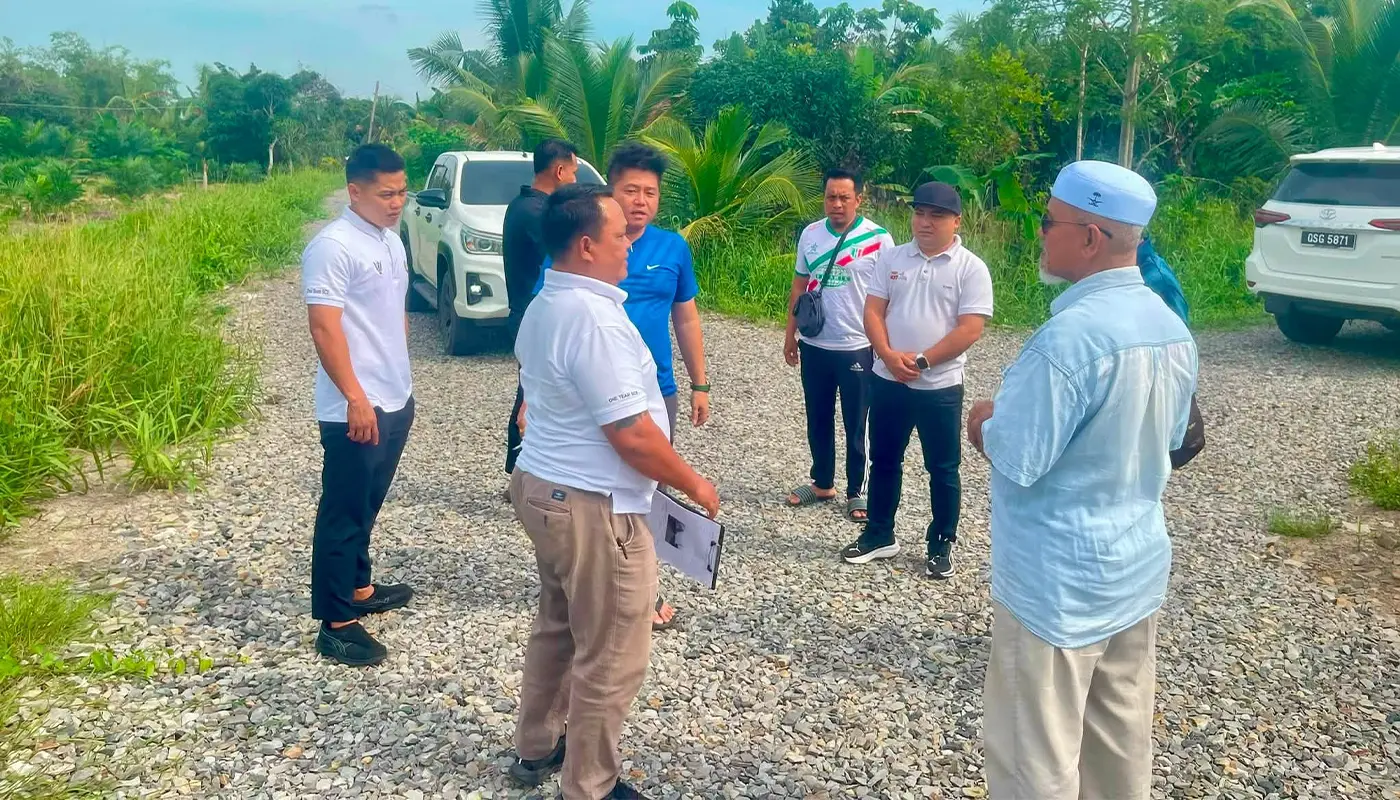
SPAOH – Agricultural logistics in the Betong Division have received a significant boost following the completion of infrastructure works at Kampung Spaoh.

A 1.5-kilometre stretch of garden road has been fully upgraded, providing local cultivators with improved access to their plantation areas and streamlining the transport of harvests to market centres.
The project was executed under the allocation of the Betong Division Development Agency (BDDA), with the Betong Division Irrigation and Drainage Department (JPS) serving as the implementing agency.
Officials confirmed that the construction adhered strictly to technical specifications and was delivered within the scheduled timeframe. The successful completion marks a tangible improvement in rural connectivity for this agricultural community.
A formal handover ceremony was conducted to transfer responsibility for the new infrastructure to the local population. Representatives from JPS, BDDA, and the N.37 Bukit Saban State Assemblyman Service Centre were present alongside community leaders and the contractor, N.H. Construction.
This session symbolised the transition from the development phase to operational use, ensuring accountability and proper stewardship of public assets.
Sarawak Deputy Premier and N.37 Bukit Saban Assemblyman, Datuk Amar Douglas Uggah Embas, highlighted the strategic importance of such rural projects. He noted that quality infrastructure is a government priority designed to sustain growth in the agricultural sector and improve livelihoods.
Enhanced road networks are fundamental to reducing post-harvest losses and increasing profit margins for smallholders.
“Better roads enable farmers to bring agricultural produce to market faster, safer and at a lower cost. This situation not only facilitates the marketing of produce but also encourages them to increase productivity and expand agricultural enterprises,” he said.
The Deputy Premier stressed that development initiatives must yield practical benefits for those who rely on basic facilities for income generation. He urged residents to take ownership of the upgraded road to ensure its longevity.
Community cooperation in maintenance is viewed as essential for maximising the return on public investment and achieving sustainable rural development goals.
“I hope that these facilities are fully utilised and well maintained so that their benefits can be enjoyed in the long term. The cooperation of the residents is very important to ensure that every development initiative implemented by the government truly achieves its goals,” he said.
Local farming representatives expressed gratitude for the approval of funds through the BDDA, which made the project possible. They acknowledged that the previous condition of the track had hindered efficient movement, particularly during wet weather.
The newly surfaced road is expected to alleviate these logistical challenges, allowing for more consistent planting cycles and timely delivery of perishable goods.
This infrastructure upgrade aligns with broader state efforts to strengthen rural amenities in the Bukit Saban constituency.
By addressing specific bottlenecks in the supply chain, authorities aim to create an enabling environment for agribusiness expansion Improved accessibility also supports social cohesion by connecting remote gardens with main village centres and services.
The collaboration between federal agencies, divisional bodies, and local contractors demonstrates the multi-tiered approach to rural development in Sarawak. Such partnerships ensure that projects are tailored to ground realities while meeting national standards.
The success of the Kampung Spaoh garden road serves as a model for future interventions aimed at empowering agricultural communities across the region.
Residents are now encouraged to utilise the facility responsibly and report any maintenance issues promptly. Sustained engagement between the community and relevant agencies will be key to preserving the road’s condition.
Ultimately, this project represents a direct investment in the economic resilience of Spaoh’s farming families and the wider Betong food security ecosystem.
