



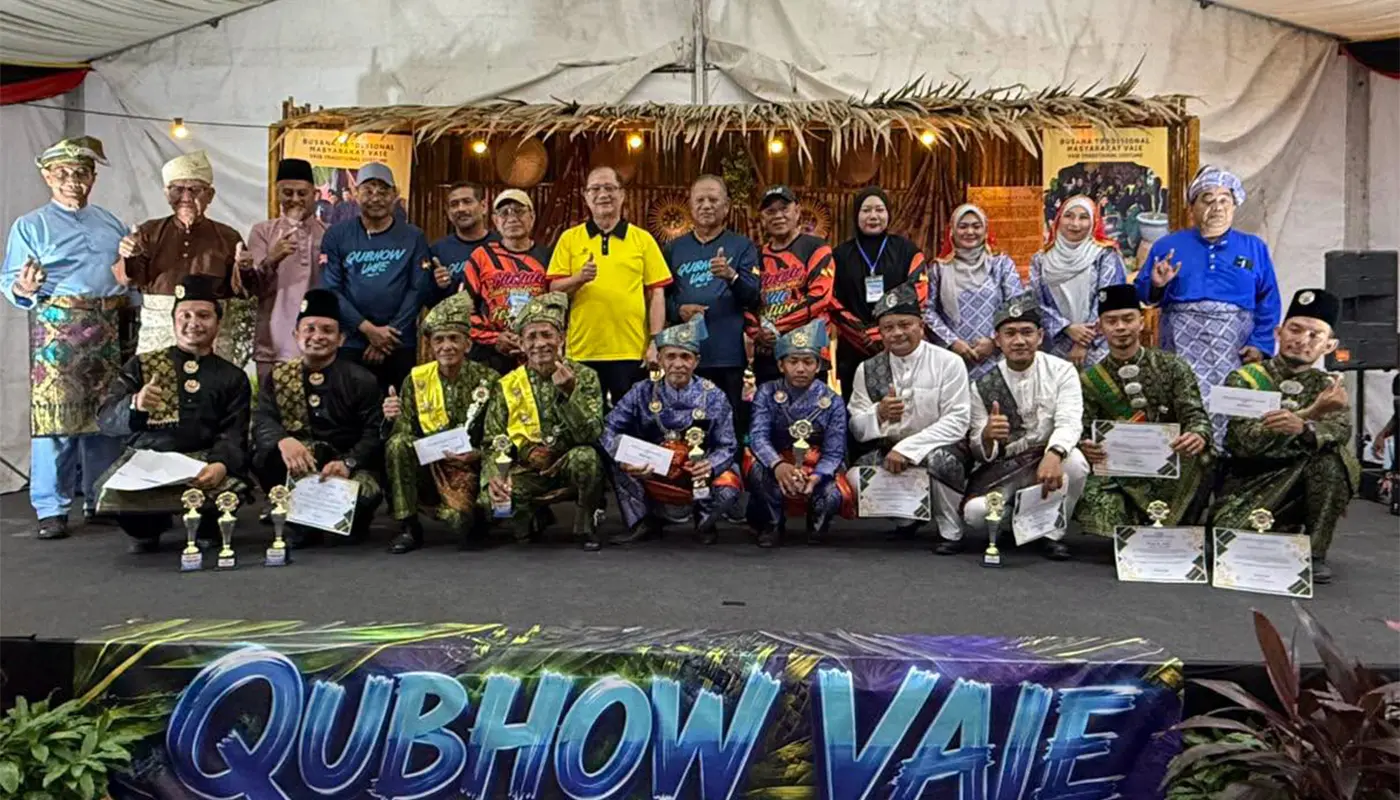
BINTULU – The Tanjong Batu assemblyman has extended his congratulations to all participants and victors of the Bermukun competition held as part of the Borneo International Kite Festival (BIKF) 2026. The event was organised under the auspices of Qubhow Vaie, a platform dedicated to showcasing the cultural heritage of the indigenous Vaie community in Bintulu
Johnny Pang, who represents the N68 Tanjong Batu constituency, attended the prize presentation ceremony to acknowledge the efforts displayed by competitors throughout the tournament. He praised the enthusiasm and talent demonstrated by those who took part in this traditional art form.
The Bermukun competition served as one of several cultural highlights during this year’s BIKF, which attracted participants from numerous countries, including Estonia, China, France, Germany, and Indonesia
The festival itself runs annually in Bintulu and has become a significant event for promoting both international kite flying and local cultural traditions.
Qubhow Vaie, which translates to “Vaie Stage” or “Vaie Platform”, provides a dedicated space for preserving and presenting the unique customs of the Vaie people. The Vaie community is native to Bintulu and possesses a distinct linguistic and cultural identity that sets them apart from other ethnic groups in Sarawak
Historically, the Vaie people have inhabited the Bintulu region for centuries, with their origins traceable to early human migrations in the area. Archaeological evidence from nearby Niah Cave suggests that present-day Bintulu residents are descendants of these ancient populations
The community successfully defended their territory against pirate attacks in the nineteenth century, earning a reputation for bravery and resilience.
The Vaie language features distinctive consonants such as Q, V, and Z, which are uncommon in most Malayo-Polynesian languages spoken across the Malay Archipelago
This linguistic uniqueness has led some scholars to propose various theories about the community’s origins, though oral histories remain the primary source of cultural knowledge passed between generations.
Bermukun represents an important aspect of Vaie cultural expression. As a traditional performance art, it requires participants to demonstrate skill in poetic recitation and improvisation. The competition format allows practitioners to showcase their mastery while engaging audiences in appreciating this intangible cultural heritage.
The assemblyman emphasised the importance of maintaining such competitions as platforms for honouring artistic traditions. These events serve dual purposes of preserving cultural practices and strengthening bonds within local communities. By providing visible recognition to practitioners, organisers help ensure that traditional arts remain relevant to younger generations.
BIKF 2026 featured multiple cultural programmes alongside the main kite flying activities. Previous editions have included duet singing competitions and other performances designed to celebrate Sarawak’s diverse ethnic traditions
The inclusion of Bermukun within this broader festival context helps introduce visitors to aspects of Vaie culture they might not otherwise encounter.
Bintulu has undergone considerable transformation from its origins as a modest fishing village. The town’s strategic location along coastal trade routes historically made it an important centre for commerce between interior communities and international traders
Today, events like BIKF continue this tradition of bringing together people from different backgrounds.
The Vaie community remains predominantly Muslim and is sometimes categorised alongside Melanau or Malay groups due to religious similarities. However, their distinct language and customs warrant separate recognition. Organisations like Qubhow Vaie play crucial roles in maintaining this distinct identity while fostering understanding among Sarawak’s many ethnic communities.
Competition winners received their awards during the ceremony attended by the assemblyman. The event concluded with expressions of hope that similar initiatives would continue in future years. Such ongoing support helps guarantee that traditional arts like Bermukun survive and thrive rather than fading into obscurity.
Participants displayed considerable dedication in preparing for the competition. Their willingness to engage with traditional forms demonstrates that cultural preservation efforts can succeed when communities actively invest time and energy. The positive response from attendees suggests strong public interest in witnessing these performances.
The assemblyman’s presence at the ceremony underscored governmental support for cultural initiatives. Political representatives attending such events signals official recognition of their importance to community cohesion and heritage conservation. This institutional backing complements grassroots efforts by organisations like Qubhow Vaie.
As Bintulu continues developing economically, maintaining connections to traditional culture becomes increasingly vital. Events combining international appeal with local authenticity, such as BIKF, offer sustainable models for cultural promotion. They attract external visitors while simultaneously reinforcing pride among resident communities.
The successful conclusion of the Bermukun competition marks another milestone in ongoing efforts to document and celebrate Sarawak’s rich cultural diversity. Future iterations will likely build upon this foundation, potentially expanding participation and reaching wider audiences through digital platforms and enhanced publicity.
