



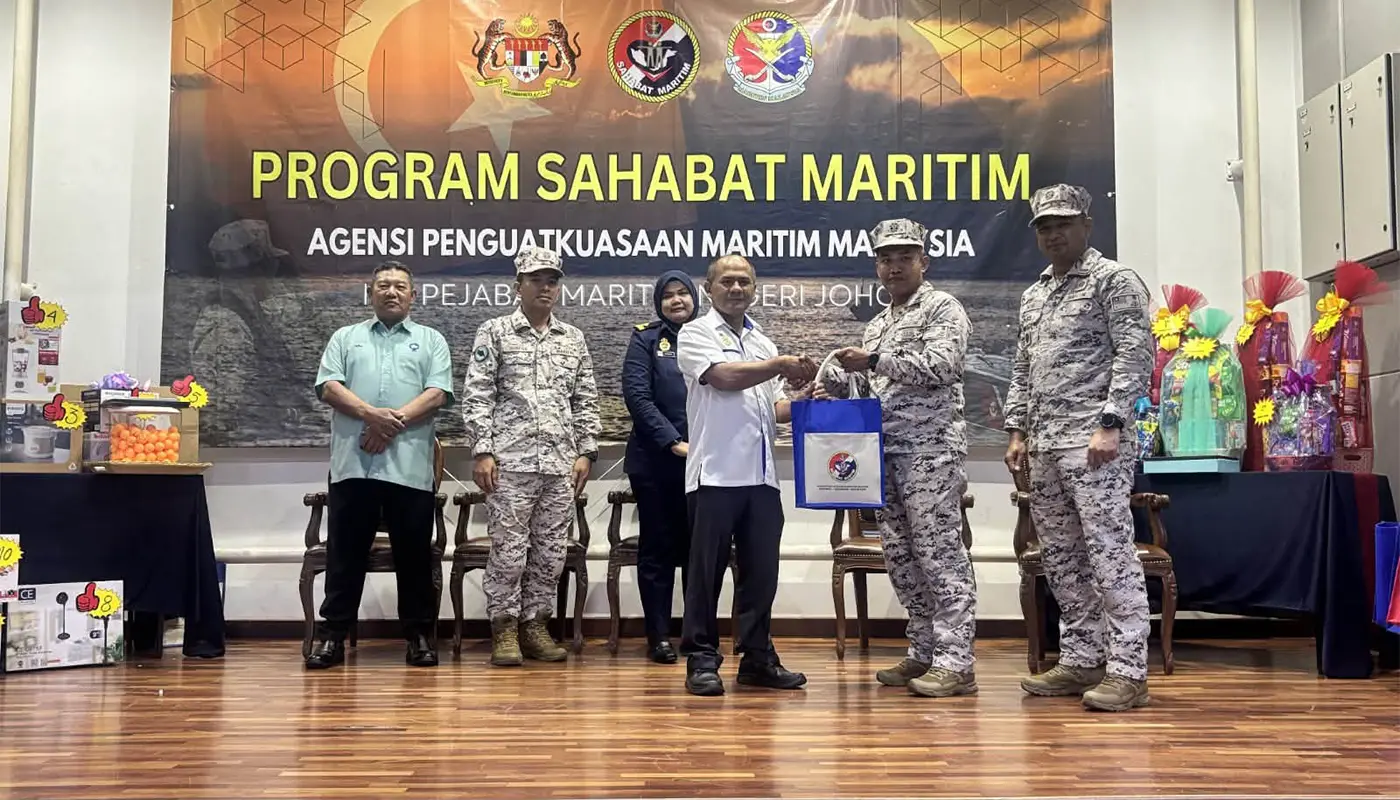
PASIR GUDANG – A significant effort to bolster maritime safety and foster stronger ties between enforcement agencies and coastal residents took place recently in Kampung Pasir Putih.

The Johor State Maritime Enforcement Agency, commonly known as Maritime Malaysia, hosted the Maritime Friends Programme 2026, an initiative designed to bridge the gap between authorities and the communities that rely on the sea for their livelihoods.
Centred around the theme “Caring Community, Safe Seas”, the event served as a strategic platform to enhance public awareness regarding ocean safety.
It highlighted the understanding that maritime security is not solely the domain of enforcement officers but a collective responsibility shared with local fishermen and coastal inhabitants. This collaborative approach is viewed as essential for maintaining the sovereignty and security of national waters.
The programme was officially launched by District Officer Mohd Masni bin Wakiman, who was joined by Penghulu Mukim Plentong, Mohd ‘Afiff bin Mohd Adzhar.
Also in attendance were Acting Director of Johor State Maritime, Maritime Captain Kama Azri bin Kamil, alongside representatives from various government departments, community leaders, and local residents. Their presence underscored the multi-agency and community-wide commitment to the initiative’s objectives.
During his address, Maritime Captain Kama Azri emphasised the critical role that civilians play in maritime operations. He urged residents to act as the “eyes and ears” of the agency, reporting any suspicious activities, accidents, or emergencies they might observe.
According to the Acting Director, timely information from the public is often the decisive factor in successful search and rescue (SAR) missions and law enforcement operations.
“The close relationship between the Malaysian Maritime and the community is the main key in ensuring that the safety, security and sovereignty of the country’s waters continue to be maintained,” he stated.
This sentiment reflects a broader shift towards community-centric policing models in maritime domains, where trust and communication are prioritised alongside traditional enforcement methods.
A central feature of the event was the Maritime Friends Forum, which brought together experts to discuss pressing issues.
The panel included Tuan Hj. Shah Habidin Arib bin Jaafar, Deputy Director of the Southern Region; Puan Fatimah binti Razak from the Johor State Fisheries Department; Maritime Lieutenant Commander Mohamed Shafiee bin Bakar; and Mr Azli bin Mohd Aziz, Chairman of the South Johor Fishermen’s Association.
Discussions during the forum covered a wide spectrum of topics, including navigation safety, marine resource conservation, and legal compliance.
Crucially, the dialogue focused on how communities can function as strategic partners rather than passive subjects of regulation. By involving fishermen directly in conversations about policy and safety, the agency aims to create more practical and culturally relevant guidelines.
Beyond the formal discussions, the programme incorporated numerous recreational activities to encourage informal interaction.
Friendly football matches, e-sports competitions, children’s colouring contests, tug-of-war events, and lucky draws helped to break down barriers between officers and residents. These activities created a relaxed atmosphere where relationships could be built on mutual respect and shared enjoyment.
Practical services were also made available to attendees. An exhibition booth provided information on maritime regulations and safety equipment, while a health clinic offered free medical check-ups.
This holistic approach ensured that the event addressed immediate community needs while promoting long-term safety goals. Providing government services in a single location also demonstrated the agency’s commitment to accessibility and public service.
The Maritime Friends Programme exemplifies a sustained effort by the Johor State Maritime Headquarters to cultivate a culture of safety.
By integrating education, recreation, and service delivery, the initiative moves beyond mere awareness-raising to active community empowerment. It acknowledges that sustainable maritime security requires the genuine engagement of those who live and work on the water daily.
As maritime challenges evolve, such partnerships will likely become increasingly important. Issues like illegal fishing, smuggling, and climate-related hazards demand coordinated responses that leverage local knowledge and agency resources.
Events like this lay the groundwork for resilient networks capable of addressing complex threats effectively. The positive response from Kampung Pasir Putih residents suggests a strong appetite for continued collaboration.
When communities feel heard and valued, they are more likely to comply with regulations and assist in enforcement efforts. This reciprocal relationship is the foundation upon which safe and secure seas are built.
Looking ahead, the success of this programme may serve as a model for other coastal regions in Malaysia.
Replicating this community-engaged approach could help standardise best practices in maritime safety across the nation. Ultimately, the goal remains clear: to ensure that every voyage is safe and every coastal community thrives.
