



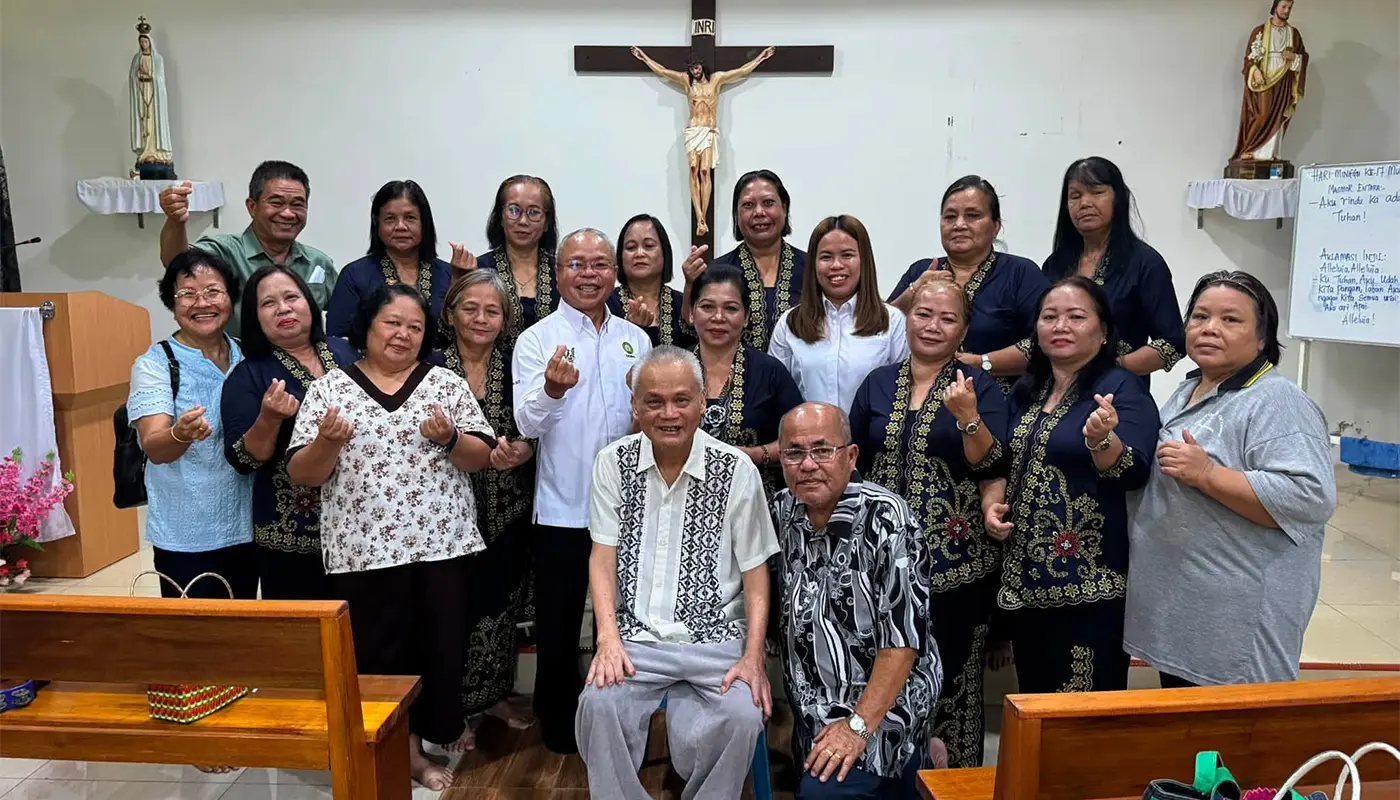
LIMBANG – Officers from the Unified Family and Children’s Support Unit (UNIFOR) recently engaged with residents of a remote longhouse in the Limbang division as part of a broader state-led social development initiative. The interaction took place at Rumah Hellen in Kampung Ensurai, Nanga Mendamit, marking the conclusion of the Limbang Division Social Development Wandering Program 2026.

The three-day programme, which ran from July 24 to July 26, 2026, aimed to bring various government agencies closer to rural communities. By visiting these areas directly, officials sought to bridge the information gap and ensure that residents are aware of the support systems available to them. The presence of UNIFOR officers highlighted the government’s focus on family welfare and child protection in less accessible regions.
On the final day of the event, UNIFOR personnel joined the local community for Sunday mass. This gesture allowed the officers to integrate respectfully with the residents’ daily routines and religious practices, fostering a sense of trust and camaraderie before formal discussions began. Such cultural sensitivity is often cited as a key factor in the success of rural outreach programmes in Sarawak.
Following the religious service, the officers conducted an informational briefing session. The primary objective was to educate the community about the specific roles and functions of UNIFOR. Many residents in remote areas may not be fully aware of the extent of assistance provided by state agencies regarding family disputes, child welfare, and domestic support. The session aimed to demystify these services and encourage residents to seek help when needed.
To make the information more accessible and engaging, the briefing included an interactive quiz based on the content presented. This approach helped reinforce key messages and allowed residents to clarify any uncertainties in a relaxed environment. Feedback from such sessions often indicates that interactive methods are more effective than traditional lectures in ensuring knowledge retention among diverse audience groups.
The closing ceremony of the wandering programme was officiated by YB Dato Paulus Palu Gumbang. His presence underscored the political and administrative importance placed on social development in the division. The event served as a platform to acknowledge the efforts of all participating agencies and the hospitality shown by the host community.
UNIFOR expressed its gratitude to the Sarawak Social Development Council for the invitation to participate alongside other agencies. The collaborative nature of the programme allowed for a holistic approach to community engagement, where different departments could address various aspects of rural life, from infrastructure to social welfare.
Special appreciation was extended to several key stakeholders who facilitated the smooth running of the event. These included the Sarawak Ministry of Women, Children and Community Wellbeing, the Limbang Resident’s Office, and the Limbang District Office. The support from the Nanga Medamit Sub-District Office was also crucial in coordinating logistics for the visit.
Local leadership played a pivotal role in welcoming the delegation. The Headman of Rumah Hellen, along with the Longhouse Committee and Church Committee members, were thanked for their cooperation and warm hospitality. Their involvement ensured that the programme was well-received and that the message reached the intended audience effectively.
The residents of Rumah Hellen were acknowledged for their openness and willingness to engage with government officials. Such interactions are vital for maintaining strong ties between the state administration and rural populations. They provide valuable insights into the ground realities faced by communities, allowing policymakers to tailor services more effectively.
This initiative reflects the Sarawak Government’s continued commitment to inclusive development. By taking services directly to the people, especially in hard-to-reach areas like Nanga Mendamit, the state aims to ensure that no community is left behind in the progress agenda. The success of this programme may serve as a model for future outreach efforts in other divisions.
As Sarawak continues to invest in social capital, programmes like these highlight the importance of face-to-face engagement. Digital communication, while useful, cannot replace the trust built through personal interaction in close-knit communities. The positive response from Rumah Hellen suggests that such efforts are yielding tangible benefits in community relations.
