



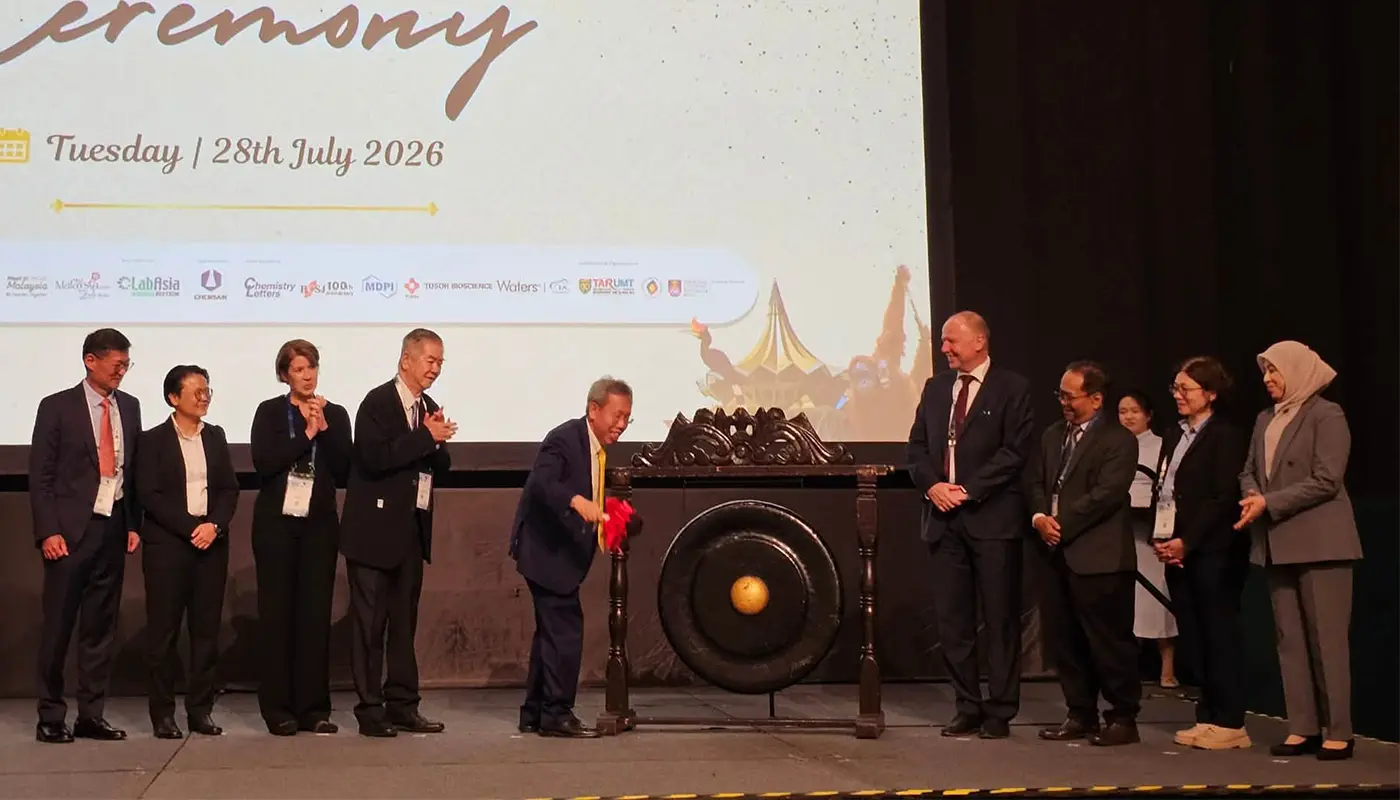
KUCHING – The global scientific community has converged on the capital of Sarawak this week for a landmark gathering focused on the future of materials science.

The fifty-first edition of the International Union of Pure and Applied Chemistry (IUPAC) World Polymer Congress, widely known as MACRO 2026, officially commenced its proceedings with a ceremony that carried significant historical weight.
The opening event was timed to coincide precisely with the one hundred and seventh anniversary of the founding of IUPAC itself. Established on 28 July 1919, the union has long served as the global authority for standardising chemical nomenclature and promoting international cooperation in chemistry.
Holding the congress on this specific date added a layer of ceremonial importance to the proceedings, linking the modern advancements in polymer science directly to the organisation’s century-long heritage.
Dr Sim Kui Hian, the Deputy Premier of Sarawak, presided over the official opening ceremony. In his address, he extended a warm welcome to the more than eight hundred delegates who have travelled from across the globe to attend.
The event has drawn a remarkably international crowd, with officials noting that upwards of eighty per cent of the attendees are visiting from overseas jurisdictions.
This high level of international participation underscores the growing prominence of Southeast Asia as a hub for scientific dialogue and industrial innovation.
The central theme guiding the discussions at MACRO 2026 is “New Polymers and Innovative Materials for a Sustainable Future”.
This focus reflects a broader shift within the scientific community towards addressing urgent global challenges through material innovation.
The congress agenda is structured around several critical areas, including the mitigation of climate change, improvements in resource efficiency, and the advancement of sustainable manufacturing processes.
Healthcare applications and the transition to renewable energy sources are also key pillars of the conference.
Furthermore, significant attention is being paid to the concept of the circular economy, which aims to minimise waste and make the most of resources by keeping products and materials in use for as long as possible.
These topics are not merely academic; they represent practical pathways for industries to reduce their environmental footprint while maintaining economic viability.
During his speech, Dr Sim highlighted the unique advantages that Sarawak brings to the table in the realm of advanced materials. The state’s rich biodiversity offers a vast repository of natural polymers that remain largely unexplored.
These biological resources present opportunities for developing new materials that are both effective and environmentally benign.
In addition to its natural assets, Sarawak possesses substantial petrochemical resources, which are fundamental to the production of synthetic polymers. The combination of these traditional industrial strengths with emerging technologies creates a robust foundation for growth.
The state is also leveraging its capacity for renewable and low-carbon energy generation to support the development of advanced manufacturing sectors.
This integration of green energy with chemical production positions Sarawak as a potential leader in green chemistry. By utilising cleaner energy sources, the state can produce sustainable materials with a significantly lower carbon intensity compared to conventional methods.
This strategic approach aligns with global efforts to decarbonise industrial processes and create a more resilient supply chain for essential materials.
The congress also served as a platform to recognise excellence in the field. Awards were presented to distinguished recipients who have made significant contributions to polymer science.
These accolades highlight the innovative work being done by researchers and engineers worldwide, encouraging further breakthroughs in the discipline.
As the days of the congress unfold, delegates are expected to engage in rigorous technical sessions, workshops, and networking events. The exchange of ideas among such a diverse group of experts is likely to foster collaborations that could lead to tangible advancements in material science.
For Sarawak, hosting an event of this magnitude reinforces its commitment to becoming a key player in the global knowledge economy.
The presence of so many international experts provides local researchers and industries with valuable opportunities to learn from global best practices. It also allows Sarawak to showcase its own capabilities and resources to a worldwide audience.
As the world grapples with the dual challenges of industrial development and environmental preservation, the innovations discussed at MACRO 2026 may well provide some of the necessary solutions.
