



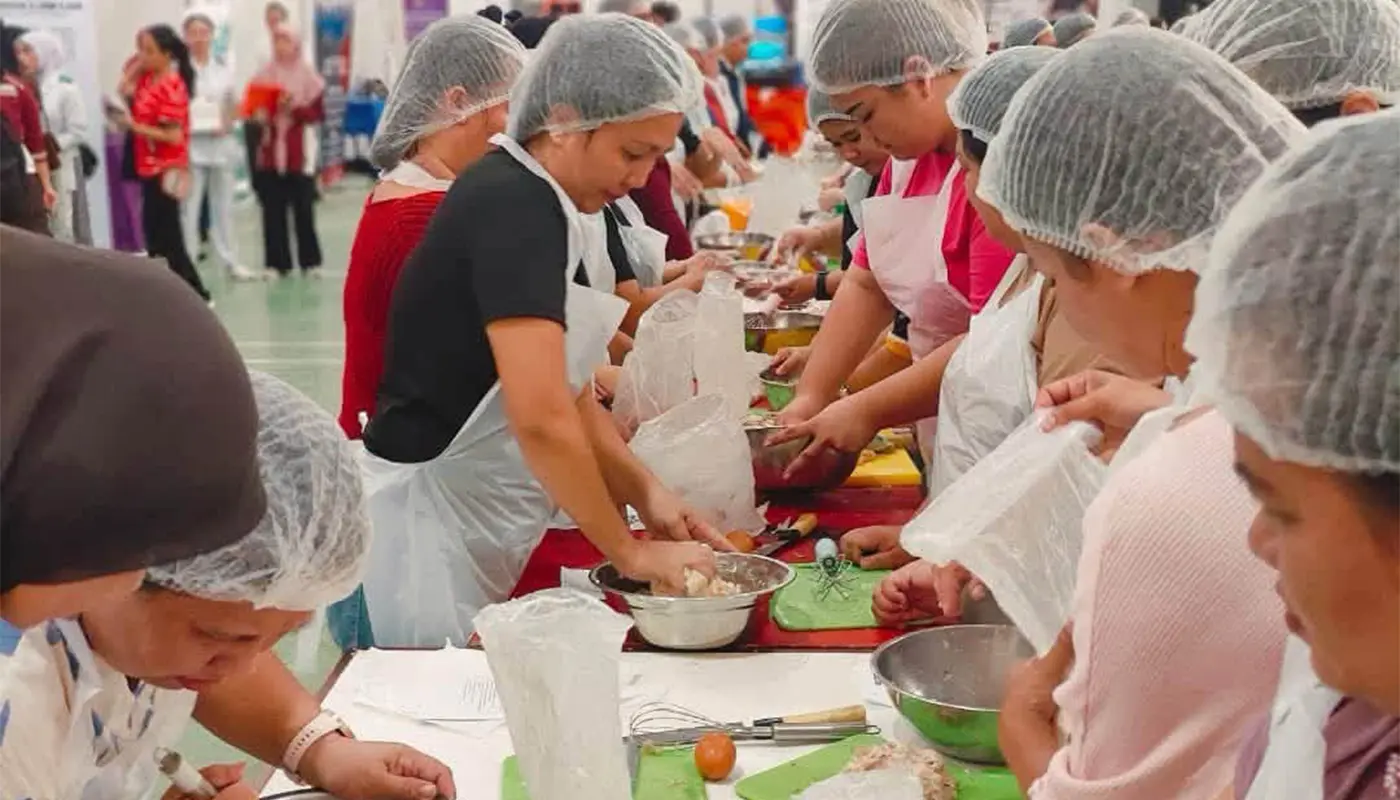
SELANGAU – A recent initiative aimed at bolstering local economic resilience has seen residents of this rural district acquire new technical capabilities in the food manufacturing sector.

The Yahos School of Skills organised a specialised training programme focused on the processing of frozen chicken products, marking another step in its mission to provide accessible vocational education to remote communities.
The intensive course was held last Saturday at the Selangau Multipurpose Hall, drawing a diverse group of participants from the surrounding area.
The event was designed to bridge the gap between theoretical knowledge and practical application, offering attendees a comprehensive overview of how to transform raw poultry into high-value commercial goods.
By focusing on tangible skills, the organisers aimed to equip locals with tools that could immediately be applied to household consumption or small-scale business ventures.
During the sessions, trainees were guided through the end-to-end production process for four distinct product lines: chicken nuggets, tempura, fingers, and popcorn chicken.
The curriculum went beyond simple recipe following, delving into critical aspects of food safety and industrial standards.
Participants learned how to select premium raw materials, implement rigorous quality control measures, and master specific handling techniques to ensure the final products met both safety regulations and consumer expectations.
This emphasis on standardisation is crucial for anyone looking to enter the competitive food market. Understanding the nuances of preservation, packaging, and hygiene allows producers to maintain consistency, which is vital for building brand trust and ensuring repeat customers.
The training highlighted that successful entrepreneurship in the food sector relies as much on operational discipline as it does on culinary creativity.
Natasha Nasa Uggah, the Director of Yahos School of Skills, emphasised that such initiatives are central to the institution’s broader strategy.
She noted that providing practical, commercially viable skills is one of the most effective ways to empower individuals in rural settings. The goal is not merely to teach a trade, but to foster a mindset of self-reliance and economic innovation.
“The skills acquired are not only beneficial for their own use, but can also be used as the basis for the development of small and medium enterprises,” Mrs Uggah stated. “We hope that participants will utilize this knowledge to create economic opportunities that can increase family and community income.”
Her comments reflect a growing recognition of the role Technical and Vocational Education and Training (TVET) plays in national development.
In Sarawak, there is an ongoing push to decentralise economic opportunities, ensuring that growth is not confined to urban centres like Kuching or Miri.
By bringing high-impact training to districts such as Selangau, institutions like Yahos are helping to level the playing field for rural entrepreneurs.
The programme also served as a platform for networking and community building. Participants shared experiences and discussed potential challenges in launching food-based businesses, creating a support network that could prove invaluable after the course concluded.
This peer-to-peer learning aspect is often cited as a key benefit of community-based training programmes, as it fosters collaboration rather than competition.
Mrs Uggah expressed gratitude to the local community and the organising team for their dedication, noting that the success of such events relies heavily on collective effort.
She reaffirmed the school’s commitment to expanding its reach, promising more courses in the future that address different sectors and skill sets.
The intention is to ensure that residents in even the most isolated areas have access to education that enhances their marketability and competitiveness.
Support from various stakeholders remains essential for the sustainability of these efforts. As the state continues to prioritise human capital development, partnerships between educational providers, local governments, and community leaders will be critical.
These collaborations help ensure that training programmes remain relevant to market demands and effectively contribute to the overall socio-economic progress of Sarawak.
For the participants, the immediate takeaway is a new set of competencies that can generate income. Whether they choose to start home-based enterprises or seek employment in existing food processing facilities, the training provides a foundation for financial stability.
In a region where traditional livelihoods are increasingly supplemented by modern industries, such adaptability is becoming ever more important.
