



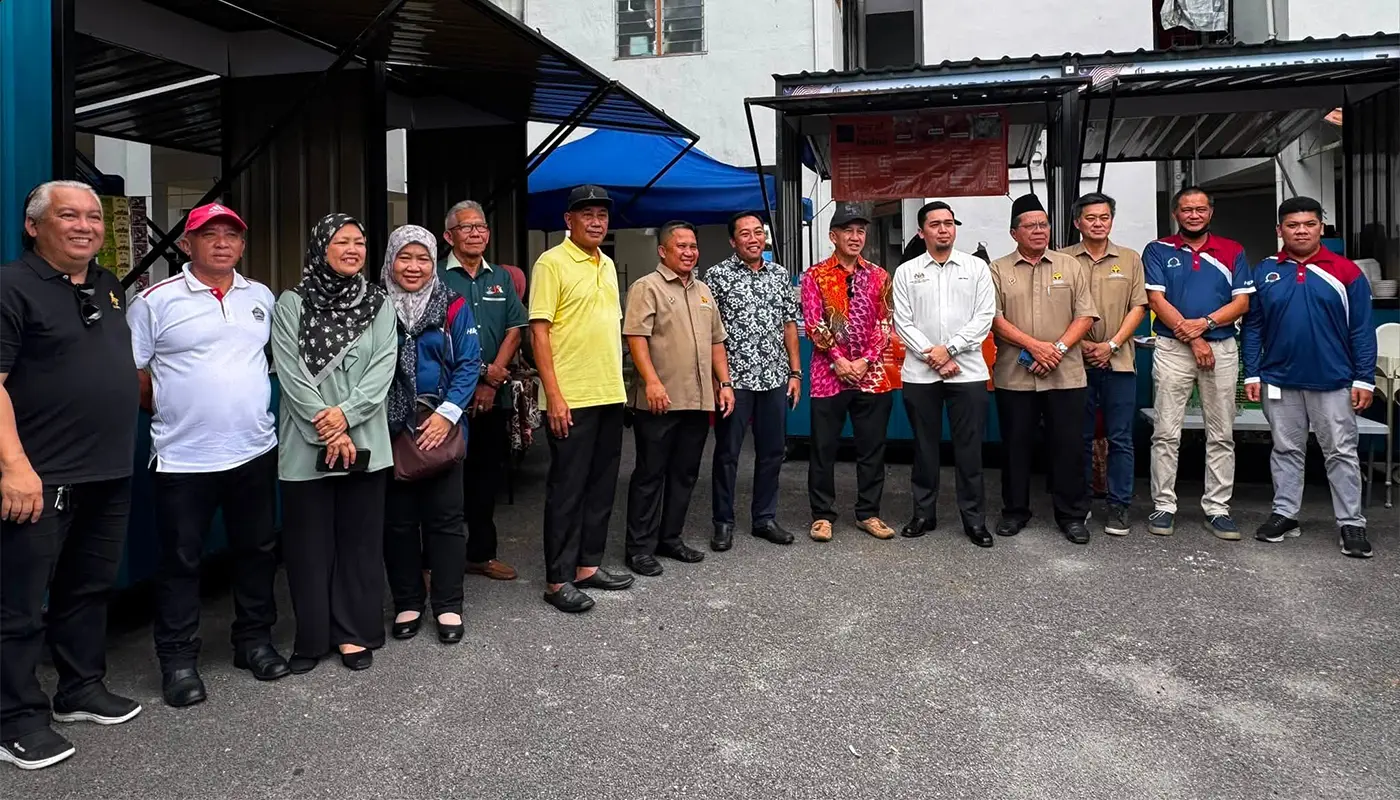
KUCHING – A significant step towards enhancing local economic resilience was taken in Kuching with the soft launch of the Medan Selera Sejati Madani Kiosk at PPR Taman Dahlia.

The event, held on 1 August 2026, marks the introduction of a structured commercial space designed to support small traders and stimulate business activity within the public housing community.
This initiative aims to provide residents with accessible opportunities to generate income while offering convenient services to the neighbourhood.
The Chief Executive Officer of the Housing Development Corporation (HDC), Haji Fathi Haji Hambali, attended the ceremony to demonstrate institutional support for community-led development.
His presence underscored the corporation’s dedication to improving the overall well-being of PPR residents.
By facilitating the creation of designated trading areas, the HDC seeks to transform public housing estates into vibrant communities where economic prosperity and social comfort coexist.
The launch also featured Ir. Irwan Zulkarnain bin Muhammad Hasbie, the Political Secretary to Deputy Prime Minister of Malaysia, YAB Dato’ Sri Haji Fadillah bin Haji Yusof.
His attendance highlighted the alignment of this local project with broader national objectives. The involvement of federal leadership signals a coordinated effort to ensure that housing developments are not merely residential zones but active hubs of economic participation.
This project reflects a shifting paradigm in public housing management, where the focus extends beyond providing shelter to fostering sustainable livelihoods.
The government’s commitment to creating inclusive environments is evident in the design of the kiosk, which offers traders a legitimate and organised platform to conduct their businesses.
This structure helps to regulate informal trading activities while ensuring hygiene and safety standards are maintained for both vendors and customers.
For the residents of PPR Taman Dahlia, the new kiosk represents more than just a place to buy food or goods. It serves as a catalyst for community interaction and economic empowerment.
By lowering the barriers to entry for aspiring entrepreneurs, the initiative encourages self-reliance and financial independence among households.
The structured nature of the business space allows traders to operate with greater confidence, knowing they have the backing of relevant authorities.
The concept of Medan Selera Sejati Madani is rooted in the principles of the MADANI framework, which emphasises sustainability, care, and inclusivity.
In this context, it translates to creating spaces where community members can thrive economically while enjoying a high quality of life.
The integration of commercial facilities within residential areas reduces the need for residents to travel far for daily necessities, thereby saving time and transportation costs.
Haji Fathi noted that such initiatives are crucial for holistic community development. He emphasized that a comfortable living environment must be complemented by opportunities for economic growth.
The HDC continues to explore various methods to uplift the socioeconomic status of PPR dwellers, viewing them as active contributors to the nation’s progress rather than passive recipients of aid.
The soft launch serves as a pilot for potential expansion to other PPR locations across Sarawak. If successful, the model could be replicated to benefit wider communities, creating a network of supportive business ecosystems within public housing estates.
This approach aligns with the state’s vision of developing smart, liveable, and economically resilient cities. Local traders expressed optimism about the new facility, citing the improved infrastructure and official recognition as key benefits.
The kiosk provides essential amenities such as proper ventilation, waste disposal systems, and secure storage, which were often lacking in informal setups.
These improvements not only enhance the working conditions for vendors but also elevate the customer experience.
As the community begins to utilise the new space, monitoring and feedback mechanisms will be put in place to ensure its continued success.
The collaboration between the HDC, local leaders, and residents will be vital in maintaining the kiosk’s operations and addressing any emerging challenges.
This collective effort exemplifies the spirit of cooperation required to build stronger, more self-sufficient communities in Sarawak.
