



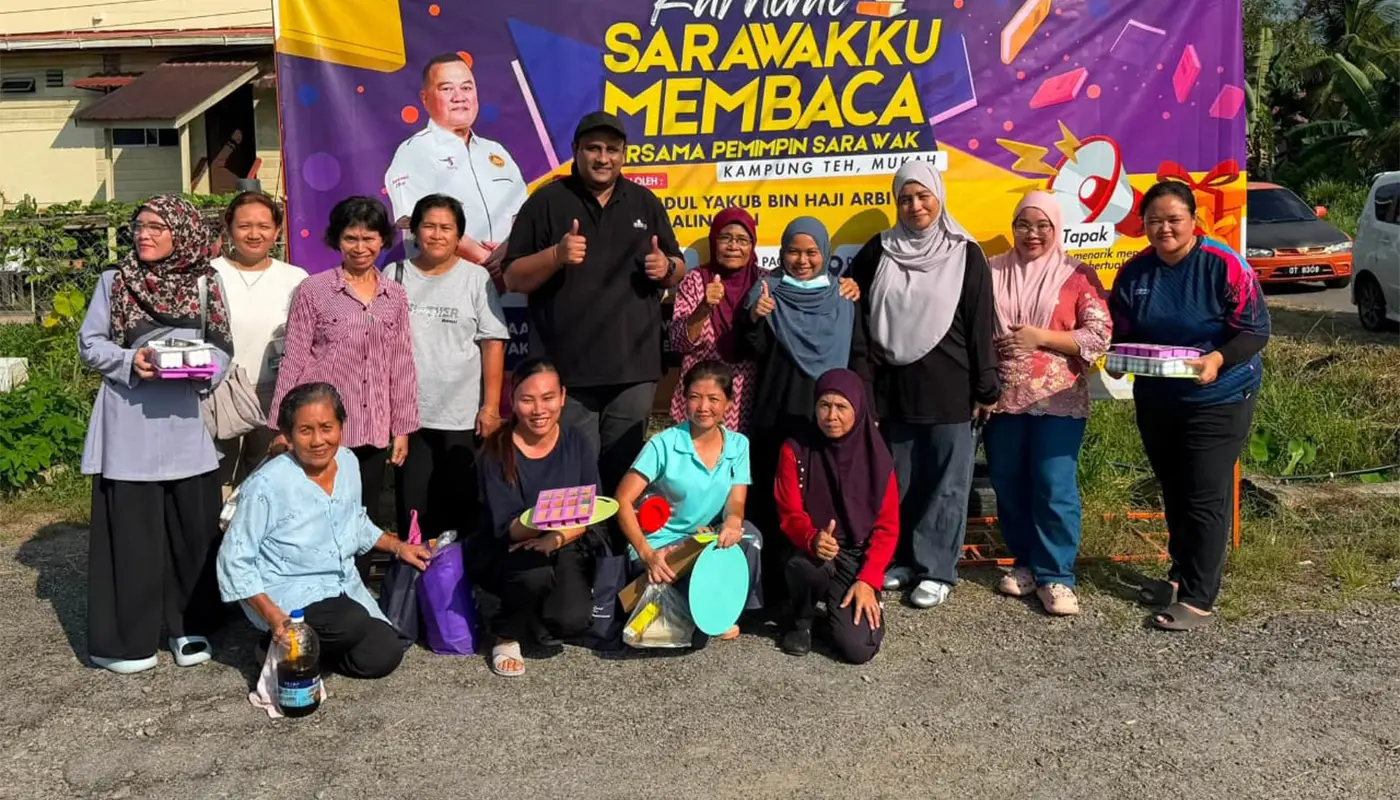
MUKAH – Residents of Kampung Teh have gained practical skills in sustainable living through a specialised workshop focused on transforming waste into useful household products.

Fifteen participants from the local community attended the session, which demonstrated how discarded cooking oil can be repurposed into eco-friendly soap bars.
The initiative formed part of the broader Sarawakku Reading Carnival, specifically the eighth instalment of the Sarawak Leaders series. Held at the Kampung Teh Multipurpose Hall, the event ran from early morning until late afternoon, offering a comprehensive day of learning and engagement for attendees of all ages.
Academic expertise was provided by three lecturers from the University of Malaysia Sarawak (UNIMAS). Dr Ain Nadirah Romainor and Dr Mugunthan Perumal, both from the Faculty of Science and Technology Resources, joined forces with Dr Faizan Iza Zainuddin from the Faculty of Economics and Business.
Their combined knowledge ensured that participants received instruction covering both the technical aspects of soap production and the economic benefits of sustainable practices.
The primary focus of the workshop was the creation of eco-enzymes and environmentally conscious soap. By using used cooking oil as a base ingredient, the villagers learned a method that reduces waste while producing a valuable cleaning agent.
This hands-on approach allowed community members to immediately apply what they had learned, fostering a sense of empowerment and self-sufficiency.
Beyond the technical training, the carnival aimed to cultivate a culture of reading and continuous learning across generations. Activities were designed to appeal to everyone, from young children to senior citizens, ensuring that knowledge dissemination remained inclusive.
The programme highlighted the importance of creativity and artistic skills, encouraging participants to explore new ways of thinking and problem-solving.
A significant component of the event was its alignment with the United Nations Sustainable Development Goals (SDGs). Organisers emphasised how small community actions, such as recycling oil into soap, contribute to larger global objectives regarding responsible consumption and environmental protection.
This connection helped residents understand the wider impact of their daily choices. The carnival atmosphere was enhanced by exhibitions from various government bodies and non-governmental organisations.
Agencies including the National Information Dissemination Center (NADI), Sarawak Forestry Corporation, and the Malaysian Palm Oil Board (MPOB) set up displays to share information about their respective fields.
Additional support came from Universiti Teknologi MARA’s Mukah Campus, the Malaysian Drug Control Association (PEMADAM), and the Sarawak Public Communication Unit (UKAS).
These exhibitions provided a platform for inter-agency collaboration, allowing visitors to access a wide range of resources under one roof.
The presence of multiple stakeholders underscored the collective effort required to drive sustainable development at the grassroots level. It also offered residents the opportunity to engage directly with officials and experts from different sectors.
UNIMAS expressed appreciation for the collaborative spirit displayed during the event. The university highlighted its ongoing commitment to working with partners such as the Sarawak State Library to deliver education that resonates with local communities.
By leveraging diverse academic expertise, the institution aims to support Sarawak’s broader agenda for sustainability and social progress.
The success of the workshop in Kampung Teh demonstrates the potential for academic institutions to play a vital role in community development.
By translating complex scientific concepts into practical, everyday applications, educators can help bridge the gap between theory and practice. This model of engagement not only enhances local capabilities but also strengthens the relationship between universities and the societies they serve.
As interest in environmental conservation grows, initiatives like these provide tangible steps for individuals to make a difference.
The skills acquired by the fifteen villagers will likely have a ripple effect, inspiring neighbours and friends to adopt similar sustainable habits. Such grassroots movements are essential for building a more resilient and ecologically conscious society.
