



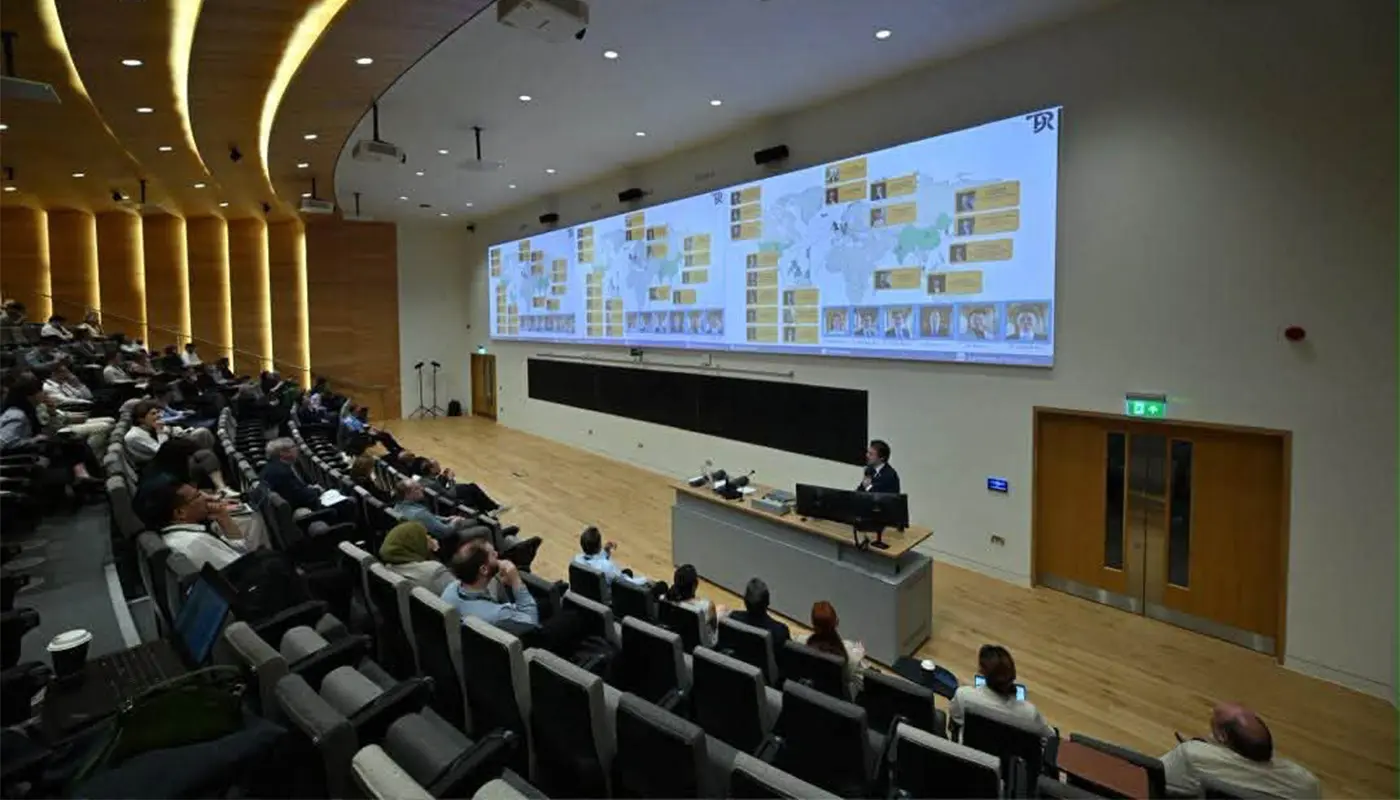
CAMBRIDGE – A delegation from the Public Works Department (JKR) Sarawak has successfully presented its latest research findings at a prestigious international forum in the United Kingdom. The team participated in the 23rd Smart and Sustainable Built Environment (SASBE) Conference 2026, held from 22 to 24 July at the University of Cambridge.

This global gathering brought together leading academics, researchers, and industry professionals to discuss innovative strategies for creating smarter and more sustainable infrastructure.
The presence of JKR Sarawak at such a high-profile event underscores the department’s dedication to modernising the state’s construction sector. The delegation was led by Ir. Ts. Bujang Anak Janang, Senior Principal Assistant Director of the Project Implementation and Monitoring Branch.
He was joined by Ir. Ts. Jessie Chin Lin Wei, Head of the BIM Unit within the Special Project Branch, and Ts. Nur Syafiqah binti Ismuini, a Senior Executive Engineer from the Mechanical Branch. Their participation highlighted the technical expertise and forward-thinking approach currently being cultivated within the department.
A key highlight of the conference was the presentation of a research paper by Ir. Ts. Jessie Chin Lin Wei. Titled “Identification and Ranking of Current Practices, Critical Success Factors & Challenges Using Relative Importance Index (RII): A Preliminary Study of Building Information Modelling (BIM) Adoption in Malaysian Construction Industry,” the study offered a detailed analysis of the local landscape.
It provided an evidence-based assessment of how BIM is currently implemented across Malaysia, identifying both the hurdles and the drivers of success in digital adoption.
The research contributes significantly to the national agenda for digital transformation in construction. By utilising the Relative Importance Index (RII), the study offers a quantitative method for understanding which factors are most critical for successful BIM integration.
This data is invaluable for policymakers and industry leaders who are working to streamline processes, reduce waste, and improve project outcomes through digital tools. The presentation placed Sarawak at the forefront of this academic and practical discourse, showcasing the state’s commitment to rigorous, data-driven improvement.
Beyond the formal presentation, the delegation engaged in extensive knowledge exchange with international peers. The conference served as a platform for learning about emerging technologies in digital construction, smart infrastructure, and sustainable building practices.
Networking with experts from around the world allowed the JKR team to gain insights into global best practices that could be adapted to the local context. These interactions are crucial for keeping Sarawak’s engineering standards aligned with international benchmarks.
The SASBE conference focuses heavily on the intersection of technology and sustainability. As the built environment faces increasing pressure to reduce its carbon footprint and improve efficiency, tools like BIM become essential.
They allow for better planning, simulation, and management of resources throughout a building’s lifecycle. JKR Sarawak’s active involvement in these discussions demonstrates a clear understanding of the role technology plays in achieving long-term environmental and economic goals.
This international engagement reflects the department’s broader strategy to foster innovation and collaboration. By participating in global conferences, JKR Sarawak not only shares its own experiences but also learns from the successes and challenges of other nations.
This two-way flow of information helps to accelerate the adoption of new methods and ensures that local projects benefit from the latest advancements in engineering science.
The commitment to advancing Building Information Modelling is part of a larger effort to support Malaysia’s digital transformation agenda. As the construction industry becomes increasingly complex, the need for integrated digital solutions grows.
JKR Sarawak’s research and participation in events like SASBE 2026 help to build the necessary foundation for this transition, ensuring that the state’s infrastructure development remains efficient, transparent, and sustainable.
Looking ahead, the insights gained from Cambridge are expected to inform future policies and training programmes within the department. The delegation returns with a wealth of knowledge and new professional connections that will likely lead to further collaborative projects.
This continuous pursuit of excellence positions JKR Sarawak as a leader in the regional push towards a smarter, more resilient built environment.
