



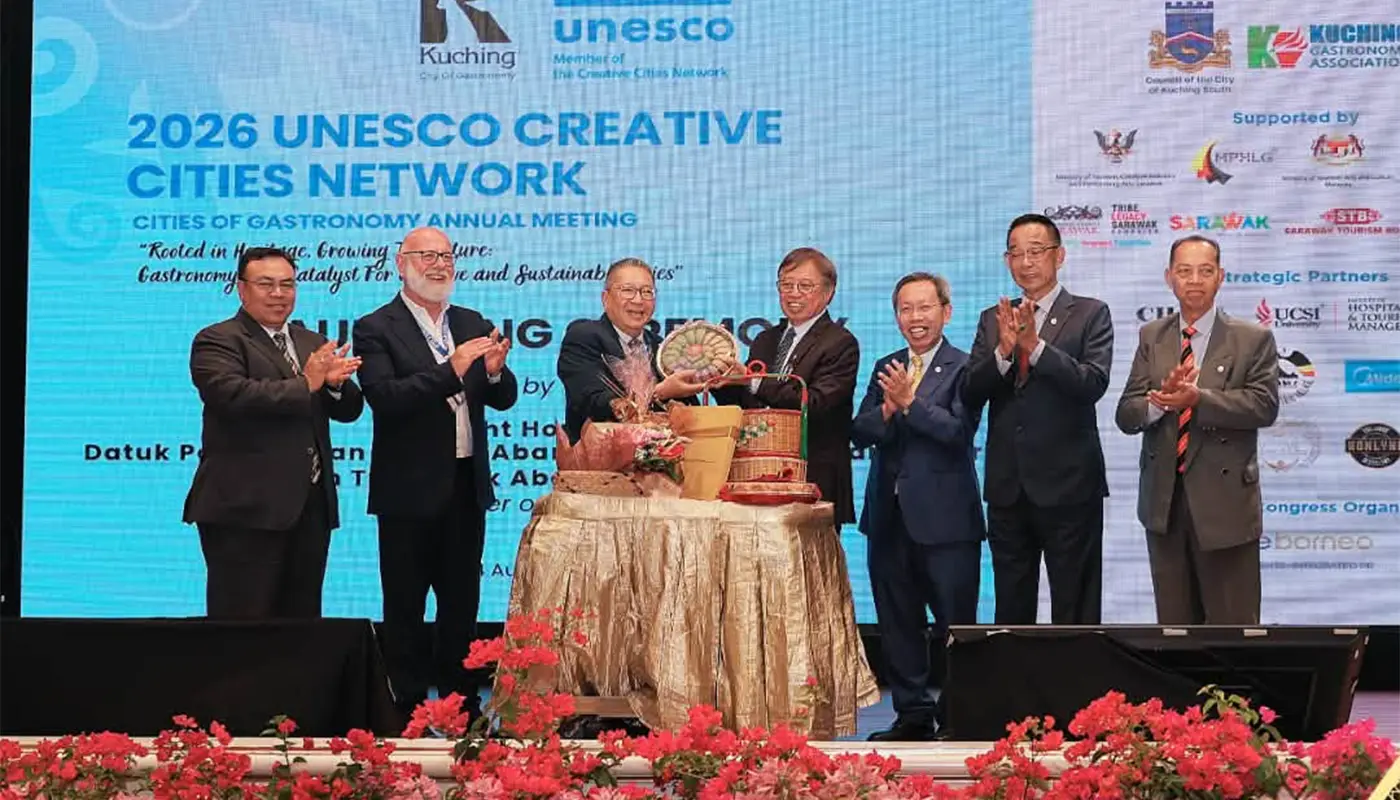
KUCHING – State leadership has proposed integrating nutritional science into traditional food preparation to enhance public health outcomes without compromising culinary heritage.

The initiative seeks to balance authentic flavours with modern dietary requirements through professional expertise rather than altering fundamental recipes or cultural identities associated with local dishes.
Datuk Patinggi Tan Sri (Dr) Abang Abdul Rahman Zohari Tun Datuk Abang Openg clarified that this approach does not intend to diminish the character of regional cuisine. Instead, it aims to ensure meals possess balanced nutritional profiles whilst retaining their distinctive taste.
Achieving this delicate equilibrium requires specialised knowledge from qualified dieticians who understand both health science and indigenous cooking traditions.
The Premier emphasised the critical need for expanded human capital in this field during a media engagement following a major international ceremony.
“So we need more dieticians so that the food served is truly balanced in terms of nutrition without affecting its taste,” he said. Such professionals would serve as bridges between gastronomic authenticity and contemporary wellness standards.
Portion control emerged as another significant factor requiring attention alongside ingredient modification. Excessive serving sizes frequently lead to substantial food waste when diners cannot consume entire portions presented to them.
Adjusting quantities to match actual consumption patterns could simultaneously reduce wastage and promote healthier eating habits amongst the population.
“Maybe what needs to be changed is the quantity or the way we consume food because sometimes we serve too much to the point of waste and sometimes people don’t finish the food, maybe only eat a third or half, so the rest becomes waste,” he said. This observation highlights how behavioural adjustments complement technical interventions in achieving dietary improvements.
Individual body composition metrics must also guide personal nutritional choices according to state guidance. Maintaining appropriate Body Mass Index ranges prevents both malnutrition risks associated with being underweight and chronic diseases linked to excess weight.
Public awareness campaigns may help citizens better understand these relationships between diet and physical wellbeing.
Recent health screening data revealed distinct regional variations in prevalent conditions across different divisions. Communities in Kapit demonstrated higher cholesterol levels whilst obesity emerged as the primary concern in Sibu.
These geographical disparities suggest that intervention strategies should be tailored to local contexts rather than applying uniform solutions statewide.
Further research is necessary to identify underlying contributors to these divergent health trends before implementing targeted measures. Understanding socioeconomic, cultural, and environmental factors influencing dietary patterns will enable more effective policy responses.
Evidence-based approaches grounded in local realities promise greater success than generic recommendations imported from elsewhere.
During his earlier address, the Premier offered a light-hearted explanation for Sibu’s obesity statistics by referencing popular local noodle dishes high in starch content.
His humorous remark underscored serious concerns about carbohydrate-heavy diets common in certain areas. Such candid observations make complex public health messages more accessible to general audiences.
“In other words, when we prepare food, we need to take into account the dietary aspects and nutritional content,” he stated plainly.
This directive applies equally to home cooks, commercial vendors, and institutional caterers responsible for feeding diverse populations daily. Collective responsibility ensures broader impact beyond individual household choices.
Specialised expertise in tropical ingredients remains essential for developing appropriate adaptation methods. Nutritionists trained primarily in Western dietary frameworks may lack familiarity with indigenous produce and preparation techniques unique to Borneo.
Cultivating local talent ensures recommendations remain culturally relevant and practically applicable within existing food systems.
“We also need experts who truly understand tropical food so that they can study and suggest suitable food preparation methods based on the ingredients used,” he explained.
Investing in such niche specialisation strengthens both healthcare capacity and culinary innovation simultaneously. Cross-disciplinary collaboration yields superior outcomes compared to siloed approaches.
The remarks followed the official launch of the UNESCO Creative Cities Network programme at a prominent hotel venue.
This international designation recognises excellence in creative fields, including gastronomy, and provides platforms for sharing best practices globally. Local participation signals commitment to elevating regional food culture onto world stages responsibly.
Several senior officials attended the event, demonstrating cross-sectoral support for integrated development agendas. Among those present were Deputy Premier Datuk Amar Prof Dr Sim Kui Hian and Tourism Minister Dato Sri Abdul Karim Rahman Hamzah.
Their collective presence reinforced the message that health, culture, and economic progress are interconnected priorities requiring coordinated governance.
Municipal leaders from both city councils also participated alongside public health representatives. Such multi-level engagement ensures alignment between state policies and local implementation capacities.
Sustainable change depends on coherent action across administrative boundaries and departmental jurisdictions working towards shared objectives.
Ultimately, this vision positions culinary tradition as compatible with rather than opposed to modern health imperatives. By embracing scientific guidance respectfully, communities can preserve cherished foodways whilst safeguarding future generations’ wellbeing.
This balanced path honours ancestral wisdom whilst adapting thoughtfully to contemporary challenges facing society today.
