



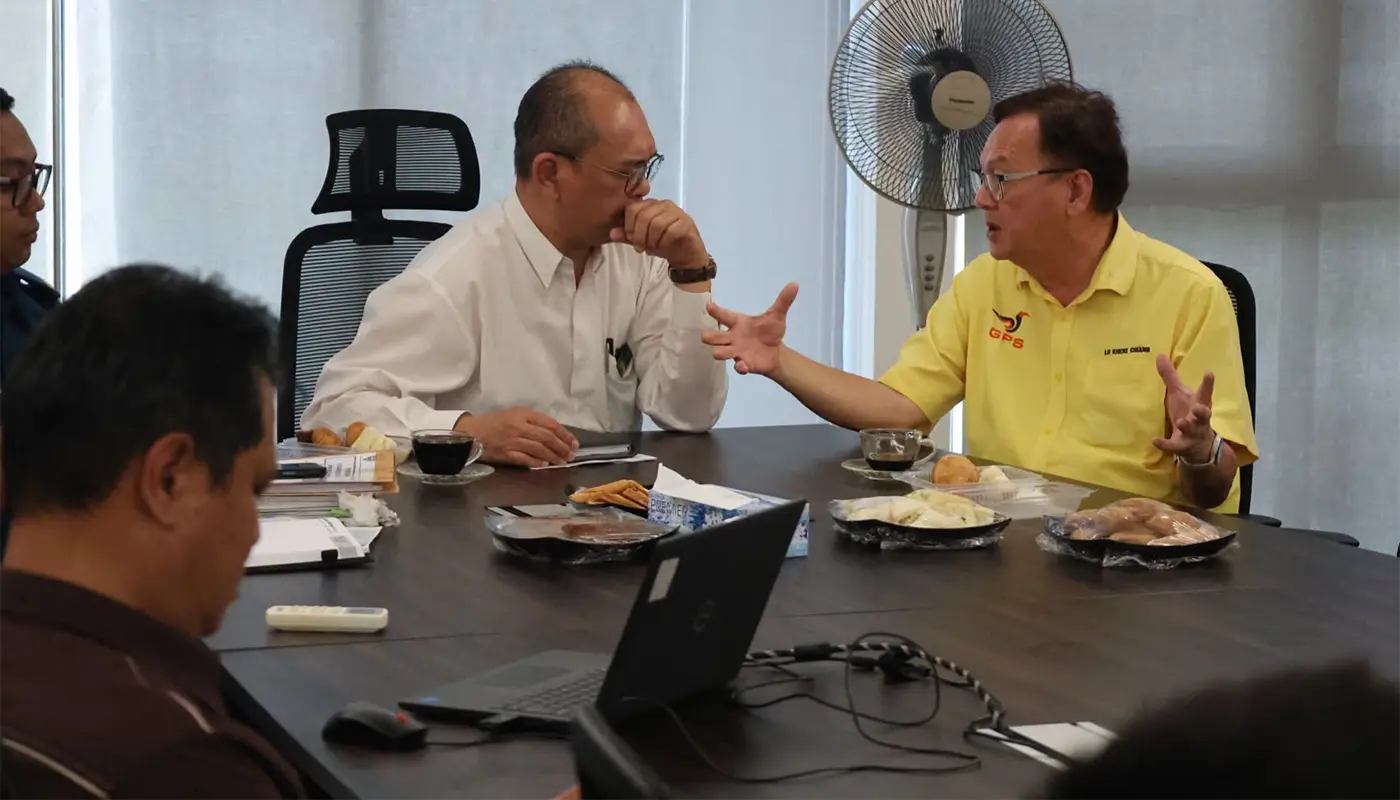
KOTA SAMARAHAN – Elected representatives and local residents recently convened at the Samarahan Land and Survey Office to address longstanding concerns affecting informal settlers in the area.

The gathering focused specifically on the community residing near the eighth mile marker along the main route, providing a formal channel for direct communication between stakeholders and government officials.
YB Dato Ir Lo Khere Chiang, the assemblyman for Batu Kitang, personally attended the session to facilitate open exchanges.
His presence signalled a commitment to grassroots engagement and underscored the importance placed on resolving land-related matters through collaborative discussion rather than top-down directives.
Such face-to-face interactions are increasingly viewed as essential for building trust between authorities and affected populations.
The primary objective of this meeting was to create a safe space where inhabitants could articulate their perspectives without reservation.
Participants were encouraged to share personal experiences, highlight specific grievances, and propose potential remedies based on their lived realities.
This bottom-up approach ensures that any eventual solutions remain grounded in actual community needs rather than bureaucratic assumptions.
Land tenure security remains a persistent challenge for many families living in unofficial settlements across the state.
Without clear documentation or legal recognition, these households often face uncertainty regarding their future residency and access to basic utilities.
Addressing such vulnerabilities requires nuanced understanding of both regulatory frameworks and humanitarian considerations unique to each locality.
During the dialogue, attendees raised various issues ranging from infrastructure deficiencies to administrative hurdles in regularising their status.
Some expressed frustration over prolonged waiting periods for official responses, whilst others sought clarification on eligibility criteria for resettlement programmes.
These candid disclosures provided valuable insights into systemic gaps that might otherwise remain invisible to policymakers.
Authorities present listened attentively and took detailed notes throughout the proceedings. Their willingness to engage constructively suggested a genuine desire to identify workable pathways forward.
Rather than offering immediate promises, officials emphasised the need for thorough verification processes and inter-agency coordination before committing to specific actions or timelines.
Community leaders played a crucial mediating role during the session by helping organise feedback and ensuring quieter voices were heard.
Their involvement helped maintain order and fostered a respectful atmosphere conducive to productive conversation.
Such local intermediaries often possess institutional knowledge that complements official records and can bridge cultural or linguistic divides.
The choice of venue itself carried symbolic weight as it situated the discussion within an existing governmental framework.
Holding the dialogue at the Land and Survey Office reinforced the connection between citizen concerns and institutional mandates responsible for land administration.
It also demonstrated accessibility by bringing decision-makers closer to those most impacted by policy outcomes. Follow-up mechanisms were discussed to ensure continuity beyond this single encounter.
Participants agreed on the importance of maintaining regular communication channels to monitor progress and adjust strategies as circumstances evolve.
Establishing such accountability structures helps prevent dialogue fatigue and sustains momentum towards tangible resolutions over time.
Broader implications extend well beyond this particular settlement. Successful resolution models developed here could potentially inform approaches to similar situations elsewhere in the region.
Each case offers lessons about balancing development imperatives with social equity considerations when managing informal habitation patterns.
State policies increasingly recognise that sustainable urban planning must accommodate diverse housing realities rather than simply displacing vulnerable groups.
This shift reflects growing awareness that inclusive governance produces more stable communities and reduces long-term social costs associated with marginalisation or forced relocation.
Looking ahead, all parties expressed cautious optimism about prospects for meaningful progress. While acknowledging complexities inherent in land regularisation processes, there was shared determination to pursue solutions honouring both legal requirements and human dignity.
Continued collaboration will be essential to translating dialogue outcomes into lasting improvements for affected families.
The session concluded with mutual appreciation for the opportunity to engage directly. Residents valued being heard whilst officials gained deeper contextual understanding of challenges on the ground.
Such reciprocal learning forms the foundation upon which durable agreements can eventually be built through patience and persistent effort.
