



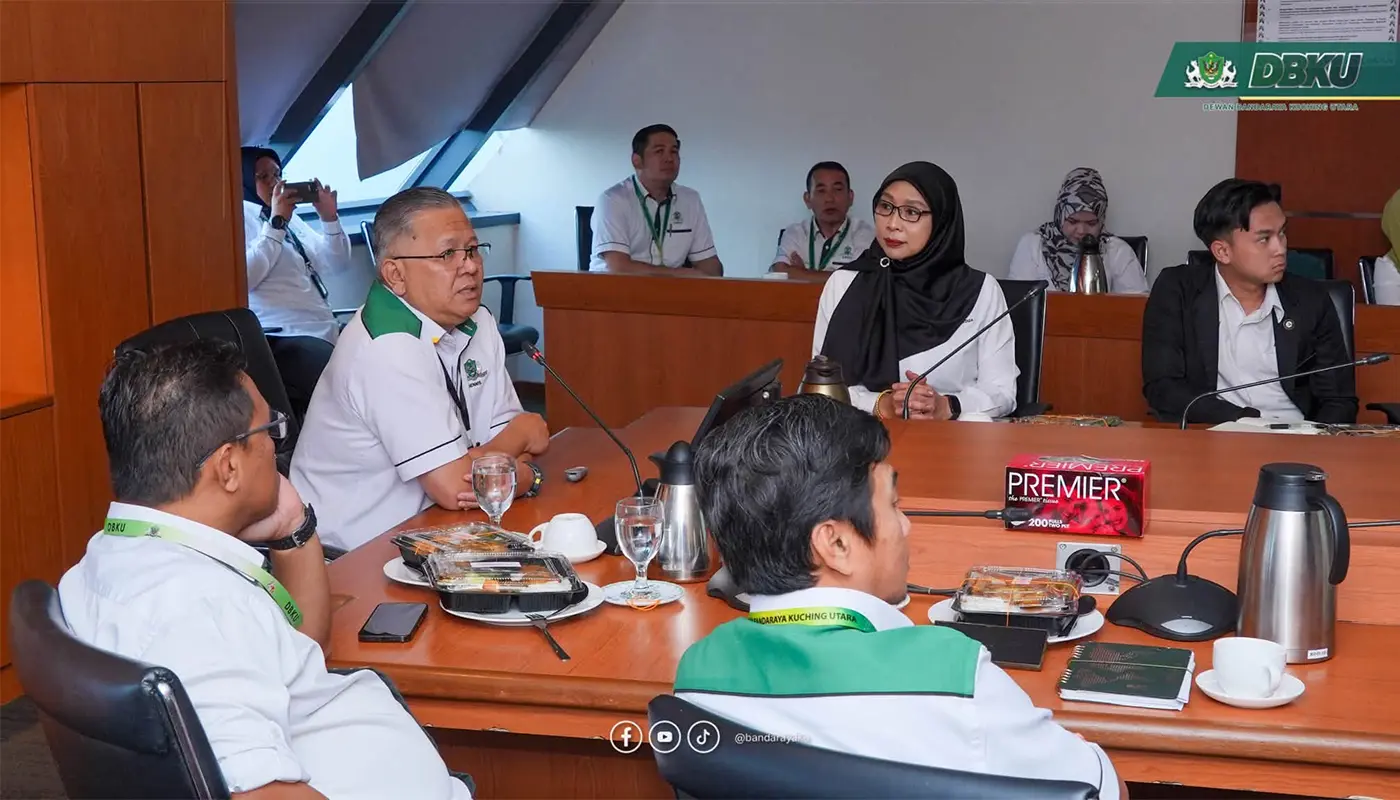
KUCHING – A significant exchange of administrative expertise took place within the state capital this week as local government bodies convened to discuss environmental compliance.

The Kuching North City Hall, commonly referred to as DBKU, welcomed a delegation from the Sarawak Timber Industry Development Corporation on Wednesday, 5 August 2026.
This official engagement was centred entirely on the operational frameworks required to maintain high ecological standards within public sector organisations.
The primary objective of this benchmarking exercise was to facilitate a transfer of knowledge regarding the Sarawak Civil Service Environmental Standard, known locally as SACSES.
As government agencies face increasing pressure to adopt sustainable methodologies, such collaborative sessions have become vital for ensuring uniformity across different departments.
The visiting team sought to understand the practical mechanisms that DBKU has successfully deployed to create a workplace that is both conducive to staff wellbeing and respectful of the natural environment.
Leading the contingent from the timber industry development body was Puan Dayang Masmolydiza binti Abang Dawi.
In her capacity as Assistant General Manager of Transformation, Innovation and Human Capital, she oversaw the fact-finding mission alongside several other officers.
Her presence underscored the strategic importance that PUSAKA places on organisational transformation and the integration of green policies into its core human capital management functions.
During the formal proceedings, the host organisation provided a comprehensive overview of their internal protocols.
Mr Dennis Achil, who serves as the Acting Deputy Director of the Corporate Services Department, was tasked with delivering the technical briefing.
He also holds the position of Chairman for SACSES at DBKU, making him the principal authority on the subject matter for the city hall.
His presentation was designed to offer transparency regarding how environmental mandates are translated into daily administrative routines.
The scope of the briefing extended well beyond mere theoretical compliance. Detailed explanations were offered concerning the management and coordination structures necessary to sustain such initiatives over the long term.
Specific attention was paid to the tangible implementation of green practices within the office setting. Furthermore, the session highlighted the continuous improvement cycles that DBKU employs to ensure they do not merely meet existing benchmarks but consistently strive to exceed them as regulations evolve.
Creating a sustainable working environment requires more than just policy documents; it demands active cultural adoption.
The discussions therefore touched upon the behavioural aspects of environmental stewardship. Both entities recognised that achieving genuine sustainability involves instilling a mindset where eco-friendly choices become second nature to civil servants.
This cultural dimension is often the most challenging aspect of institutional reform, yet it remains essential for lasting success.
The gathering also served as a platform for bilateral dialogue rather than a one-sided lecture. Representatives from both agencies were able to exchange views candidly, sharing specific challenges and triumphs encountered during their respective journeys towards certification.
Such open communication helps to identify common hurdles and allows for the development of shared solutions that can benefit the wider Sarawak Public Service.
Strengthening inter-agency cooperation is a fundamental outcome of these benchmarking visits. When organisations like PUSAKA and DBKU align their approaches to environmental governance, it creates a more cohesive public administration ecosystem.
The insights gained from this session are expected to inform future strategies at the timber corporation, whilst simultaneously validating the effective practices already established at the city hall.
Ultimately, this event reflects a broader commitment within the state civil service to modernise operations in line with global sustainability trends.
By prioritising the sharing of best practices, these bodies are ensuring that environmental responsibility is not treated as an isolated project but as an integral component of public service delivery.
The ongoing collaboration between these two distinct entities demonstrates a proactive approach to building a greener, more efficient bureaucracy for the people of Sarawak.
