



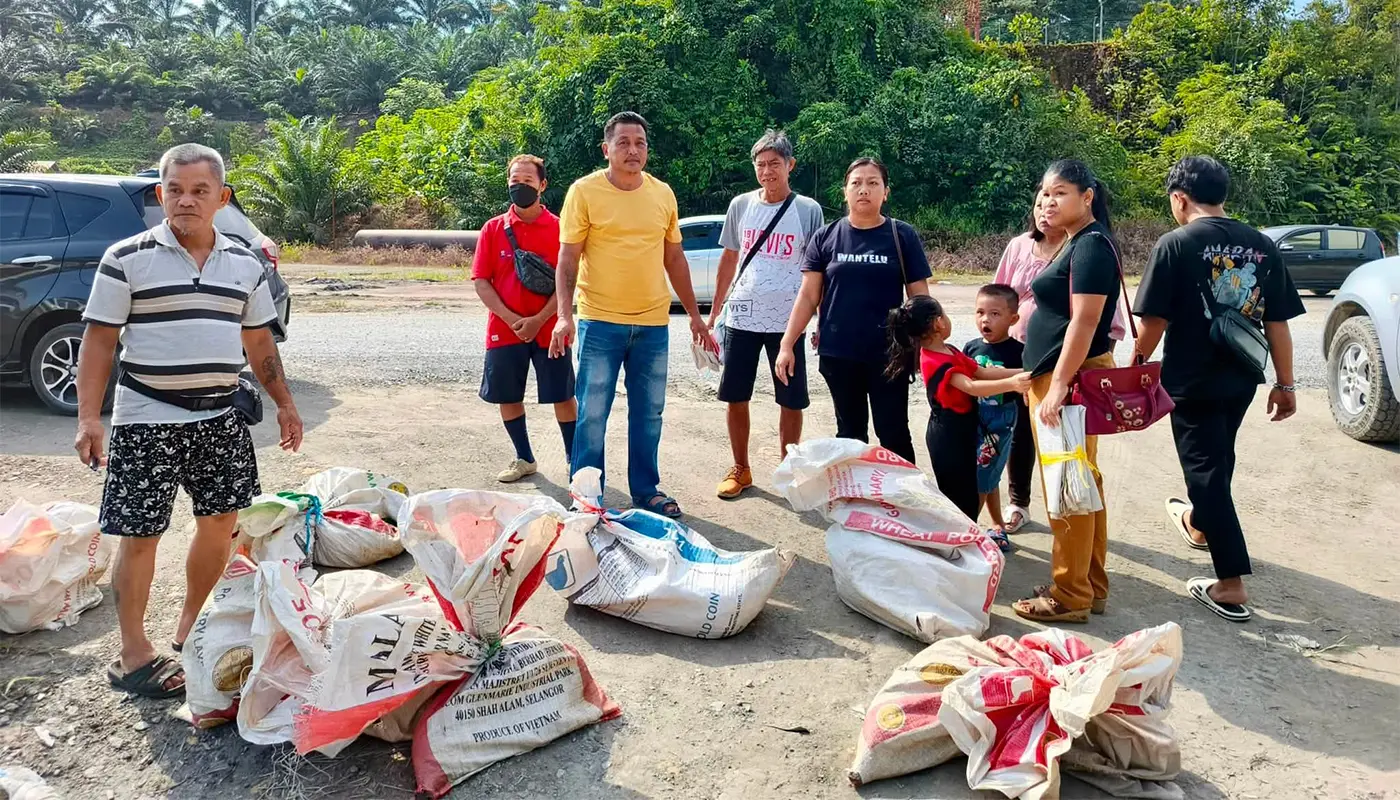
SPAOH – The Sarawak Government has intensified its efforts to revitalise the rural economy in Bukit Saban through a targeted agricultural initiative.

Eighty-one local farmers have become beneficiaries of the Economic Enhancement Program for Pig Farming, receiving a total of 162 piglets to bolster their production capabilities and household earnings.
This strategic distribution aims to restore confidence in the livestock sector following recent challenges that impacted productivity across the state.
The programme is being executed in three distinct phases throughout 2026, managed by the Bukit Saban N.37 State Assemblyman (ADUN) Service Centre.
This phased approach ensures that support is delivered consistently to eligible participants, allowing for better monitoring and sustained assistance.
The initiative represents a broader commitment to strengthening the economic resilience of rural communities by diversifying income sources and enhancing agricultural output.
Datuk Amar Douglas Uggah Embas, the Sarawak Deputy Premier and ADUN for Bukit Saban, spearheaded the introduction of this scheme.
He highlighted that the primary objective is to help farmers expand their operations, improve productivity, and secure a more stable financial future for their families.
The pig farming industry had previously suffered significant setbacks due to the global pandemic and outbreaks of African Swine Fever (ASF), which disrupted supply chains and reduced herd sizes.
To address these historical vulnerabilities, the government has coupled livestock distribution with comprehensive educational support.
Participants are required to attend training courses covering essential aspects of modern agriculture. These sessions include barn management techniques, nutritional planning, livestock healthcare, and rigorous biosecurity practices.
The goal is to equip farmers with the technical knowledge needed to manage their enterprises systematically and sustainably.
Uggah emphasised that the provision of animals is merely the starting point. He described the programme as a catalyst for broader economic growth within the district.
“This programme is not just about providing assistance but also acts as a catalyst for efforts to increase the production capacity and income of farmers. When the industry grows, the benefits are not only enjoyed by farmers but also contribute to the economic development of the area,” he stated.
The success of the initiative relies heavily on the diligence of the recipients. The Deputy Premier urged farmers to utilise the piglets as initial capital wisely, focusing on long-term business expansion rather than short-term gains.
He expressed hope that each beneficiary would strive to grow their operations, thereby generating a more reliable income stream that improves their overall standard of living.
A critical component of the training focuses on disease prevention. Given the devastating impact of ASF in previous years, strict adherence to biosecurity protocols is mandatory. Uggah warned that neglecting these measures could jeopardise the entire industry.
“Past experience has proven that disease threats can have a major impact on this industry. Therefore, compliance with biosecurity procedures, livestock health monitoring and disciplined farm management must be practiced continuously to protect the enterprises that have been developed,” he explained.
The integration of practical assistance with knowledge transfer reflects a modern approach to rural development.
By ensuring that farmers understand the scientific principles behind healthy livestock rearing, the government aims to create a self-sustaining ecosystem.
This method reduces dependency on continuous handouts and fosters a culture of professional agricultural practice.
Local agricultural experts note that such targeted interventions are crucial for post-pandemic recovery. The pig farming sector remains a vital source of protein and income for many rural households in Sarawak.
Restoring its viability not only supports individual families but also contributes to food security at the regional level.
The Bukit Saban initiative serves as a model for other districts facing similar economic hurdles. By combining resource allocation with education, the state government demonstrates a holistic strategy for poverty alleviation and economic empowerment.
As the first phase of distributions concludes, attention now turns to the monitoring of herd health and the application of learned skills in daily farm management.
Farmers involved in the scheme have reported increased optimism regarding their future prospects. With access to quality stock and expert guidance, they are better positioned to navigate market fluctuations and biological risks.
The government’s ongoing commitment to this sector underscores its recognition of agriculture as a cornerstone of Sarawak’s rural economy.
