



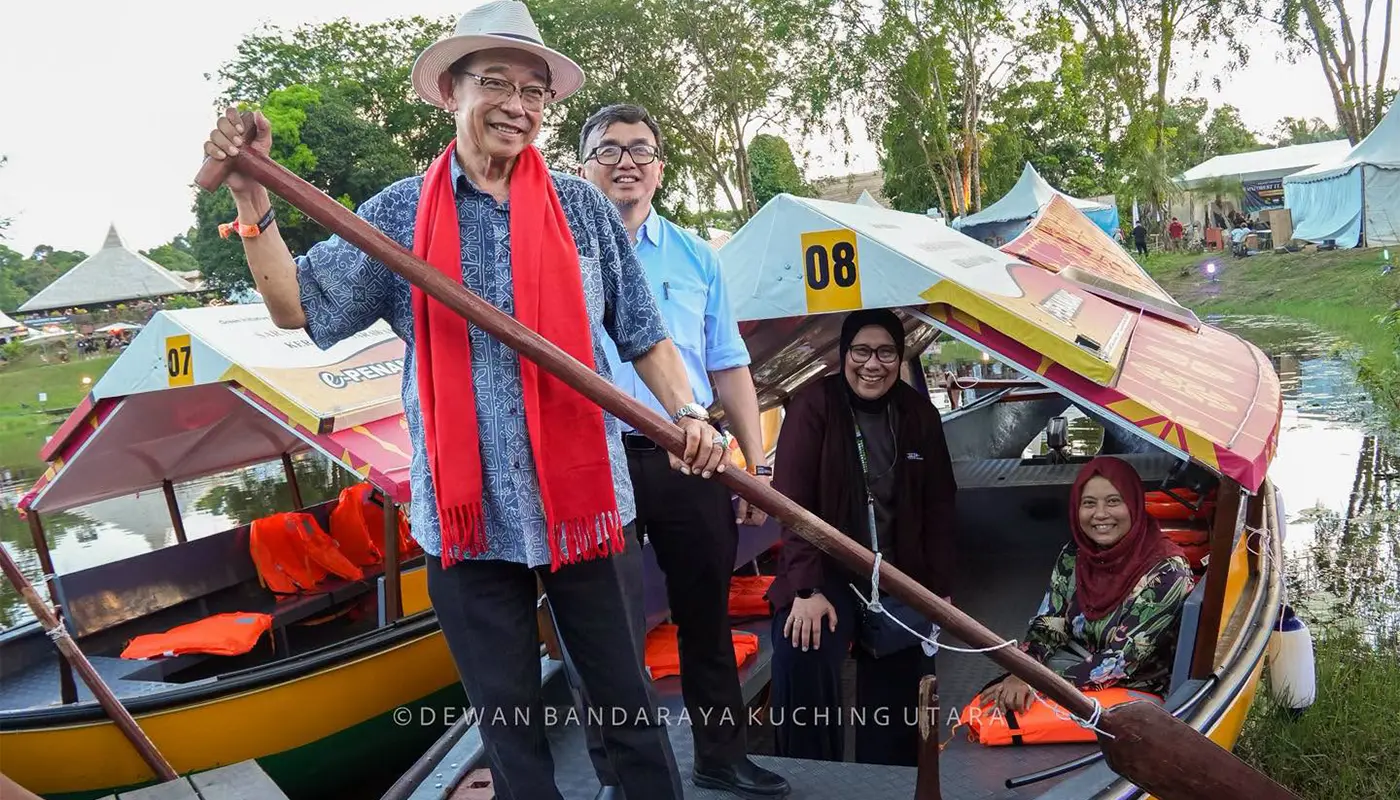
KUCHING – Kuching North City Hall (DBKU) has taken part in the Green Ruai exhibition at the Rainforest World Music Festival (RWMF) 2026, highlighting its E-Penambang initiative as part of efforts to promote sustainable urban mobility.

The festival, held from 26 to 28 June, is hosted at the Sarawak Cultural Village and continues to attract international attention for its blend of music, culture and environmental awareness.
DBKU’s participation, in collaboration with the Sarawak Tourism Board, reflects its commitment to advancing Kuching’s green city agenda.
The E-Penambang project, which introduces an environmentally friendly alternative to traditional river transport, was showcased to festival visitors as an innovative solution for reducing carbon emissions and supporting sustainable travel.
The Green Ruai exhibition serves as a platform for organisations to present eco-friendly initiatives, aligning with the festival’s sustainability theme.
DBKU’s involvement demonstrates its ongoing efforts to introduce smart city concepts and raise public awareness about the importance of adopting sustainable practices in everyday life.
In recognition of its contribution, DBKU received a Green Ruai Certificate of Appreciation. The certificate was presented by Sarawak’s Minister of Tourism, Creative Industries and Performing Arts, and Minister of Youth, Sports and Entrepreneur Development, YB Dato Sri Haji Abdul Karim bin Rahman Hamzah. The acknowledgement underscores DBKU’s role in supporting Sarawak’s broader environmental and tourism strategies.
Officials noted that the E-Penambang initiative is part of a wider programme to modernise Kuching’s transport system while preserving its cultural heritage.
By integrating sustainability into traditional modes of travel, DBKU aims to balance innovation with community identity.
The Rainforest World Music Festival has long been recognised not only for its diverse musical performances but also for its emphasis on environmental responsibility.
The Green Ruai exhibition complements this vision by encouraging organisations to showcase projects that contribute to ecological balance and sustainable development.
DBKU hopes its participation will inspire greater public involvement in sustainability efforts and strengthen Kuching’s reputation as a smart, green city.
The initiative is expected to contribute to long-term goals of reducing pollution, improving mobility, and enhancing the quality of life for residents and visitors alike.
