



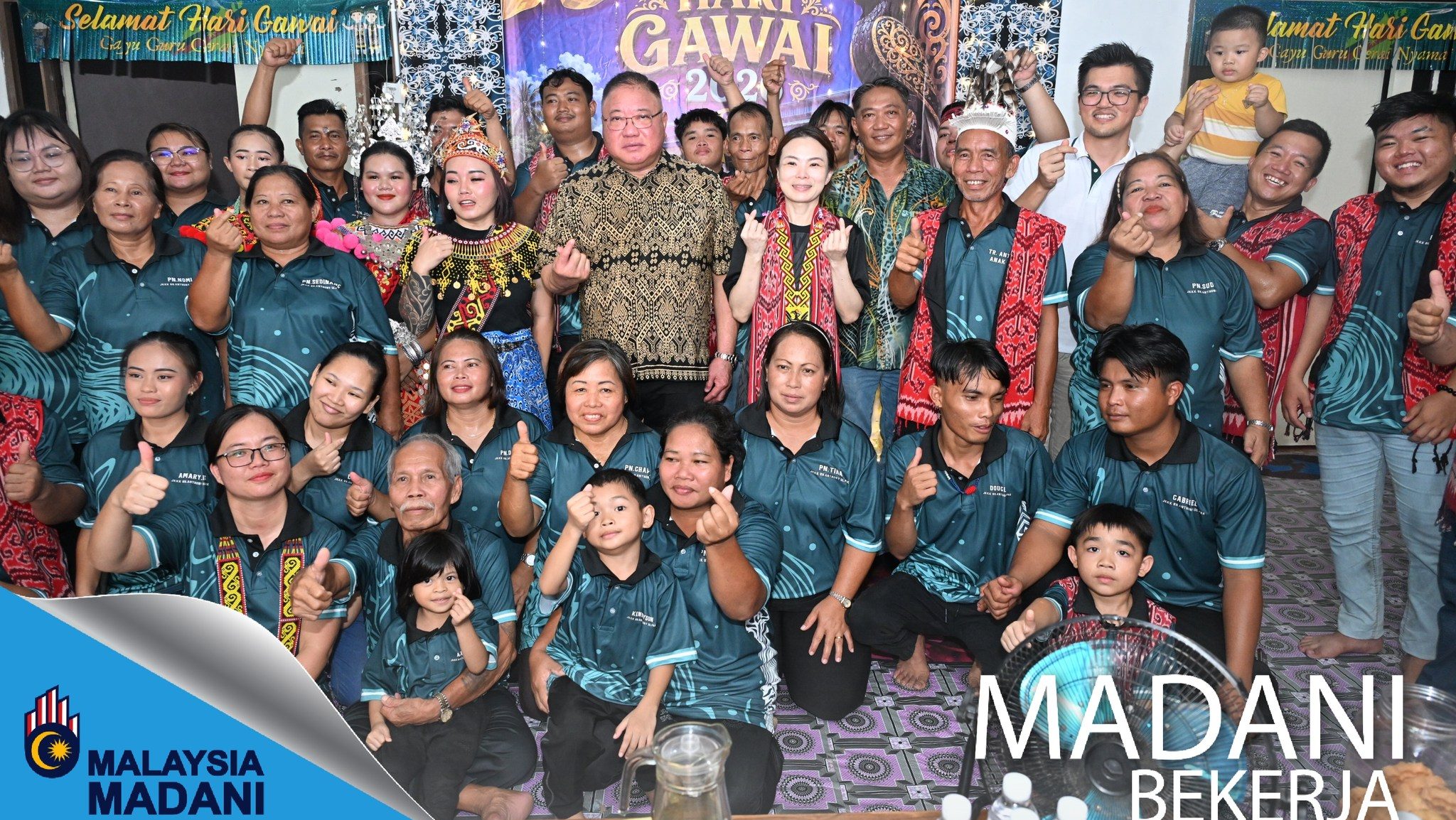
KUCHING: During the ongoing Hari Gawai celebrations, rural outreach visits to longhouse communities in Sarawak have highlighted stronger engagement between leaders and residents, as well as the continued importance of listening to grassroots voices.

The second day of the programme covered several longhouses, including Rh Agatha Ak Menchol, Rh Janet Chiya Ak Serom, Rh Nancy Ak Lanju, and Rh Anthony Ak Saba. The visits were carried out as part of a broader effort to celebrate the Gawai festival while also engaging directly with rural communities on their needs and development concerns.
Among those present and taking part in the engagement was YB Dato’ Seri Tiong King Sing, Minister of Tourism, Arts and Culture, Member of Parliament for Bintulu, and Sarawak ADUN N.52 Dudong. His presence reflected continued attention to rural development issues alongside cultural and community-based programmes during the festive season.
Residents took the opportunity to raise several important matters during the meetings, particularly related to rural road conditions, water supply reliability, and improvements to basic community infrastructure. These issues were noted for further review and follow-up with the relevant authorities and community leaders to ensure proper action is taken.
Hari Gawai, celebrated by the Dayak community, remains a significant harvest festival that goes beyond tradition and celebration. Hari Gawai continues to serve as an important platform for strengthening family bonds, cultural identity, and unity among rural communities across Sarawak.
The programme also placed strong emphasis on the role of women in community development. Women were encouraged to take active roles in organising community activities and to participate in training and exchange programmes that can help bring new knowledge and skills back to their respective longhouses. This approach is seen as essential in supporting inclusive and balanced rural development.
Cultural elements were also a key highlight of the visits, with traditional Ranyai ceremonies and cultural performances showcasing the rich heritage of the Dayak community. Participation from all age groups demonstrated the strong commitment to preserving cultural traditions that continue to define rural identity in Sarawak.
Many Sarawakians working or studying outside their hometowns also return during the Gawai season to celebrate with their families in longhouses. This annual homecoming strengthens family ties and reinforces the values of unity, respect, and togetherness within the community.
Overall, the Gawai longhouse visits underline a consistent message that development is not only about physical infrastructure, but also about maintaining strong human connections and cultural continuity. With continued cooperation between leaders and rural communities, Sarawak is expected to move forward in a more inclusive and sustainable direction.
