



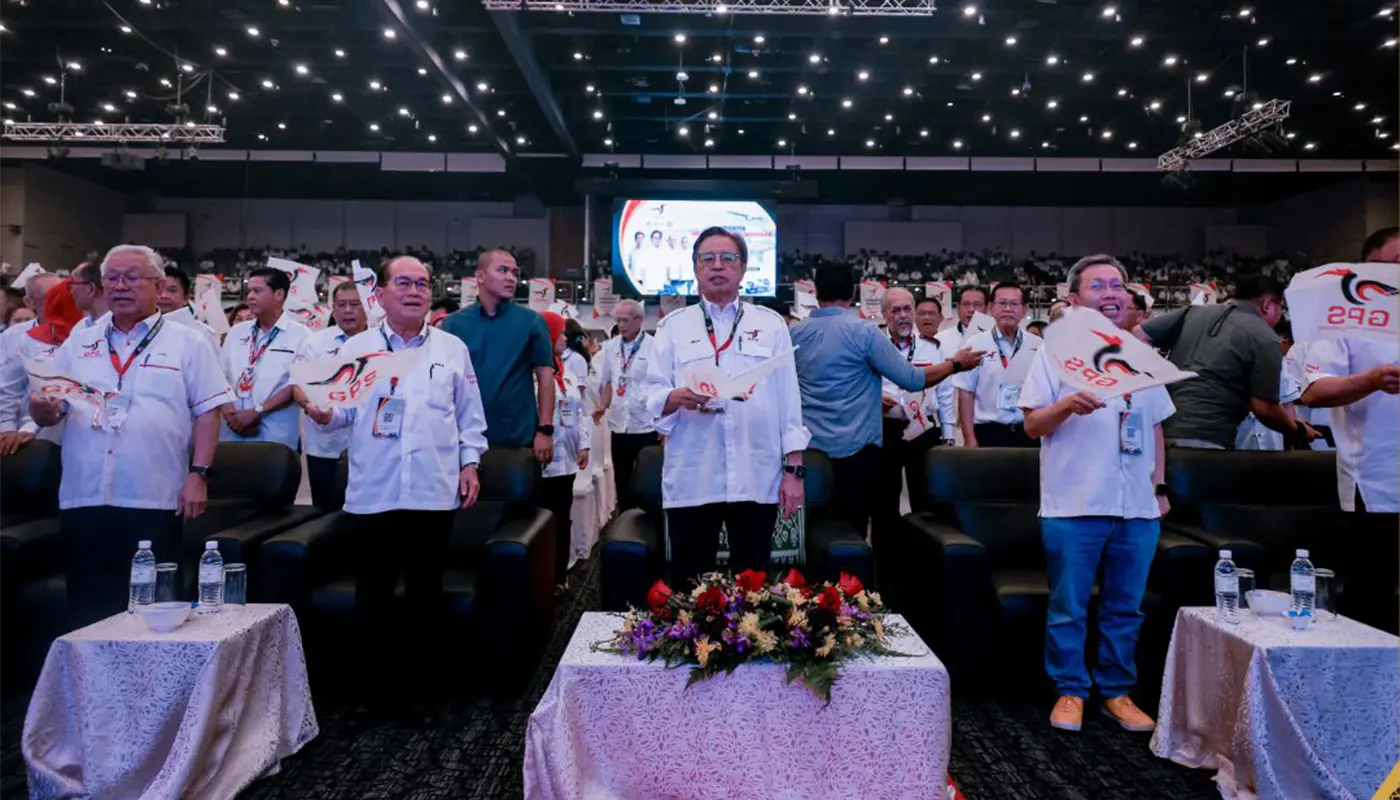
KUCHING – The long-debated matter concerning the appointment of judges in Sabah and Sarawak has been formally resolved, with leaders emphasising that the process should no longer be subject to dispute.

Speaking at the closing of the Gabungan Parti Sarawak (GPS) 2026 Convention at the Borneo Convention Centre Kuching, Premier of Sarawak, Datuk Patinggi Tan Sri (Dr) Abang Haji Abdul Rahman Zohari bin Tun Datuk Abang Haji Openg, clarified that the issue had been settled at the Technical Committee level under the Malaysia Agreement 1963 (MA63).
He noted that while some quarters continue to raise questions, the consensus reached ensures that the matter is no longer open for debate.
“Any appointment of judges involving the Sabah and Sarawak courts must take into account the views of both states, in line with existing practices. It has become our custom that there must be consultation. The matter has been settled; it has been resolved in the MA63 committee,” he said.
The Premier reiterated that while the Yang di-Pertuan Agong retains the authority to appoint judges, the consultation process with the Yang di-Pertua Negeri of each state remains essential.
This mechanism, he explained, safeguards the interests of Sabah and Sarawak and reflects the unique judicial structures of both states, which maintain their own high courts.
“Judges are appointed by the Yang di-Pertuan Agong, but the names need to be referred to the Yang di-Pertua Negeri. We have the Sabah and Sarawak High Courts, so the consultation must be there,” he added.
Legal experts have previously highlighted that the Malaysia Agreement 1963 provides constitutional guarantees for Sabah and Sarawak, ensuring that their judicial systems retain distinctive features compared to other states in Malaysia.
The reaffirmation of this process underscores the importance of respecting the autonomy granted under MA63, which has been a cornerstone of Sarawak’s political discourse for decades.
The Premier further urged that the matter should not be revisited, stressing that consensus has already been achieved.
“We don’t need to ask about this matter again because it has been resolved. Don’t bring up things that have already been settled,” he said.
He also emphasised that GPS’s political struggle is firmly rooted in legal frameworks and historical agreements.
“We are fighting within the parameters of the law and agreements. We are fighting with facts,” he stated, reinforcing the coalition’s commitment to defending Sarawak’s rights through lawful means.
Observers note that the resolution of this issue is significant in maintaining stability and clarity within the judiciary of both states.
It also reflects broader efforts to strengthen Sarawak’s position within the federation, ensuring that its legal and constitutional rights are upheld.
The announcement comes at a time when Sarawak continues to assert its autonomy in various sectors, including education, healthcare, and infrastructure development.
The reaffirmation of judicial consultation is seen as another step in consolidating Sarawak’s role within Malaysia while preserving the principles of MA63.
