



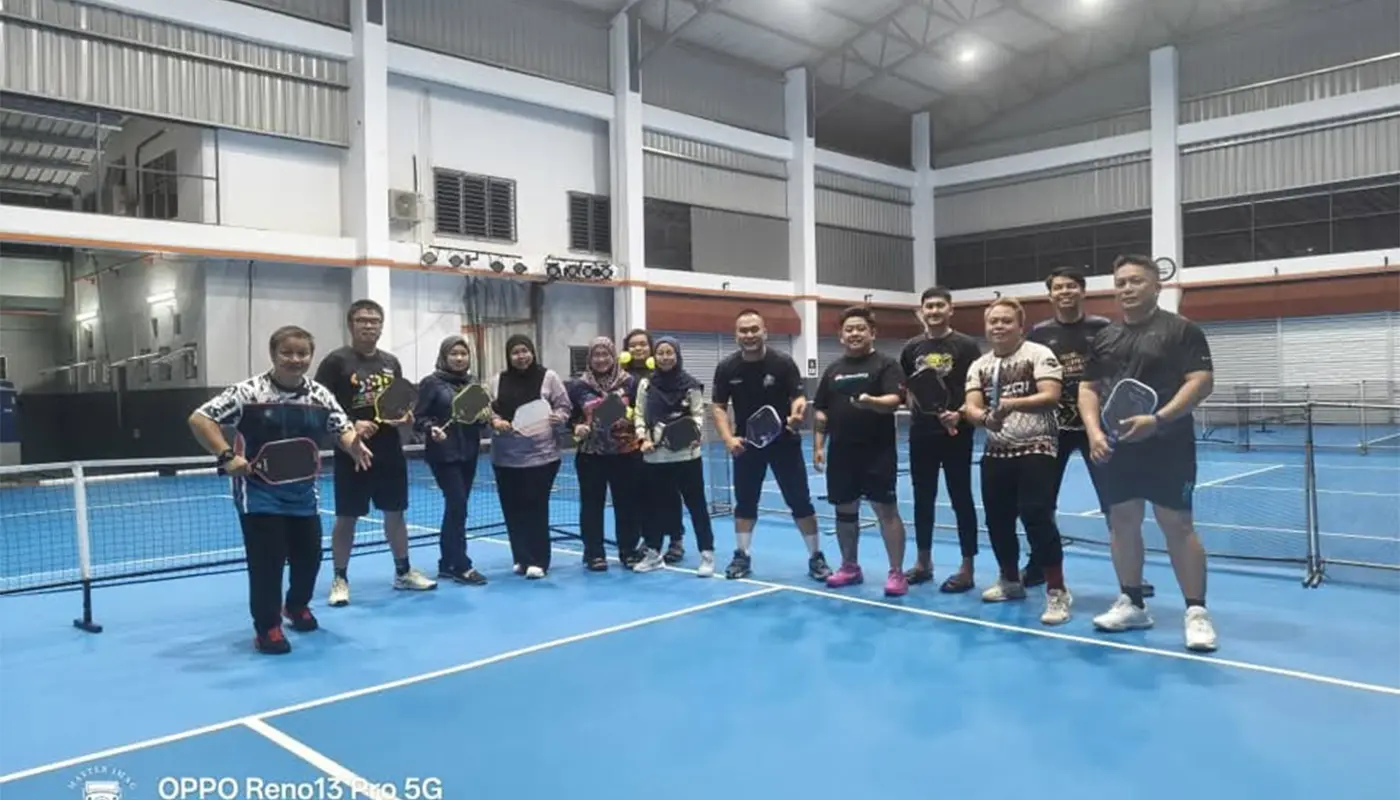
KAPIT – A novel approach to community engagement and drug prevention was showcased in Kapit recently, as local authorities joined forces with a sports club to host a recreational pickleball event.

The initiative, held on Friday evening at the Lighthouse of Hope Pickleball Court, sought to blend physical activity with vital public health messaging.
The event was organised by the Sibu District Anti-Drug Squad Committee, widely known as SKUAD, in close partnership with several key stakeholders.
These included the Sibu District office of the National Anti-Drug Agency (AADK), the Sibu Branch of the National Security Council (MKN), and the Rizqi Pickleball Club (RPC).
By bringing together government agencies and civil society groups, the organisers aimed to create a unified front against substance abuse through positive community interaction.
Nasir Mohammad, who serves as the active SKUAD coordinator, played a central role in orchestrating the programme. He brought together a diverse group of participants, including SKUAD members, AADK officers and staff, MKN representatives, and members of the local pickleball community.
This mix of officials and residents helped to break down formal barriers, fostering an environment where open dialogue could take place naturally.
The primary objective of the gathering was to encourage healthy lifestyle choices among residents. However, beyond the physical benefits of sport, the event served as a strategic platform for delivering drug prevention messages.
Rather than relying on traditional lectures or stern warnings, the agencies adopted a friendly and approachable method. This soft-power strategy is increasingly recognised as an effective way to reach wider audiences, particularly those who might be resistant to conventional enforcement-led campaigns.
A significant portion of the evening was dedicated to a “Leisure Chat” session. This informal dialogue allowed agency representatives to connect with community members on a personal level.
Coupled with the AADK’s “Santuni Komuniti” activities, which focus on community care and outreach, the sessions were designed to strengthen the bonds between the authorities and local residents.
Building trust is often cited as a crucial first step in any successful social intervention, and this event provided ample opportunity for such relationship-building.
Several senior figures attended the event to show their support for the collaborative effort. Azimah Marsid, the District Head of AADK, was present alongside Nur Syahirah Samsul, the Branch Head of MKN.
Also in attendance was Mohammad Mostapha Lasot, who holds the dual roles of Deputy Chairman of SKUAD and Chairman of the Rizqi Pickleball Club.
Their presence underscored the high level of commitment from both the regulatory bodies and the sporting community to address social issues proactively.
The choice of pickleball as the medium for this campaign is noteworthy. As one of the fastest-growing sports globally, it appeals to a broad demographic, from young adults to older citizens. Its inclusive nature makes it an ideal vehicle for community building.
By associating drug prevention with a fun, social, and healthy activity, the organisers hope to shift the narrative away from fear and towards empowerment.
This collaborative model reflects a growing trend in public health strategy, where multi-agency partnerships are leveraged to tackle complex social ills.
The involvement of the National Security Council highlights the seriousness with which drug-related issues are viewed, not just as health problems but as matters affecting national stability and community safety.
Meanwhile, the participation of the Rizqi Pickleball Club demonstrates how grassroots organisations can play a pivotal role in amplifying government messages.
The ultimate goal of such initiatives is to curb the spread of social ills and create a community environment that is resilient against the threat of drugs.
By empowering residents through recreation and education, agencies like SKUAD and AADK are working towards a long-term solution that relies on community strength rather than solely on enforcement.
As the event concluded, the atmosphere remained positive and engaging. Participants left not only with the physical benefits of exercise but also with a renewed sense of community spirit.
The success of this programme may well serve as a blueprint for future collaborations in Kapit and beyond, proving that sport can indeed be a powerful tool for social change.
The continued commitment of these agencies suggests that more such initiatives are likely to follow, keeping the momentum alive in the fight for a drug-free society.
