



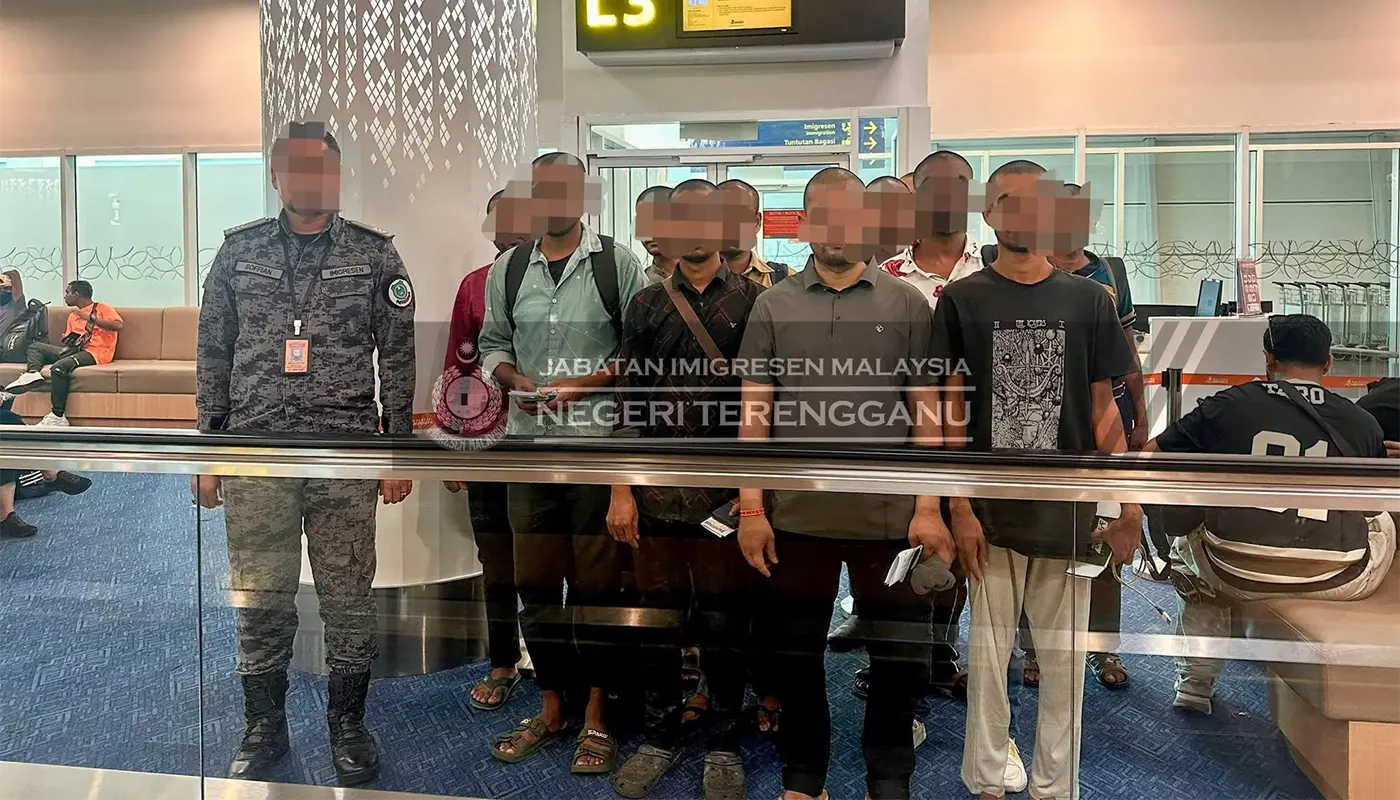
KUALA LUMPUR – The Malaysian Immigration Department has completed the deportation of 87 foreign detainees through Kuala Lumpur International Airport (KLIA) on 10 July 2026, underscoring its commitment to enforcing immigration laws and safeguarding national security.

The detainees, aged between 18 and 57, were escorted from the Ajil Immigration Depot in Terengganu by the Transfer Unit with support from the depot’s control team.
Authorities confirmed that all individuals had completed their legal processes, served their sentences, and were subsequently blacklisted under the Immigration Act before being repatriated.
The group comprised 82 men and five women, with the majority being Indonesian nationals (62). Others included 13 Bangladeshis, 7 Pakistanis, 2 Palestinians, 1 Indian, 1 Thai, and 1 Filipino.
Officials emphasised that the deportation was carried out in an orderly and secure manner to ensure compliance with Malaysian law.
This operation comes amid intensified immigration enforcement across Malaysia. Earlier in July, the Immigration Department detained 503 foreigners nationwide in a large-scale crackdown targeting overstayers and undocumented workers.
In Kuala Lumpur alone, authorities recorded 845 charges and RM10.04 million in compounds during the first half of 2026, highlighting the scale of violations detected.
Recent raids also uncovered syndicates using luxury condominiums in Kuala Lumpur as transit hubs for undocumented migrants.
Ten Bangladeshi nationals were arrested in one such operation, with officials revealing that migrants were charged between RM700 and RM1,500 for temporary accommodation before being moved to their destinations.
These findings underline the challenges faced by enforcement agencies in tackling organised networks facilitating illegal entry.
Malaysia’s deportation framework is governed by the Immigration Act 1959/63, which empowers authorities to remove individuals who overstay, enter illegally, or commit offences deemed harmful to public order.
Deportation typically follows a structured process involving detention, investigation, issuance of deportation orders, and coordination with foreign embassies for repatriation.
The latest transfer also coincides with ongoing bilateral discussions between Malaysia and Indonesia on prisoner repatriation agreements.
Both governments recently reached a principle understanding to formalise cooperation on returning nationals serving sentences abroad, reflecting a broader regional effort to manage cross-border legal and immigration issues.
Officials from the Terengganu Immigration Department reiterated their commitment to conducting deportations in a safe and prudent manner.
They stressed that such measures are vital to protect Malaysia’s sovereignty, uphold the rule of law, and maintain public safety.
The department has assured that enforcement operations will continue, targeting both undocumented migrants and employers who shelter or hire them.
Authorities have urged the public to provide information on suspected immigration offences, reinforcing that compliance with immigration laws is essential for national stability.
