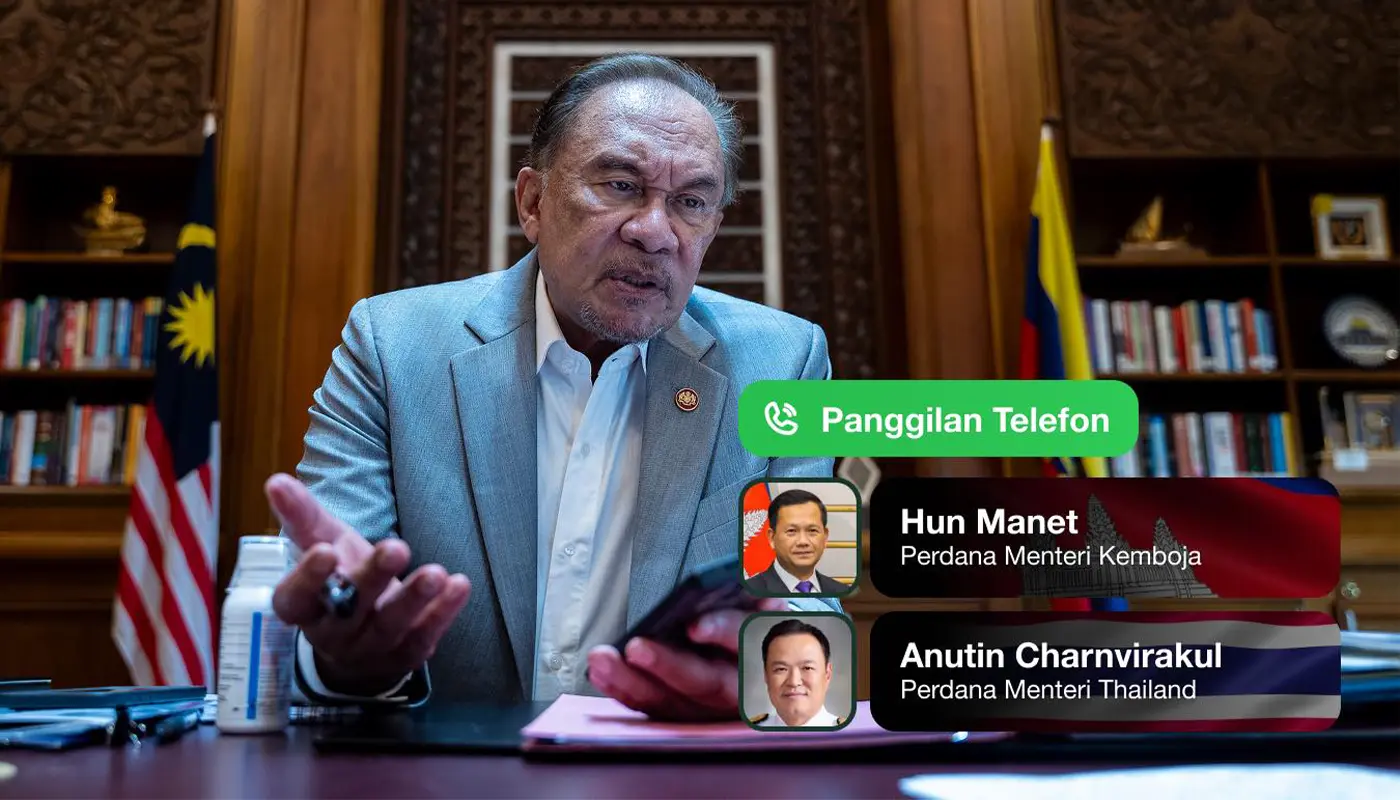
Malaysia’s Prime Minister Anwar Ibrahim has stepped in to mediate as clashes between Cambodia and Thailand intensify along their disputed frontier.
Fresh fighting erupted on 8 December across multiple border points, with both sides accusing each other of violating a fragile truce brokered earlier this year.
Thai forces confirmed they had launched air strikes against Cambodian positions, while Phnom Penh alleged that Thai troops had targeted civilian areas.

The renewed hostilities have already displaced more than half a million people, with casualties reported on both sides.
In a statement yesterday, Anwar Ibrahim revealed he had spoken directly with Cambodian Prime Minister Hun Manet and Thai Prime Minister Anutin Charnvirakul.

He praised both leaders for their “openness and willingness” to continue negotiations, stressing that dialogue was essential to prevent misunderstandings that could escalate into wider conflict.
“Malaysia will continue to support peaceful dialogue, solutions grounded on international law, and strengthened regional cooperation to safeguard the stability and security of our shared region,” Anwar said.
The border dispute, rooted in colonial-era maps and contested temple sites, has flared repeatedly over the past decades.
A five-day battle in July killed more than 40 people and displaced hundreds of thousands, before a ceasefire was brokered by international mediators including Anwar and US President Donald Trump. That truce has now collapsed, with artillery, drones, and air raids reported in recent days.
Cambodia has signalled readiness for immediate talks, with a senior adviser to Hun Manet stating the country was “ready at any time” to sit down with Thailand.
However, Thai officials have insisted that Cambodia must first demonstrate a commitment to de-escalation. Prime Minister Anutin has vowed to continue military operations “to defend sovereignty and protect public safety”.
Regional observers warn that domestic political pressures in both countries are fuelling the crisis, making compromise difficult.
Analysts note that the violence risks destabilising ASEAN’s broader agenda for regional security, particularly as Malaysia currently chairs the bloc.
For Sarawak and Malaysia, the conflict underscores the importance of ASEAN-led diplomacy in preventing instability from spilling across borders.
Anwar’s intervention highlights Malaysia’s role as a mediator in Southeast Asia, reinforcing its commitment to peace and regional cooperation.
While no definitive resolution has yet been reached, sustained diplomatic engagement has so far prevented the clashes from spiralling into a larger war.
The coming days will test whether dialogue can overcome entrenched mistrust and nationalist sentiment on both sides.
Sources: Anwar Ibrahim FB Page, Sarawak Daily