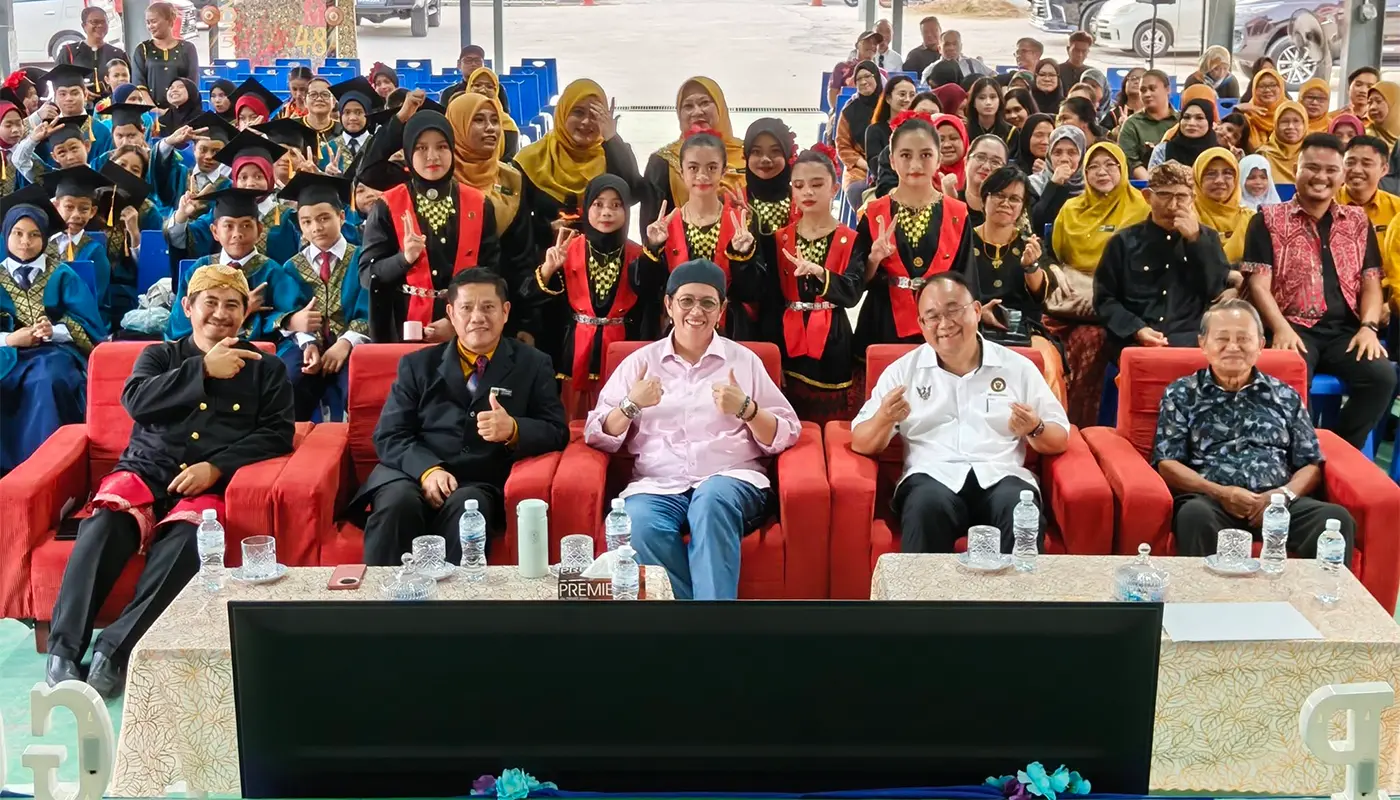
MUKAH – Educational facilities at Sekolah Kebangsaan (SK) Kampung Petanak have received a major boost following a contribution of RM390,000 from Deputy Minister of Economy and Mukah Member of Parliament, Dato Hanifah Hajar Taib.
The allocation, channelled through the Rural Transformation Project (RTP) and the People-Friendly Project (PMR), includes RM350,000 for the construction of a new multipurpose hall and RM40,000 for new furniture such as chairs and tables to improve student comfort. The new facility has been named the SK Kampung Petanak Laila Taib Hall.
Speaking at the handover ceremony, Dato Hanifah reaffirmed her commitment to prioritising educational development in Mukah.
“It is hoped that facilities such as the new hall and furniture will provide comfort to school staff and instil the spirit of students to continue to gain knowledge,” she said. She added that rural education would continue to receive support to ensure the younger generation has access to better learning opportunities.
The new hall is expected to serve as a central hub for school activities and community events. Ramlan Ali, President of the Parent-Teacher Association (PIBG), expressed gratitude on behalf of the school community, noting that the project fulfilled a long-standing aspiration for a safer and more comfortable space.
“The multipurpose hall will not only be the heart of organising school activities, but will also be a centre for community activities that will benefit the entire Kampung Petanak community,” he said.
The initiative also received support from Tellian Assemblyman Royston Valentine, alongside contributions from various stakeholders who helped complete the project.
The ceremony was attended by Mukah District Officer Peleadzman Ahip, Headmaster Afian Bokhan, and Pemanca Mohamad Jali Kawi, reflecting strong collaboration between government leaders, educators, and the local community.
SK Kampung Petanak, located in Mukah, has long been a vital institution for the surrounding community. The addition of the Laila Taib Hall and new furniture is expected to enhance the learning environment, provide a venue for cultural and social activities, and strengthen ties between the school and residents.
This development forms part of Sarawak’s wider strategy to improve rural education infrastructure, ensuring that schools in smaller towns and villages are not left behind in the state’s progress.
By investing in facilities that benefit both students and the wider community, the government aims to foster inclusivity and long-term growth.