



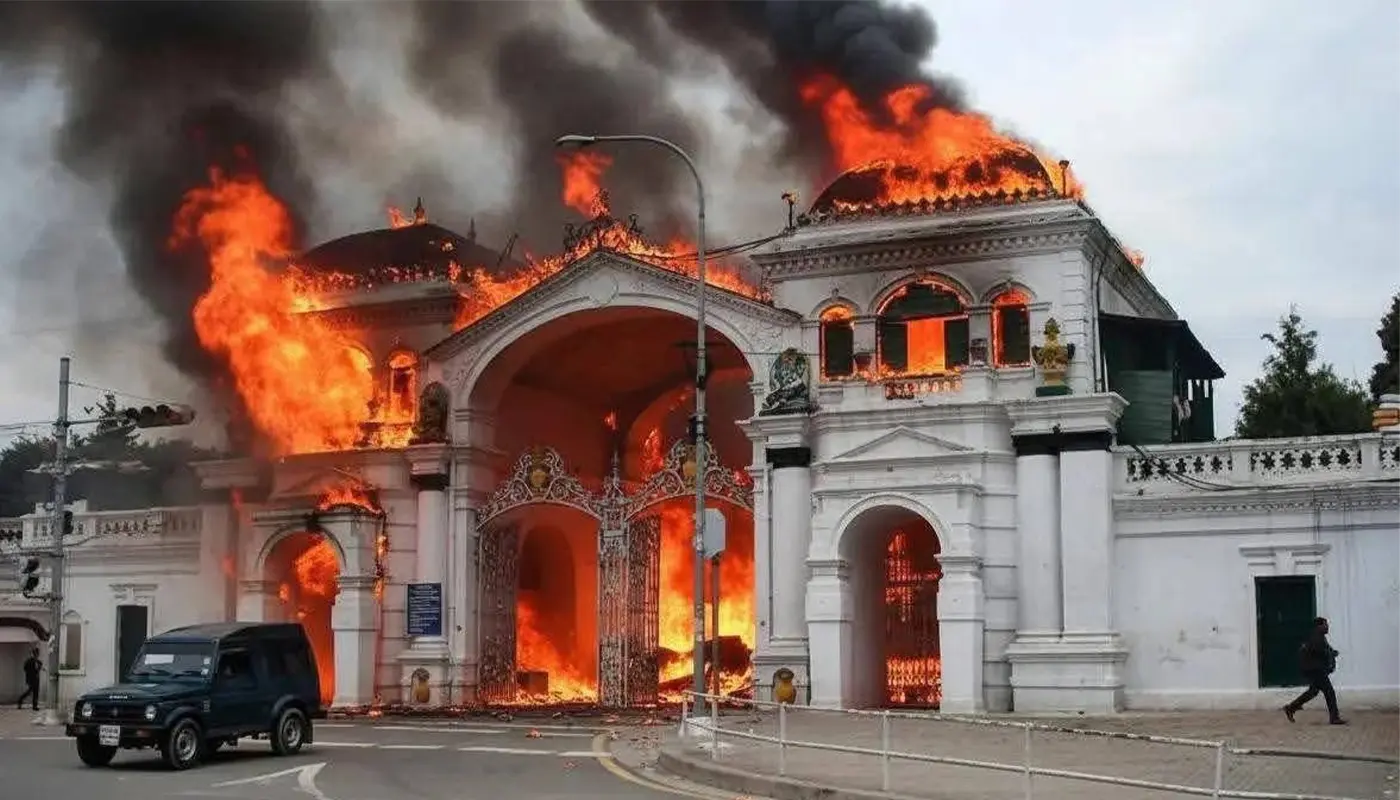
KATHMANDU – Nepali Prime Minister KP Sharma Oli has resigned following deadly anti-corruption protests that saw parliament set ablaze and widespread violence across the Himalayan nation.

The unrest, led largely by Generation Z activists, resulted in at least 25 deaths and over 600 injuries, marking the country’s worst civil strife in decades.
The protests erupted initially in response to a government ban on 26 social media platforms, including Facebook, WhatsApp, and Instagram, for non-compliance with registration requirements.
Although the ban was swiftly reversed, it ignited deeper frustrations over systemic corruption, economic inequality, and youth unemployment, which hovers around 20%.
Demonstrators particularly targeted the perceived privilege of political elites’ children, symbolized by the trending hashtag #NepoKids, which contrasted politicians’ lavish lifestyles with widespread economic struggles.
Violence escalated rapidly on September 9–10, as protesters defied curfews and clashed with security forces in Kathmandu. Police used live ammunition, rubber bullets, and tear gas, leading to significant casualties.
Key government buildings, including the Singha Durbar parliamentary complex and the Supreme Court, were set on fire, along with the private residences of several ministers and former Prime Minister Sher Bahadur Deuba.
In his resignation letter, Oli stated he stepped down to “facilitate a constitutional solution” to the crisis. The army has since imposed an indefinite curfew and deployed troops to restore order, while protest leaders have proposed former Supreme Court Chief Justice Sushila Karki to head an interim government.
International observers, including the UN and human rights groups, have condemned the violence and called for investigations into the use of lethal force.
Nepal, which transitioned to a republic in 2008 after abolishing its monarchy, has faced persistent political instability and corruption.
The current upheaval underscores deep-seated grievances among youth, who demand accountability and economic opportunities beyond the reliance on remittances from abroad, which constitute over a third of Nepal’s GDP.
Sources: Al Jazeera, Reuters, Local news media
