



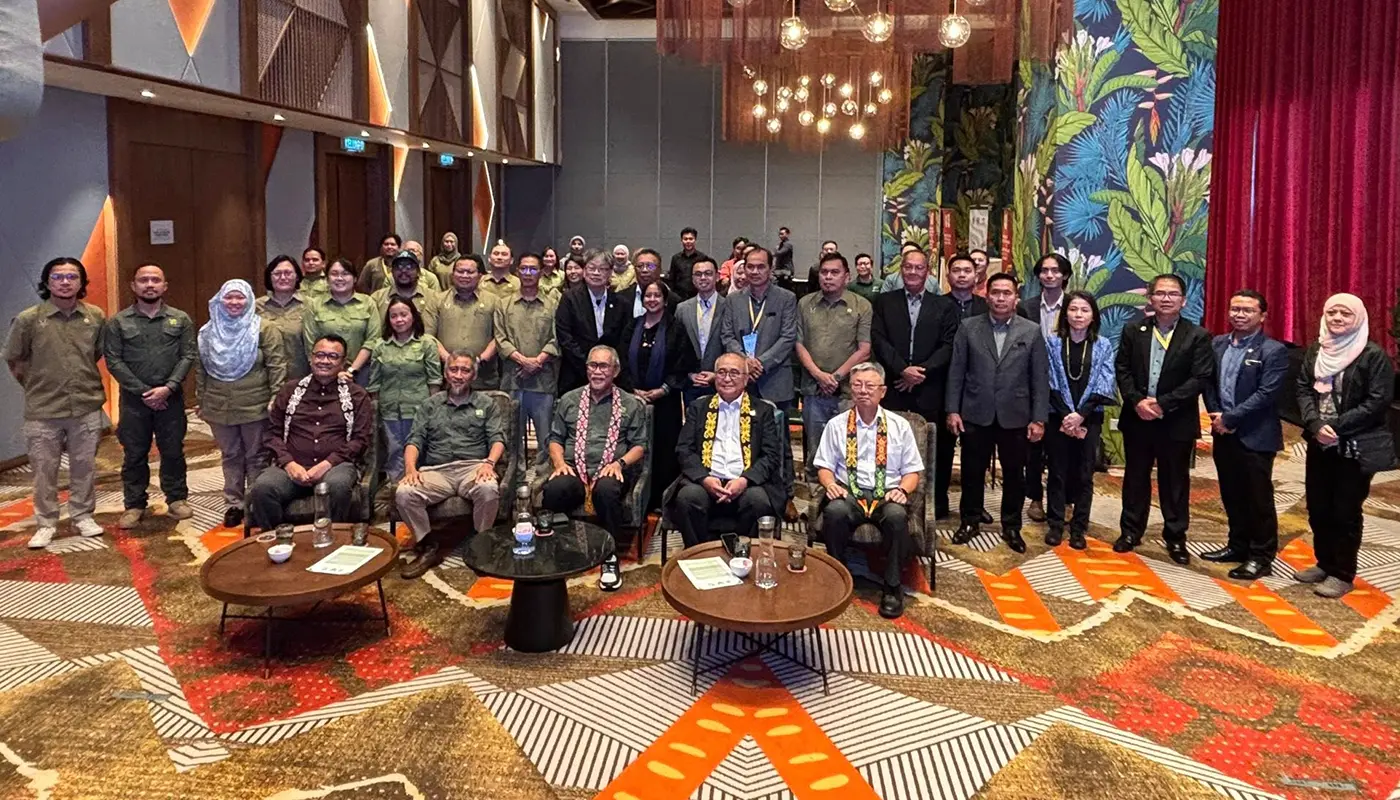
MIRI – The Study Tour and International Workshop on Integrated Disaster Risk Management and Climate Adaptation, jointly organised by Sarawak Forestry Corporation (SFC) and ICOMOS Malaysia, concluded successfully at Niah National Park on 20 April 2026.

Held over three days from 18 to 20 April, the programme brought together experts, partners, and stakeholders to explore strategies for protecting the Niah Caves Complex and surrounding areas.
Through a combination of presentations, discussions, and site visits, participants examined the challenges posed by disaster risks and climate change while sharing practical approaches to sustainable site management.
The workshop highlighted several key objectives. Technical sessions focused on identifying vulnerabilities at the Niah Caves Complex, while discussions centred on developing effective prevention and response measures.
Participants emphasised that safeguarding Niah requires more than conservation alone, pointing to the importance of planning, visitor management, community involvement, and inter-agency cooperation.
The event also underscored the need for resilience in heritage management, with experts stressing that climate adaptation strategies must be integrated into long-term planning.
By combining scientific knowledge with local insights, the workshop aimed to strengthen the ability of agencies and communities to respond to environmental challenges.
On the final day, the closing ceremony was officiated by YB Datuk Haji Len Talif Salleh, Deputy Minister of Urban Planning, Land Administration and Environment Sarawak, alongside Miri City Council Mayor YB Adam Yii.
Their presence reflected the government’s support for collaborative efforts to protect Sarawak’s cultural and natural heritage.
SFC expressed gratitude to ICOMOS Malaysia, speakers, organisers, and participants for their contributions, noting that the workshop’s success was due to strong teamwork and shared commitment.
Officials reiterated that while the programme has ended, the work of protecting Niah National Park continues, with ongoing initiatives to ensure its preservation for future generations.
The workshop reinforced the principle that heritage protection is a collective responsibility, requiring cooperation across agencies, communities, and international partners.
By fostering dialogue and practical solutions, the event marked an important step in strengthening disaster risk management and climate adaptation for one of Sarawak’s most iconic heritage sites.
