



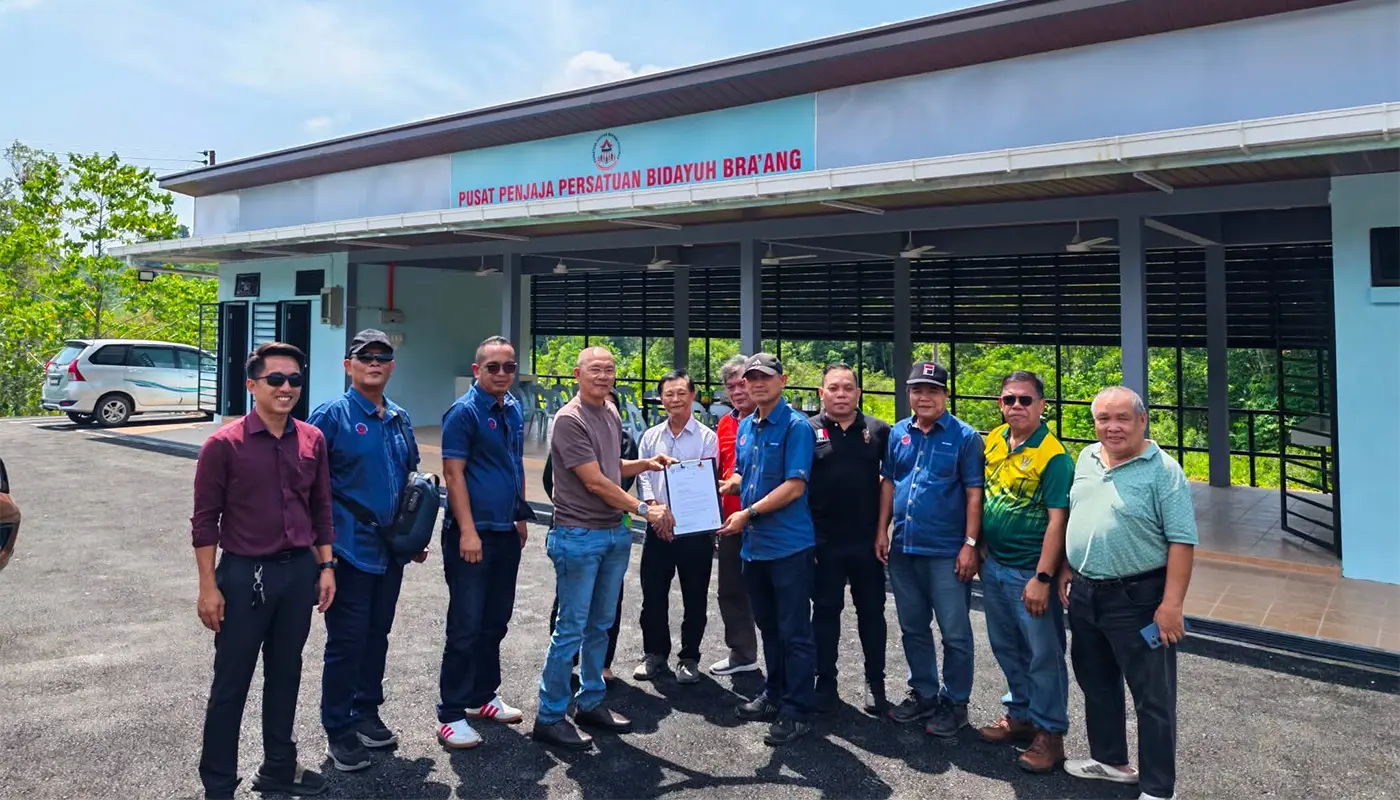
PADAWAN – A new commercial facility designed to support local micro-entrepreneurs has officially been completed in the Padawan district, marking another milestone in the state’s ongoing efforts to revitalise rural economies. The Bra’ang Padawan Bidayuh Association Hawker Centre, constructed under the Mambong State Constituency Rural Transformation Project (RTP), is now ready for occupancy.

The project, valued at RM500,000, provides a modern and organised space for hawkers who previously operated in less structured environments. By offering a conducive business atmosphere, the initiative aims to enhance the livelihoods of small traders while improving the overall customer experience. The completion of this infrastructure underscores the government’s dedication to empowering grassroots economic activities through targeted development programmes.
Construction works commenced in September 2025 and were executed according to schedule, with the project reaching full completion on 19 June 2026. The timely delivery of the facility ensures that local businesses can begin operations without further delay, capitalising on the upcoming festive seasons and increased community foot traffic.
The official handover ceremony was attended by key stakeholders, including Keron Mapus, the State Assemblyman for Mambong and Special Administrative Officer to the Deputy Minister of Transport of Sarawak. Also present were representatives from the Kuching Division Public Works Department, who oversaw the technical aspects of the construction, as well as committee members of the Bra’ang Padawan Bidayuh Association. Their presence highlighted the collaborative effort between government agencies and local community organisations in delivering tangible benefits to residents.
For many years, informal hawking activities in rural areas have faced challenges related to hygiene, weather exposure, and lack of proper amenities. The new centre addresses these issues by providing sheltered stalls, adequate sanitation facilities, and a clean environment. This upgrade is expected to attract more patrons, thereby increasing revenue for traders and stimulating local commerce.
Keron Mapus emphasised that the project is part of a broader strategy to uplift the socio-economic status of rural communities. By investing in quality infrastructure, the state government aims to create sustainable opportunities for small entrepreneurs to grow their businesses. The hawker centre is not merely a physical structure but a catalyst for community cohesion and economic resilience.
Local residents have welcomed the development, noting that it provides a legitimate and safe platform for selling traditional foods and handicrafts. The organised layout allows for better traffic management and waste disposal, contributing to a cleaner and more pleasant neighbourhood. Furthermore, the centre serves as a social hub where community members can gather, fostering stronger interpersonal bonds.
The success of this project reflects the effectiveness of the Rural Transformation Project framework, which prioritises high-impact initiatives that directly improve the well-being of the people. By focusing on essential infrastructure, the government ensures that rural areas keep pace with urban development, reducing the disparity in living standards across the state.
As the hawker centre opens its doors, attention now turns to the management and maintenance of the facility. The Bra’ang Padawan Bidayuh Association will play a pivotal role in ensuring that the premises remain in good condition and that rules are adhered to by all tenants. Sustainable management practices will be crucial to preserving the long-term value of the investment.
This development also sets a precedent for future projects in other constituencies, demonstrating how targeted funding can yield significant community benefits. Other rural associations are likely to look towards this model as a blueprint for upgrading their own local facilities.
The completion of the Bra’ang Padawan Hawker Centre stands as a testament to the power of collaborative governance. By listening to the needs of the community and responding with practical solutions, authorities have delivered a project that promises to enhance both economic prospects and quality of life for the people of Padawan.
