



KUCHING – Sarawak is positioning palm oil industry by-products as a cornerstone of its future economy, following the passage of the Sustainable Resources and Wastes Management Bill 2025.

The legislation sets the stage for a structured authority to regulate and promote the transformation of waste into valuable resources, signalling a major shift in the state’s environmental and economic policies.
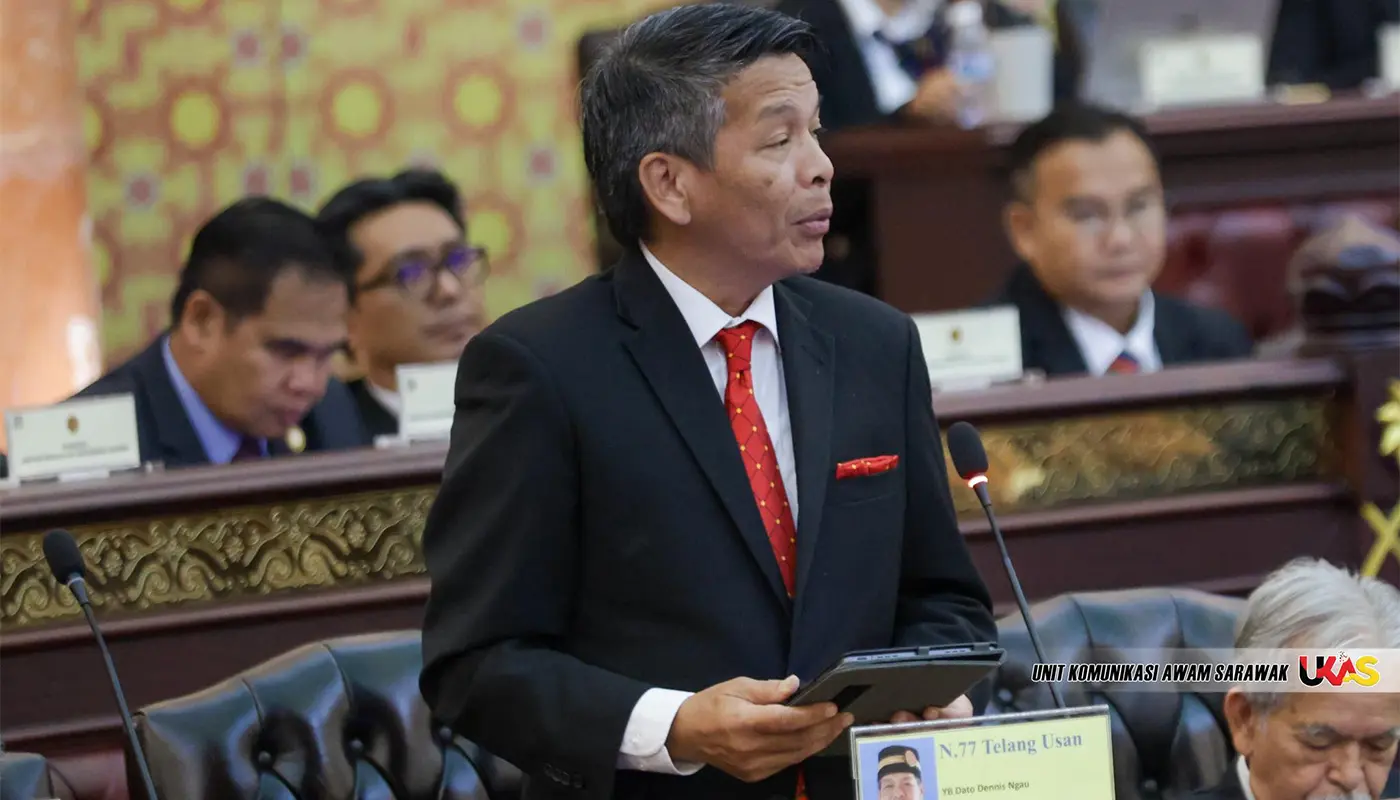
Telang Usan Assemblyman Dato Dennis Ngau highlighted during the debate that palm oil residues, once treated as disposable waste, can now be harnessed for energy, fertiliser, biochar, bioplastics and other biomass-based products.
He emphasised that recognising waste as a commercial asset opens new opportunities for Sarawak’s economy.
“Palm oil waste actually has great commercial value and can be a new economic resource for the state if managed properly and in an organised manner,” he said.
The Bill, tabled by Deputy Premier Datuk Amar Douglas Uggah Embas, aims to strengthen environmental governance and accelerate Sarawak’s transition towards a circular economy.
It also aligns with the state’s broader energy transition strategy, which envisions biomass contributing significantly to the energy mix by 2035.
Malaysia’s palm oil sector generates nearly 95 million tonnes of biomass annually, including empty fruit bunches, palm kernel shells and mesocarp fibre. These materials are increasingly used for renewable energy, fertiliser, animal feed and biofuel production.
Industry experts have long urged stronger collaboration to maximise this potential, noting that palm biomass remains under-utilised despite its vast availability.
Dato Dennis stressed that the benefits of palm oil biomass should not be confined to large corporations. He pointed out that rural communities, including longhouses and villages located near plantations, stand to gain from new income streams and employment opportunities.
“The opportunity in palm oil biomass is not only for large companies, but can generate income for communities in remote areas who live and work in oil palm plantation areas,” he explained.
The establishment of a dedicated waste management authority is expected to attract investment and encourage infrastructure innovation tailored to Sarawak’s diverse geography. Rural regions, in particular, require customised models to ensure effective implementation.
Beyond economic gains, the initiative is seen as a step towards reducing reliance on landfills and supporting green job creation.
By treating waste as a resource, Sarawak aims to build a more resilient and efficient circular economy that safeguards the environment while improving livelihoods.
Deputy Premier Uggah underscored that the Bill reflects the state’s commitment to “monetise the wastes” and move towards a renewable-energy driven future.
The legislation received unanimous support in the State Assembly, marking a milestone in Sarawak’s journey towards sustainable development.
The move also sends a clear signal that Sarawak is ready to embrace a new economic model, one that balances environmental protection with long-term prosperity for its people.
