



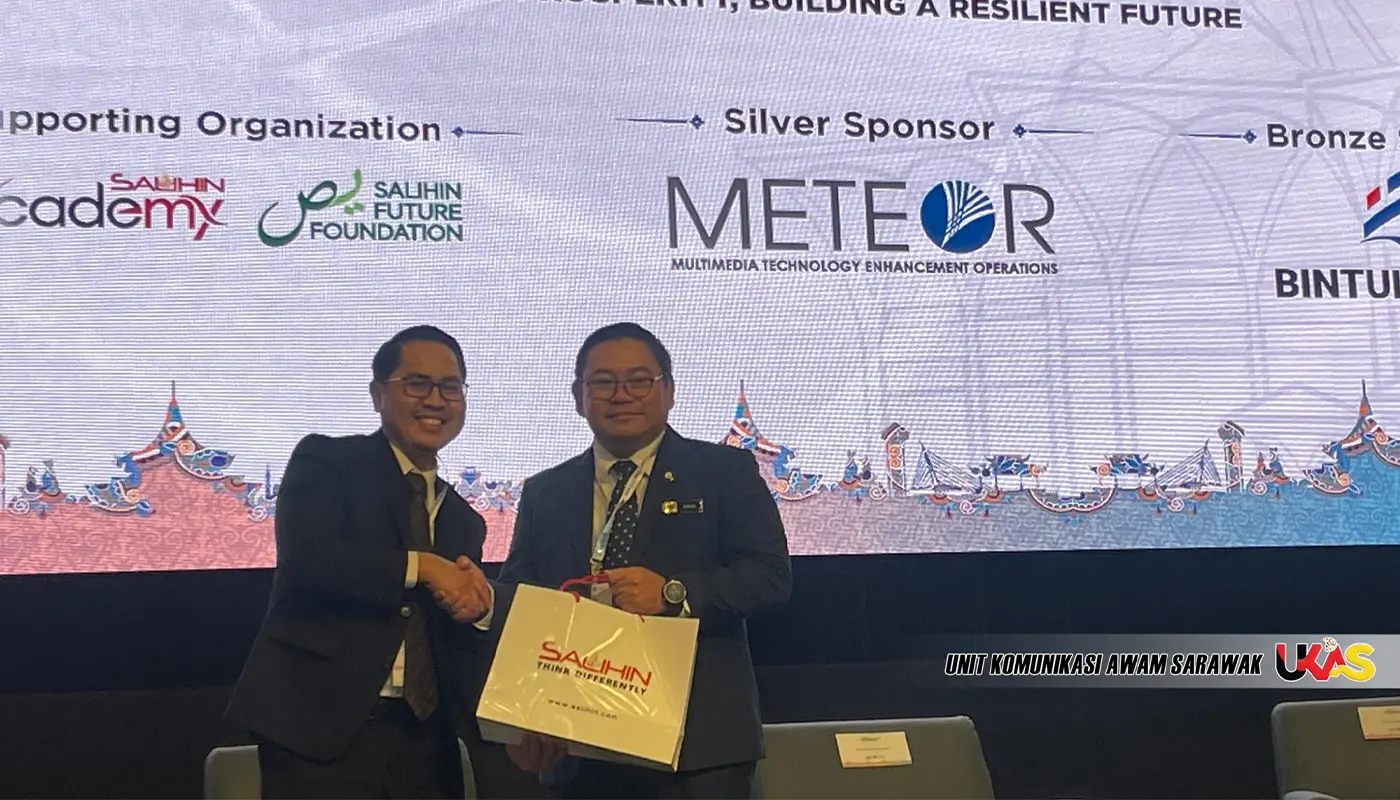
KUCHING – Sarawak’s economic journey over the past six decades has been marked by resilience and structured planning, laying the foundation for the state to achieve high-income economic status by 2030.

Datu Lester Matthew, Director of the Sarawak Economic Planning Unit, emphasised that the transformation was not the result of short-term measures but stemmed from consistent long-term strategies.
He highlighted the importance of political stability, sustained investment in infrastructure, industrial growth, and human capital development in shaping Sarawak’s progress.
Delivering his remarks at the Sarawak Budget Conference 2026 at the Borneo Convention Centre Kuching (BCCK), Lester noted that the agriculture, forestry, and oil sectors of the 1960s and 1970s provided the initial foundation for rural infrastructure, education, and healthcare.
These sectors enabled Sarawak to withstand global challenges such as the oil crisis and early security concerns, ensuring economic resilience during its formative years.
He pointed to the launch of the Sarawak Corridor of Renewable Energy (SCORE) in 2008 as a turning point, driving the growth of energy-intensive industries and elevating the state’s economy to new heights.
SCORE has since become a catalyst for industrial expansion and a key contributor to Sarawak’s economic diversification.
Commenting on current priorities, Lester explained that Sarawak is now focusing on emerging sectors such as hydrogen energy, renewable energy, biotechnology, digital services, and high-value industries.
These areas are expected to strengthen the state’s competitiveness in the global value chain and support sustainable growth.
Under the 12th Malaysia Plan (12MP), Sarawak recorded positive economic growth, with Gross Domestic Product (GDP) reaching RM148.2 billion in 2024.
This performance was supported by the services, manufacturing, and mining sectors, reflecting the state’s diversified economic base.
Looking ahead, Lester said the 13th Malaysia Plan (2026–2030) will serve as the final phase of the Post-COVID-19 Development Strategy (PCDS) 2030.
The plan will emphasise effective implementation, stronger public-private partnerships, and balanced development across urban and rural areas.
He stressed that this approach is crucial to ensure that the benefits of economic progress are shared widely among Sarawakians, reinforcing the state’s vision of long-term prosperity.
The transformation strategy, he added, is designed to position Sarawak as a competitive, sustainable, and high-income economy by the end of the decade.
