



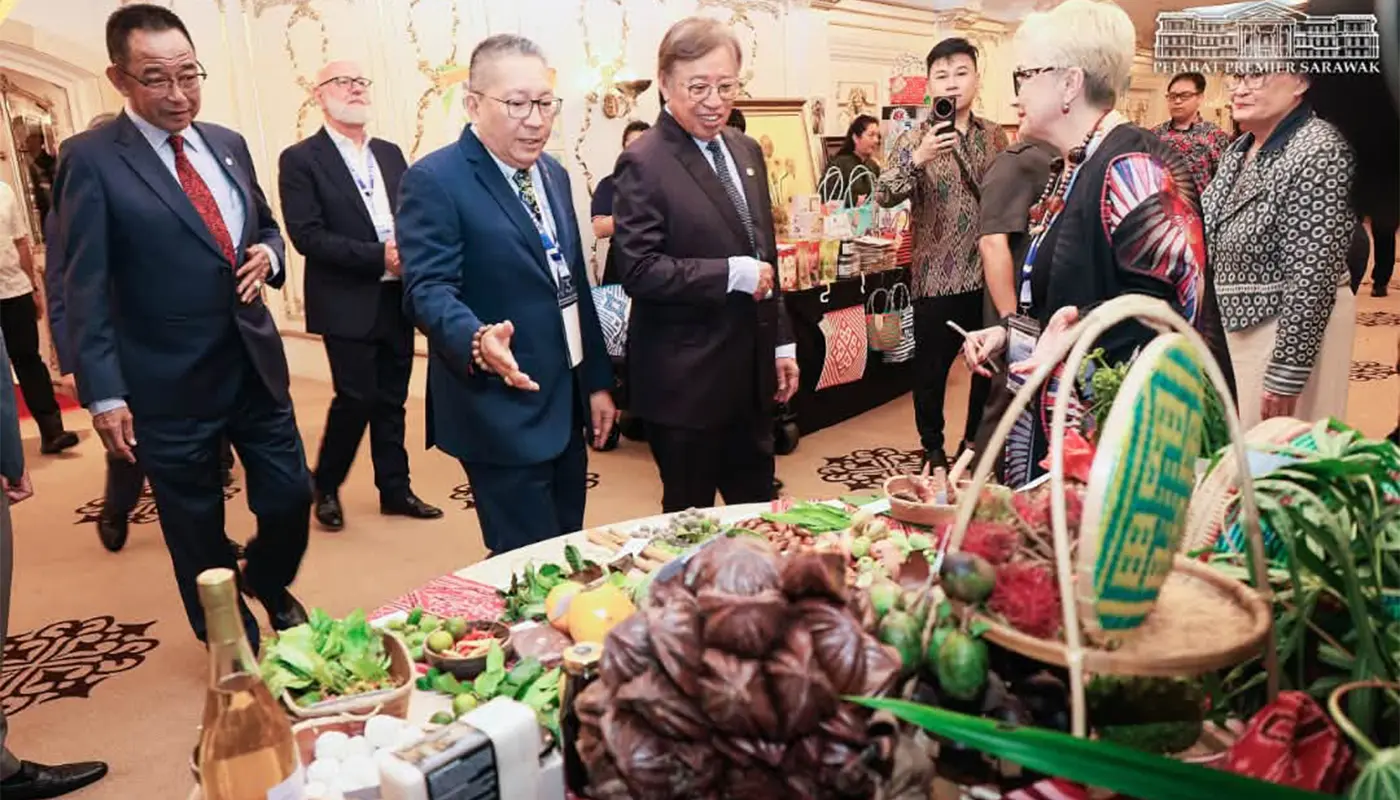
KUCHING – The culinary landscape of Sarawak is being repositioned as a fundamental pillar for broader economic expansion and cultural sustainability. Rather than viewing food solely through the lens of tourism promotion, state leadership now advocates for its recognition as a distinct industrial sector.

This strategic shift aims to integrate gastronomy with entrepreneurship, creative arts, and heritage preservation to form a cohesive development ecosystem.
Datuk Patinggi Tan Sri (Dr) Abang Haji Abdul Rahman Zohari bin Tun Datuk Abang Haji Openg articulated this vision whilst addressing delegates at a major international gathering in the state capital. He emphasised that sustenance extends far beyond basic nutrition.
In his view, culinary practices serve as vital vessels for maintaining communal identity and safeguarding ancestral knowledge against the erosion of time.
The region boasts an exceptionally rich tapestry of edible traditions derived from more than thirty distinct ethnic groups. Each community has cultivated unique preparation methods and flavour profiles that have been carefully handed down through successive generations.
These diverse customs are not merely historical artefacts but living expressions of local life that continue to evolve whilst retaining their core significance.
During his address, the Premier highlighted the profound narrative embedded within local cuisine. “Every recipe tells a story. Every ingredient reflects the environment from which it comes. Every cooking tradition carries generations of accumulated wisdom and cultural identity,” he said. This perspective underscores the intrinsic link between the land, its people, and the dishes they prepare.
Such extensive culinary variety is increasingly viewed as a strategic asset for future growth. By leveraging these authentic foodways, the state can enhance its global tourism appeal whilst simultaneously generating tangible benefits for residents.
This approach seeks to create commercial pathways for local producers, small business owners, and hospitality operators who form the backbone of the industry.
Formal acknowledgement of gastronomy as a legitimate economic sector is expected to yield dual benefits. It would foster deeper respect for traditional techniques amongst younger generations whilst providing space for innovation that aligns with modern consumer preferences.
This balance ensures that heritage remains relevant rather than becoming static or obsolete in a rapidly changing world.
The Premier also stressed the universal power of food to bridge geographical and social divides. “Although we come from different countries, cultures and traditions, we are united by one common understanding, that gastronomy is far more than nourishment. Food represents our identity, our heritage, our creativity and our collective future,” he said. Such sentiments reinforce the idea that shared meals can facilitate cross-cultural dialogue and mutual appreciation.
These remarks were delivered during the official opening of the third annual assembly for UNESCO Creative Cities designated as Cities of Gastronomy.
Hosted locally, this prestigious event brings together representatives from member cities worldwide to discuss best practices and collaborative initiatives. The choice of venue itself signals the growing international stature of the state’s culinary reputation.
Leadership hopes this convening will catalyse stronger partnerships and knowledge exchange among participating municipalities. The ultimate objective is to promote gastronomy as a dynamic engine for sustainable progress.
By intertwining cultural conservation with economic innovation, stakeholders aim to build resilient communities that honour their past whilst actively shaping a prosperous tomorrow.
Furthermore, the integration of food into wider policy frameworks suggests a long-term commitment to holistic development.
When culinary arts are treated with the same seriousness as manufacturing or technology, it validates the labour of countless artisans and farmers. This validation can inspire renewed pride in local produce and encourage investment in supply chain improvements.
Visitors attending such international forums also gain firsthand exposure to the depth of regional culture. Their experiences translate into word-of-mouth promotion and potential repeat visitation, creating a virtuous cycle of engagement.
Local entrepreneurs benefit directly from this influx of interest, gaining access to new markets and networking opportunities that might otherwise remain out of reach.
Ultimately, the elevation of gastronomy reflects a sophisticated understanding of value creation in the twenty-first century.
It acknowledges that intangible cultural heritage possesses measurable economic worth when nurtured appropriately. As discussions continue throughout the meeting, participants are expected to refine strategies that make this vision a practical reality for all involved parties.
