



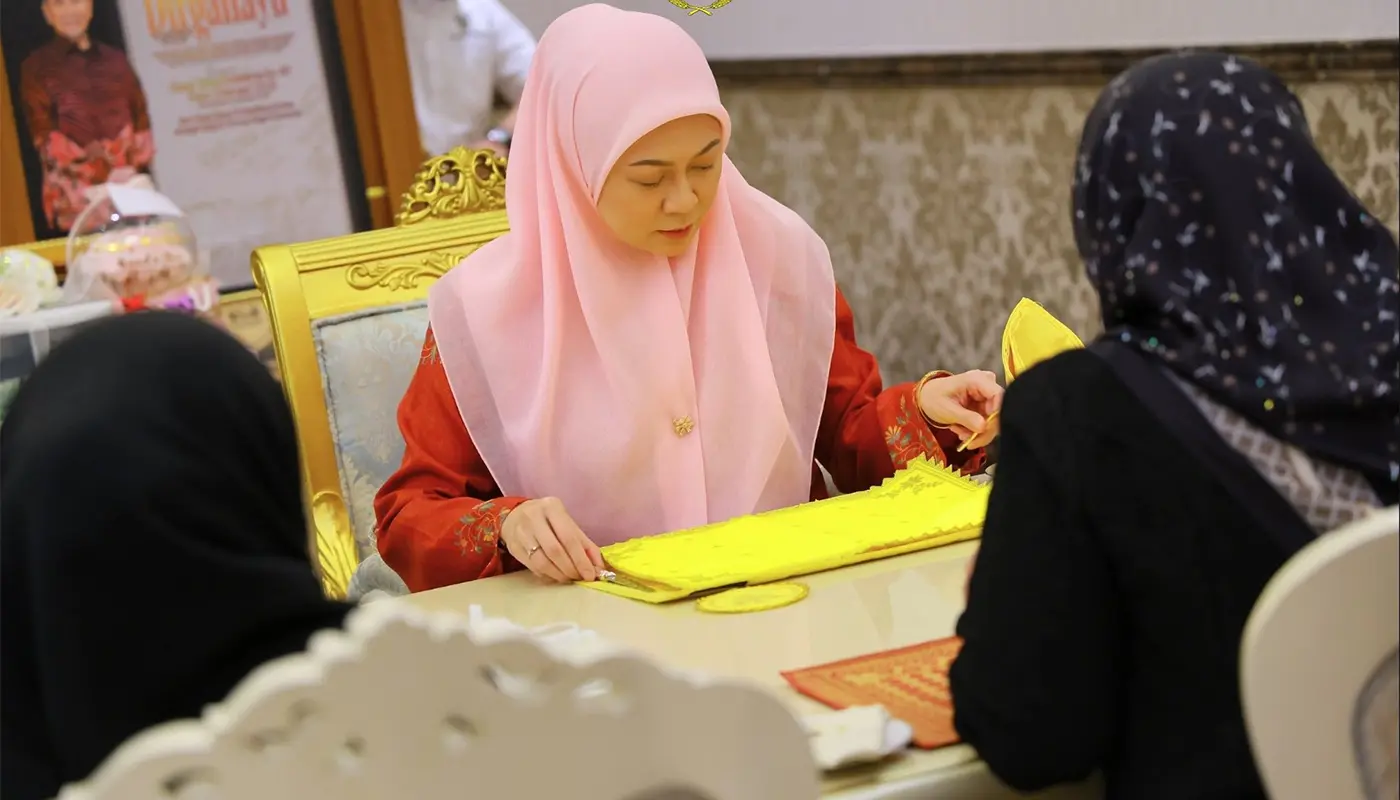
KUCHING – Toh Puan Datuk Patinggi Fauziah binti Mohd Sanusi, the wife of the Yang di-Pertua Negeri Sarawak, received a courtesy visit from Puan Nor Hazilah binti Mohd Rahim, founder of Hikayat Sulaman, at the Kasuma Resort official residence on 6 April.

The meeting provided an opportunity for Hikayat Sulaman to present a collection of keringkam-inspired embroidery pieces.
Keringkam, a traditional Sarawak textile art form, is renowned for its intricate threadwork and cultural significance.
The craft, often associated with ceremonial attire, has long been considered a symbol of heritage and artistry in the region.
During the session, Toh Puan Fauziah expressed appreciation for the dedication shown in preserving this centuries-old embroidery tradition.
She highlighted the importance of ensuring that keringkam remains relevant in modern society, noting that both traditional craftsmanship and contemporary innovation can play a role in sustaining its legacy.
“Keringkam must continue to be valued and appreciated by today’s generation,” she said, adding that efforts to safeguard the authenticity and aesthetic qualities of the art should be supported regardless of whether they are pursued through conventional methods or modern technology.
The First Lady also emphasised the need for younger generations to be actively involved in learning and practising the embroidery technique.
She noted that intergenerational participation, combined with institutional and community support, would help secure the survival of keringkam as a cultural treasure for future Sarawakians.
Keringkam embroidery, traditionally made with gold or silver threads, has historically been worn by brides and dignitaries during important ceremonies.
In recent years, cultural organisations and artisans have worked to revive interest in the craft, introducing workshops, exhibitions, and collaborations with fashion designers to broaden its appeal.
The visit by Hikayat Sulaman reflects ongoing efforts by local entrepreneurs and cultural advocates to promote Sarawak’s textile heritage.
By showcasing the artistry to prominent figures such as Toh Puan Fauziah, advocates hope to strengthen recognition of keringkam both locally and internationally.
Observers note that initiatives like these are vital in ensuring traditional crafts are not overshadowed by mass-produced textiles.
With growing interest in heritage-based fashion and sustainable design, keringkam embroidery could find renewed relevance in contemporary markets while retaining its cultural roots.
The meeting concluded with Toh Puan Fauziah reaffirming her support for artisans and organisations committed to preserving Sarawak’s cultural identity.
She expressed optimism that through collective effort, keringkam embroidery will continue to thrive as a proud symbol of Sarawak’s artistic and historical richness.
