



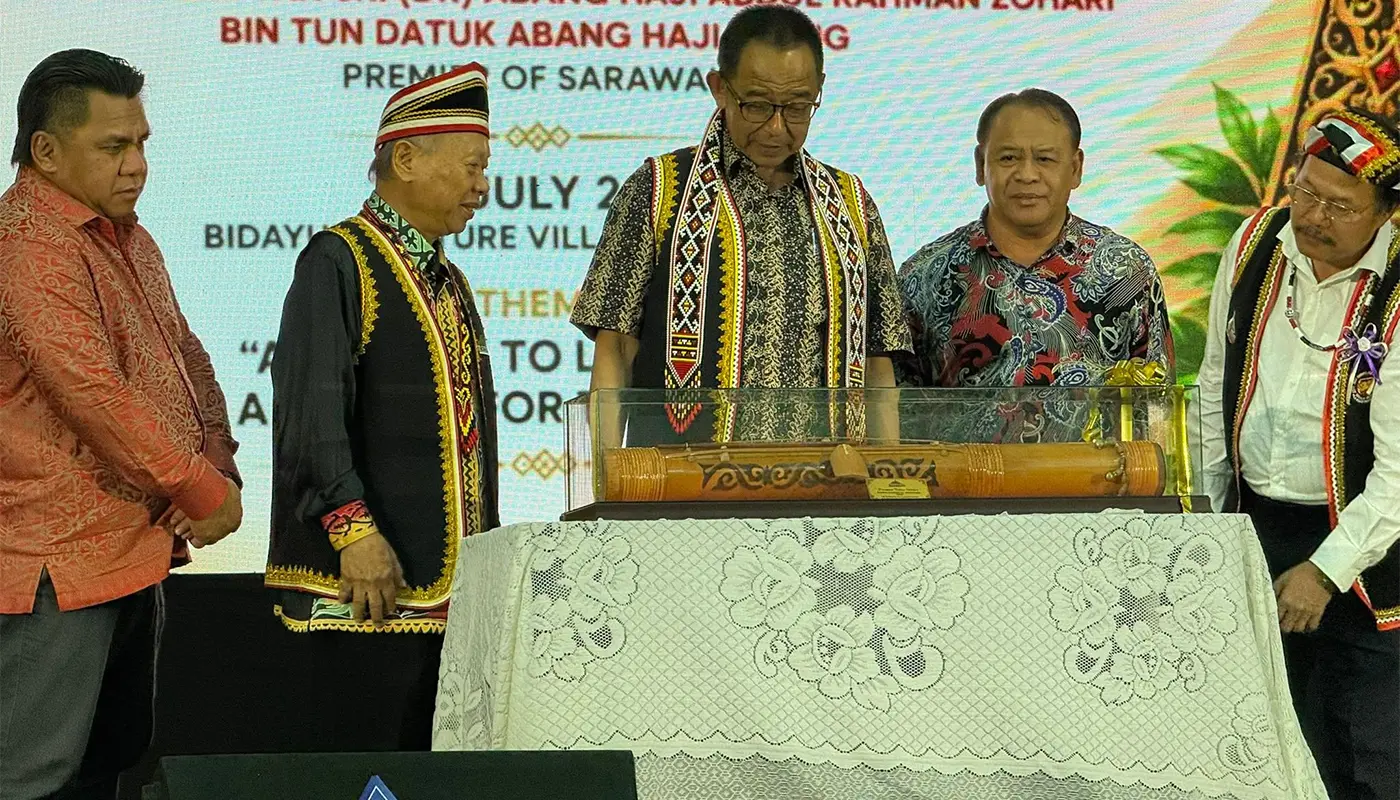
BAU – The spirit of celebration and cultural pride was palpable in the Singai area last weekend as the 18th edition of the Gawai Carnival Redeems took centre stage.
Held at the REDEEMS centre in the Bau district, the event served as a vibrant testament to the enduring traditions of the local indigenous communities while fostering a strong sense of unity among residents.
The carnival, which has become a staple in the regional calendar, drew significant attendance from across the district.
Organisers reported an overwhelming response from the public, with families, elders, and youth alike turning out to participate in the festivities.
This robust turnout underscored the deep-rooted appreciation for the Gawai harvest festival, a time-honoured tradition that marks the end of the rice harvesting season and gives thanks for a bountiful yield.
YB Dato Sri Haji Abdul Karim Rahman Hamzah, the Sarawak Minister for Tourism, Creative Industry and Performing Arts, attended the event to show his support for the initiative.
As the State Assemblyman for N15 Asajaya in Samarahan, his presence highlighted the cross-district solidarity and the state government’s broader commitment to preserving and promoting Sarawak’s rich cultural tapestry.
In acknowledging the efforts behind the successful execution of the carnival, the minister commended the organising committee for their diligence and creativity.
He noted that the event had managed to garner strong support from all levels of the local community, a feat that reflects the cohesive nature of the society in the Bau district. Such widespread participation is often cited as a key indicator of a healthy and engaged community.
The REDEEMS centre provided an ideal venue for the celebrations, offering ample space for the various activities that characterise the Gawai festival.
These typically include traditional music performances, such as the rhythmic beating of gongs and sape playing, as well as cultural dances that narrate stories of ancestral heritage.
The carnival also featured culinary delights, allowing visitors to savour traditional dishes like tuak (rice wine) and pansoh (meat cooked in bamboo), which are integral to the Gawai experience.
Beyond the festive atmosphere, the event served as a platform for intergenerational exchange. Elders shared stories and customs with younger generations, ensuring that the knowledge and values associated with the Gawai festival are passed down and kept alive.
This educational aspect is crucial in an era where rapid modernisation can sometimes overshadow traditional practices.
Local community leaders expressed their satisfaction with the outcome of the 18th edition, noting that the level of engagement exceeded expectations. They attributed this success to the collaborative effort between village heads, local organisations, and the enthusiastic participation of residents.
The carnival has evolved over the years from a simple village gathering to a more structured event that attracts visitors from neighbouring areas, thereby boosting local visibility and pride.
The emphasis on community support was a recurring theme throughout the proceedings. By bringing people together in a celebratory context, the carnival reinforced social bonds and provided a space for neighbours to reconnect.
In rural districts like Bau, where community ties are particularly strong, such events play a vital role in maintaining social harmony and collective identity.
The involvement of state-level figures like Minister Abdul Karim further validates the importance of these grassroots festivals. While the primary focus remains on local tradition, the recognition from higher authorities helps secure resources and attention for future iterations.
It also aligns with broader state objectives to promote cultural tourism, where authentic experiences like the Gawai Carnival attract visitors interested in genuine cultural immersion.
As the 18th Gawai Carnival Redeems concluded, the sentiment among attendees was one of fulfilment and anticipation for the next year. The event not only celebrated the harvest but also celebrated the resilience and unity of the Bau community.
It stands as a reminder of the power of cultural festivals to bring people together, preserve heritage, and create lasting memories for all who participate.
