



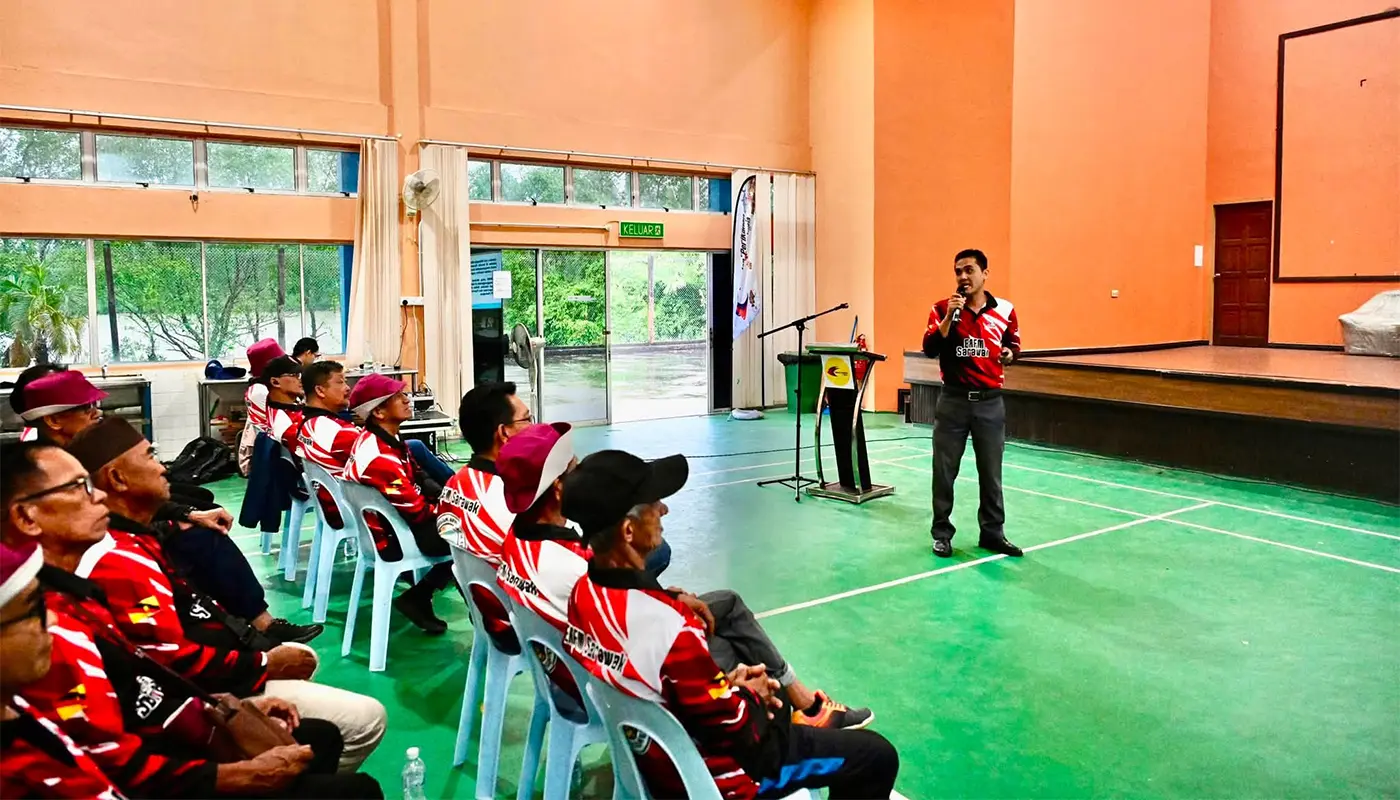
MUKAH – The Mukah District Ecosystem Approach to Fisheries Management (EAFM) Programme concluded successfully on 16 July 2026 after two days of intensive knowledge-sharing sessions, discussions, and interactive activities.

The initiative was organised by the Mukah District Marine Fisheries Office with the aim of strengthening awareness and responsibility in managing marine resources sustainably.
The programme brought together participants from various agencies and communities to highlight the importance of adopting ecosystem-based practices in fisheries management.
Organisers emphasised that sustainable resource management is not only vital for the fishing industry but also for the long-term health of marine ecosystems and the livelihoods of coastal communities.
Briefing sessions were delivered by Mr. Ashrul Hakimi bin Muhd Arzaman from the Malaysian Marine Department and Mrs. Nurridan binti Abdul Han from the Bintawa Fisheries Research Institute.
Their presentations covered navigation safety, the role of fisheries research, and the principles of ecosystem-based management.
Participants were encouraged to view fisheries not just as an economic activity but as part of a broader ecological system that requires careful stewardship.
The programme also featured an interactive quiz session, conducted in a relaxed and engaging atmosphere. This activity helped reinforce key lessons while fostering camaraderie among participants.
Organisers noted that such interactive elements are crucial in ensuring that knowledge is retained and applied effectively.
The Sarawak Marine Fisheries Department expressed its appreciation to all speakers, agencies, and participants for their commitment and cooperation.
Officials highlighted that the success of the programme was a result of collective effort and shared responsibility.
They stressed that the knowledge and awareness gained should serve as a catalyst for future initiatives aimed at preserving marine ecosystems.
The EAFM approach is increasingly recognised worldwide as a holistic method of managing fisheries. Unlike traditional practices that focus solely on catch limits, EAFM considers the broader ecological, social, and economic impacts of fishing.
By integrating these factors, the approach seeks to balance human needs with the sustainability of marine life.
In Malaysia, the adoption of EAFM reflects the government’s commitment to aligning fisheries management with international best practices.
Programmes such as the one held in Mukah are part of ongoing efforts to build capacity among local stakeholders, ensuring that communities are equipped with the knowledge and tools to manage resources responsibly.
Participants expressed optimism that the lessons learned would be applied in their respective areas. Many noted that the programme provided valuable insights into how local actions can contribute to global sustainability goals.
The emphasis on collaboration between agencies and communities was seen as a key strength of the initiative.
The closing remarks underscored the importance of viewing the sea not merely as a source of livelihood but as a shared trust that must be preserved for future generations.
Organisers reminded participants that sustainability is a collective responsibility, requiring continuous effort and vigilance.
With the successful conclusion of the Mukah District EAFM Programme, Sarawak has reaffirmed its commitment to marine conservation.
The initiative is expected to inspire similar programmes across other districts, further strengthening Malaysia’s role in promoting sustainable fisheries management.
