



KUCHING – The Sarawak Integrated Waste Management Masterplan 2050 is nearing completion and will serve as the state’s comprehensive roadmap for managing municipal and scheduled waste. The plan is expected to guide Sarawak’s transition towards a circular economy, ensuring long-term sustainability as the state continues to grow.

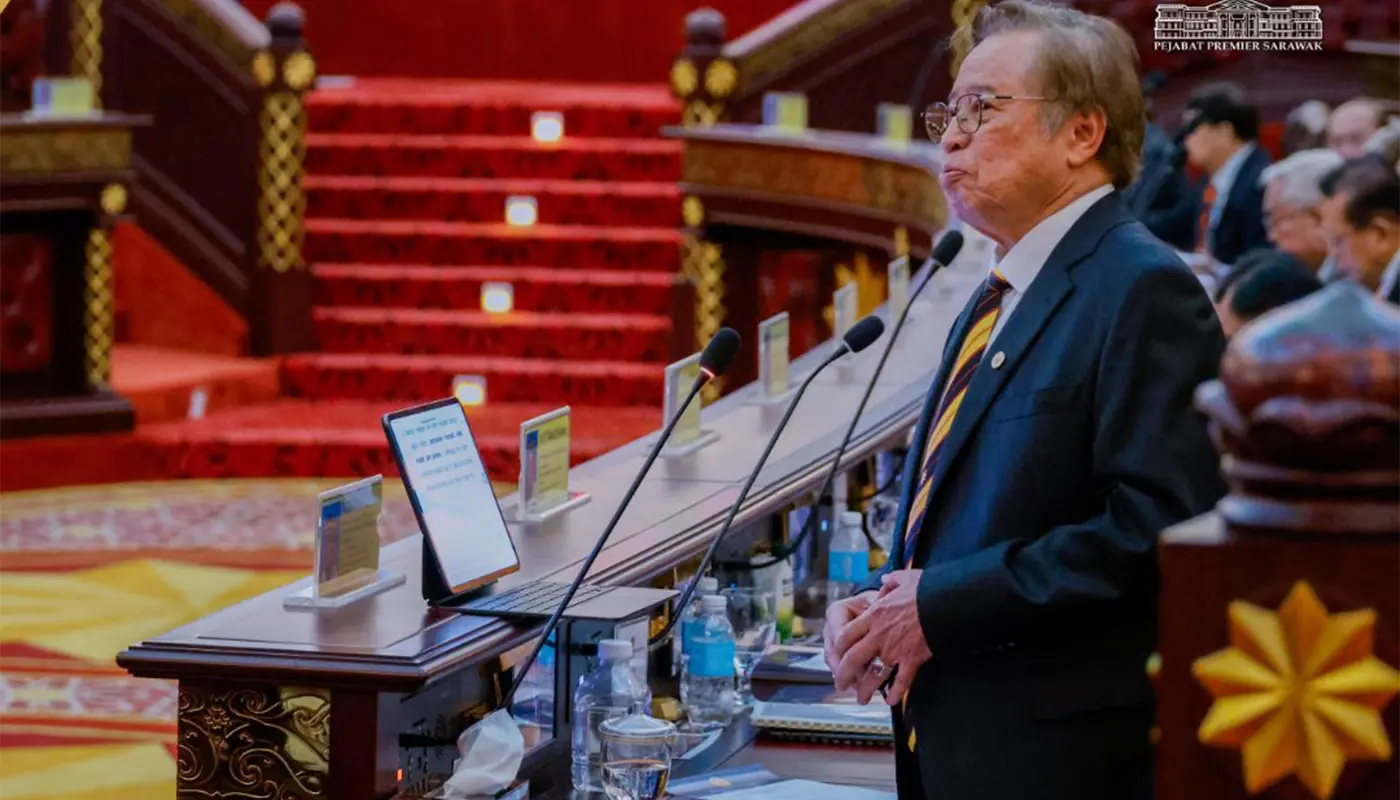
The Premier of Sarawak, Datuk Patinggi Tan Sri (Dr) Abang Haji Abdul Rahman Zohari bin Tun Datuk Abang Haji Openg, highlighted the importance of the master plan during his winding-up speech at the First Meeting of the Fifth Session of the 19th Sarawak State Legislative Assembly.
He explained that the state is moving decisively towards a circular economy approach, as population growth, rapid development, and land constraints place increasing pressure on waste management systems.
The Premier noted that Sarawak has already established the necessary legislative framework through the Sustainable Resources and Waste Management legislation passed by the State Assembly.
“The effort will be guided by the Sarawak Integrated Waste Management Masterplan 2050, now in its final stage, which will provide the roadmap for municipal and scheduled waste,” he said.
He stressed that waste should no longer be seen purely as a disposal issue but as a valuable resource. With the right technology and innovation, waste can be transformed into electricity, fuel, fertiliser, and other useful products. This shift in perspective is central to Sarawak’s broader sustainability agenda.
The state government is also conducting feasibility studies to explore how biomass, agricultural residues, and organic waste can be harnessed to create new value streams.
These initiatives are intended to support Sarawak’s circular economy agenda, which focuses on reducing waste, reusing resources, and maximising efficiency.
A pilot gas-to-energy cogeneration project at the Kuching Integrated Waste Management Park in Mambong has already demonstrated promising results.
The initiative converts methane from landfill sites into electricity, showcasing the potential of waste-to-energy technologies.
“Just last month, I was briefed on the gas-to-energy cogeneration initiative at the Kuching Integrated Waste Management Park in Mambong. The pilot project has proven that methane from the landfill can be converted into power,” the premier said.
When fully scaled, the project could generate up to three megawatts of electricity from 700 tonnes of daily waste. This would not only reduce environmental impact but also contribute to Sarawak’s energy diversification strategy.
The Premier reaffirmed his administration’s commitment to advancing the circular economy agenda and encouraged greater private sector involvement in waste-to-energy projects and related technologies.
By fostering collaboration between government, industry, and research institutions, Sarawak aims to build a resilient and sustainable waste management system that supports economic growth while protecting the environment.
The completion of the masterplan will mark a significant milestone in Sarawak’s journey towards a greener future, positioning the state as a leader in sustainable resource management in the region.
