



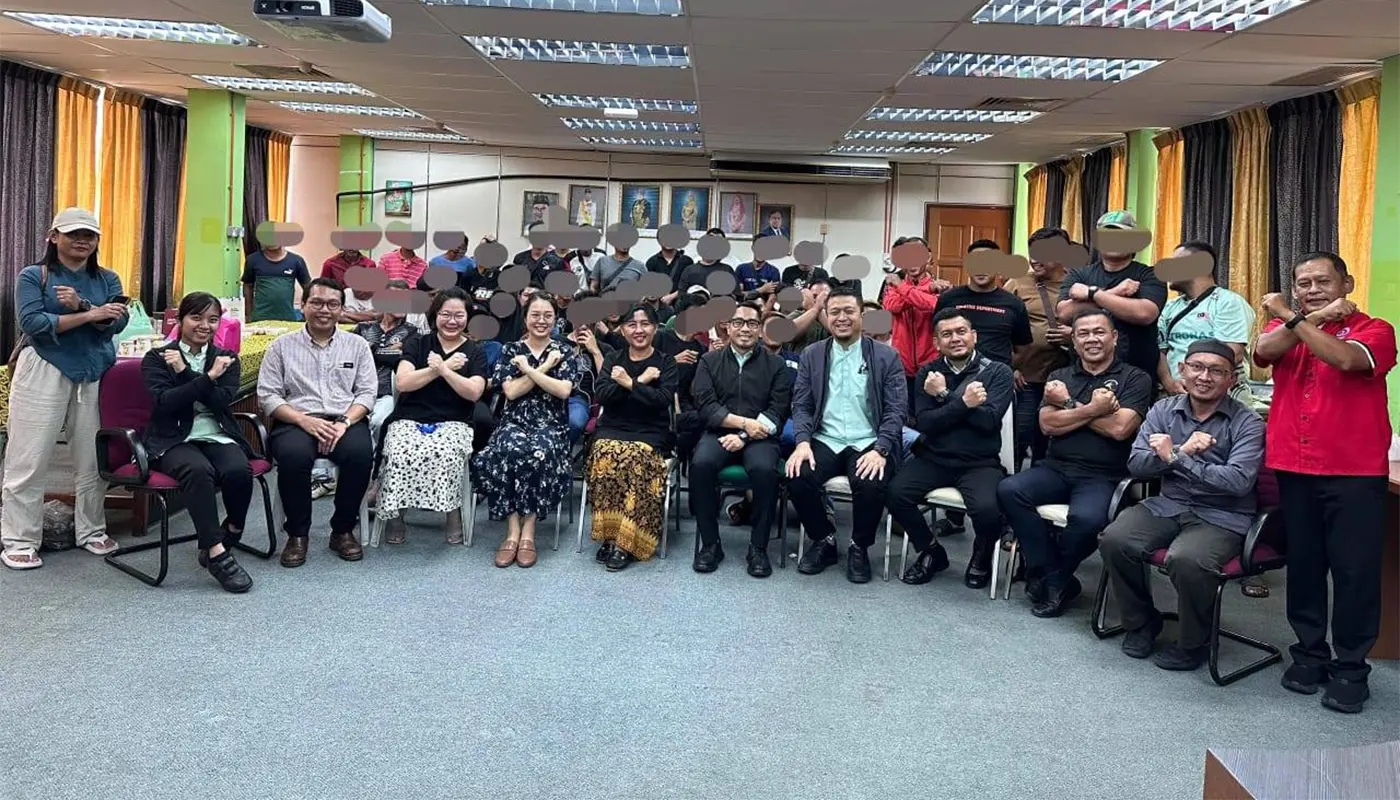
SARIKEI – The Sarikei District National Anti-Drugs Agency (AADK) held its Treatment and Recovery Programme under the theme “Healthy Steps, Blessed Life”.

Organised in collaboration with the Sarikei Division Health Office, the initiative sought to provide support for individuals working to rebuild their lives after struggles with addiction.
The programme offered health screenings to 76 clients, many of whom were taking their first steps towards paying closer attention to their wellbeing.
For some, the checks marked a new beginning, while for others they represented another milestone in a longer journey of recovery.
The examinations included basic health assessments such as blood pressure and sugar level readings, but the organisers emphasised that the initiative was about more than numbers.
Participants were reminded that poor health readings should not be seen only as warnings but as opportunities to show care for the body and to embrace the chance for change.
The programme aimed to instil confidence, restore dignity, and reinforce the message that every individual has value and a rightful place in society.
The atmosphere in the examination room reflected the resilience of those present. Many carried untold stories and unseen struggles, yet their participation demonstrated a determination to rise again.
Organisers highlighted that recovery is not simply about overcoming addiction but about rediscovering identity, rebuilding self-worth, and rekindling hope.
Community health experts have long stressed the importance of integrating medical care with emotional and social support.
Initiatives such as the Sarikei programme align with national strategies to strengthen rehabilitation services by combining physical health monitoring with counselling and community engagement.
This holistic approach is seen as vital in helping individuals sustain long-term recovery.
The event also underscored the role of local agencies in fostering inclusive programmes that reach vulnerable groups.
By offering accessible health checks and encouragement, the Sarikei AADK demonstrated that even modest efforts can have profound impacts on those striving to change their lives.
Behind the programme lies a broader vision: to ensure that recovery is not viewed as a solitary struggle but as a collective journey supported by family, community, and institutions.
The organisers expressed hope that participants would continue to move forward, even if progress is slow, and never lose faith in the possibility of transformation.
As Sarikei continues to strengthen its public health initiatives, the Treatment and Recovery Programme stands as a reminder that compassion and perseverance remain central to building healthier communities.
