



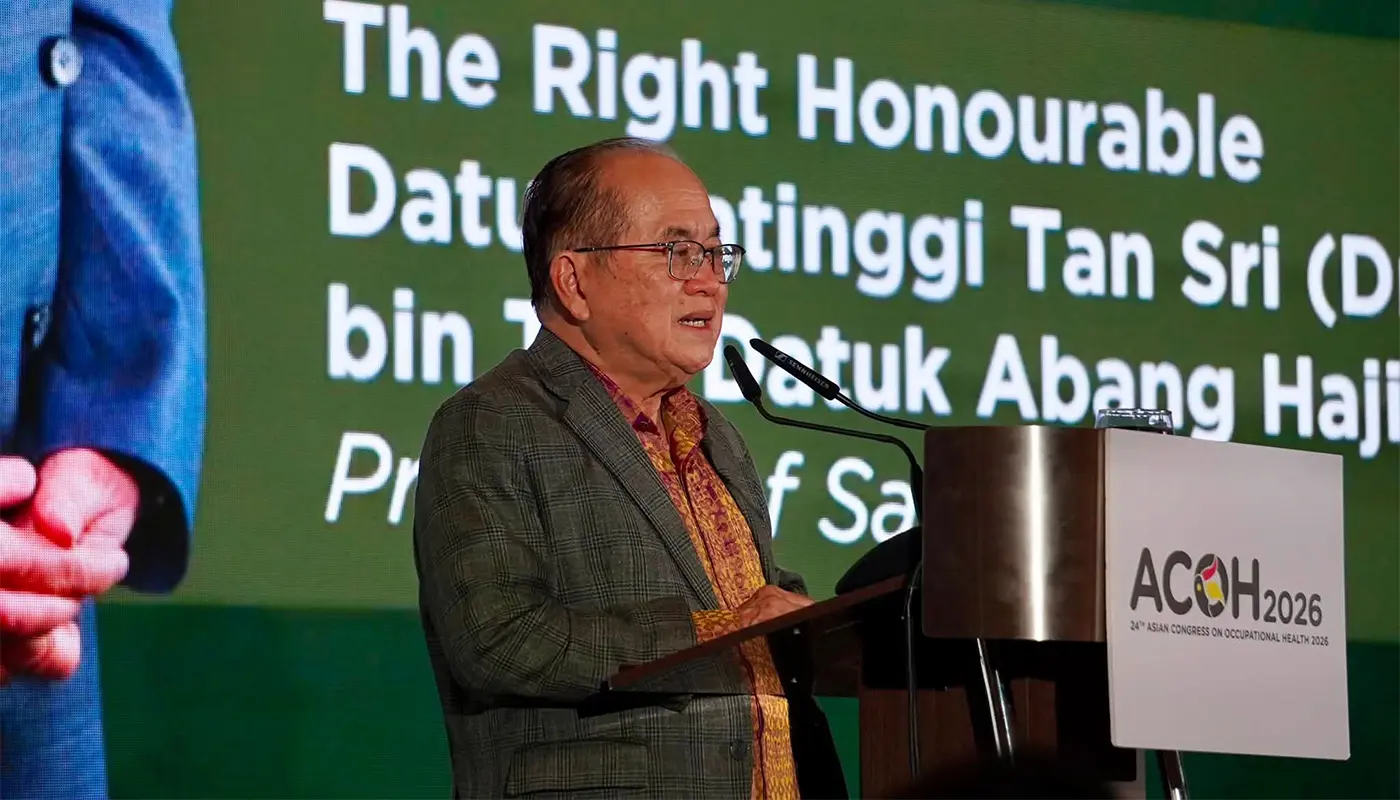
KUCHING – The critical necessity of collective action in maintaining workplace standards took centre stage at a prominent international gathering held in the state capital on Thursday evening. Datuk Amar Douglas Uggah Embas, the Deputy Premier of Sarawak, attended the gala dinner for the 24th Asian Congress on Occupational Health (ACOH) 2026 to represent the Premier, Datuk Patinggi Tan Sri Abang Haji Abdul Rahman Zohari bin Tun Datuk Abang Haji Openg.

Standing in for the head of state government, Uggah delivered a keynote address that reinforced the administration’s commitment to worker welfare. His message focused heavily on the concept that occupational safety and health cannot be achieved in isolation. Instead, it must be viewed as a shared obligation that transcends individual sectors or single entities within the economy.
The speech outlined a strategic vision requiring deeper integration between multiple stakeholders. Uggah stressed that robust cooperation is essential amongst government bodies, private employers, academic institutions, and professional practitioners. Only through such unified efforts can the region hope to cultivate work environments that are not only safe and healthy but also genuinely inclusive for all employees.
This year’s congress serves as a vital convergence point for specialists from across the continent. Experts, researchers, and frontline practitioners have gathered to pool their knowledge and debate emerging issues. The discussions are particularly timely given the rapid transformations currently reshaping the global employment landscape and introducing new types of workplace hazards.
Attendees at the event represented a broad spectrum of the occupational health ecosystem. International delegations were present alongside domestic representatives from various government agencies and industry players. Academic institutions also sent delegates, ensuring that theoretical research informs practical application in real-world settings.
The choice of Kuching as the host city underscores Sarawak’s growing profile as a venue for high-level professional discourse. Hosting such a significant regional assembly allows local practitioners to engage directly with international peers without leaving the state. This proximity facilitates more accessible learning opportunities for domestic professionals who might otherwise face barriers to attending overseas conferences.
Workplace safety has evolved considerably beyond traditional industrial accident prevention. Modern occupational health encompasses mental wellbeing, ergonomic design, and adaptation to technological changes. The congress provides a dedicated forum for addressing these multifaceted challenges through evidence-based dialogue and cross-border collaboration.
Government participation at this level signals policy alignment with international best practices. When senior leaders articulate clear expectations for multi-stakeholder cooperation, it sets a tone that resonates throughout the public and private sectors. Such top-level endorsement helps legitimise safety initiatives and encourages resource allocation towards preventive measures rather than reactive responses.
The gala dinner itself functioned as more than a ceremonial conclusion to the day’s proceedings. It offered informal networking opportunities that often yield collaborative partnerships long after formal sessions end. Relationships forged during these social interactions frequently translate into joint research projects, training exchanges, and harmonised regulatory approaches across national boundaries.
As the world of work continues its post-pandemic evolution, platforms like ACOH become increasingly indispensable. They provide the intellectual infrastructure necessary for adapting safety frameworks to new realities. The insights generated during this congress will likely influence policy development and corporate practice well beyond the event’s immediate duration.
Local industry players benefit significantly from exposure to international expertise presented at such gatherings. Access to cutting-edge research and innovative solutions helps domestic organisations remain competitive whilst protecting their workforce. This dual advantage of economic resilience and human capital protection aligns closely with broader state development objectives.
The emphasis on inclusivity mentioned in the Deputy Premier’s address reflects contemporary understanding of occupational health equity. Safe workplaces must accommodate diverse needs including those of women, persons with disabilities, and migrant workers. Ensuring equitable protection requires intentional policy design and vigilant implementation across all employment sectors.
Professional practitioners attending the congress gain valuable continuing education credits and certification updates. These credentials maintain professional standards and demonstrate competency to employers and regulators alike. The concentration of qualified experts in one location creates an efficient mechanism for widespread skills enhancement within the regional occupational health community.
