



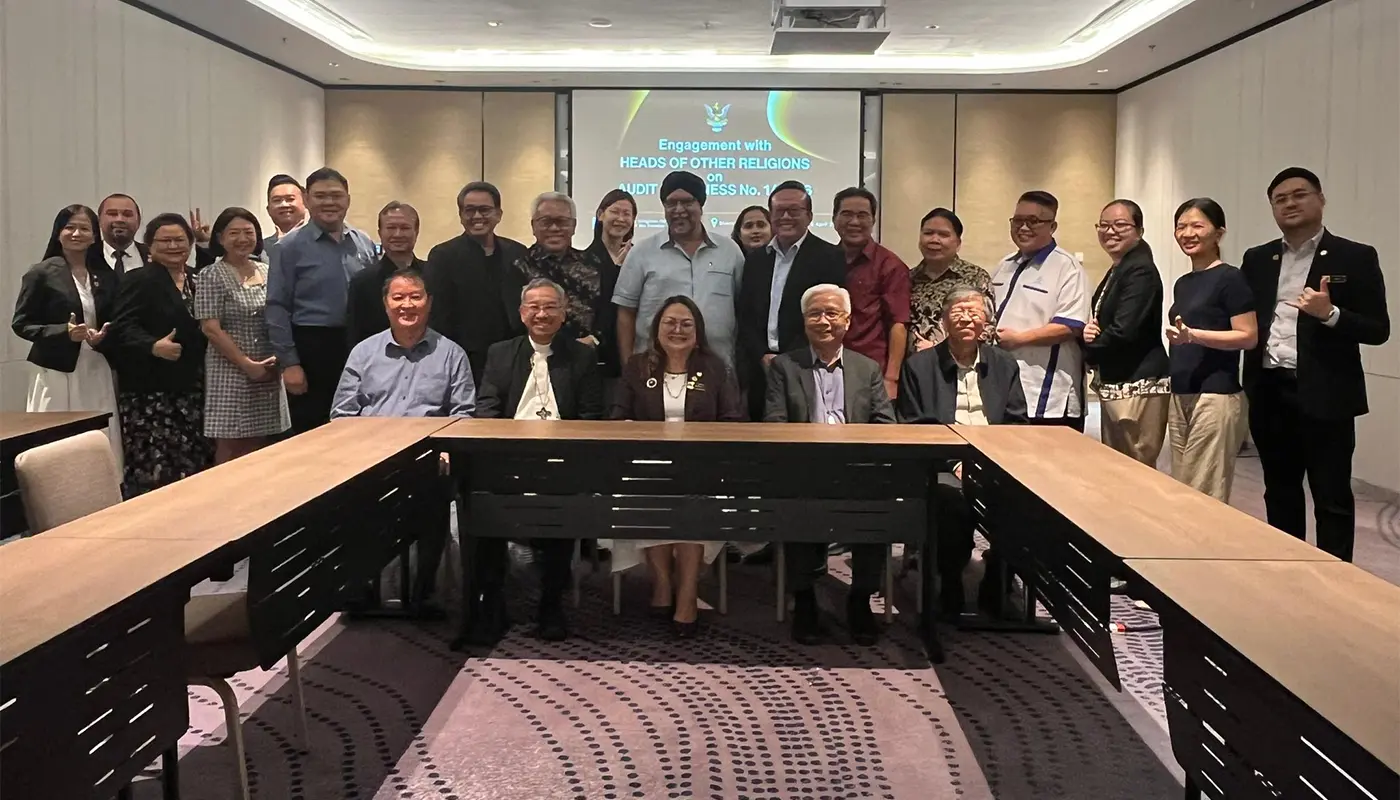
KUCHING – The Unit for Other Religions (UNIFOR) recently convened an engagement session with various heads of religious bodies and representatives from houses of worship to address crucial aspects of financial oversight and audit readiness.

Held at the Sheraton Hotel in Kuching on 2 April 2026, the session was chaired by the Director of UNIFOR, Dato Georgina Apphia Ngau.
The meeting served as a strategic platform to review findings from recent audits carried out by the Internal Audit Unit of the Sarawak Premier’s Department and the Sarawak Treasury Department.
These audits focused on the administration of projects financed through UNIFOR’s annual grant assistance programmes.
As the distribution of public funds to various religious institutions continues to support community development, the state government has placed a renewed emphasis on transparency and accountability.
During the session, participants examined critical areas of financial management where adherence to governance standards is paramount.
Dato Georgina highlighted that the engagement was not merely about addressing past findings but was a proactive, forward-looking discussion designed to improve future operations.
By outlining necessary corrective actions and identifying specific areas for procedural improvement, the session aimed to simplify compliance for all stakeholders involved.
“UNIFOR, together with the Heads of Religions and representatives of Houses of Worship, shares a collective responsibility to ensure that every ringgit is managed prudently, utilised effectively, and aligned with its intended purpose,” a representative stated during the proceedings.
The dialogue focused on the importance of robust documentation and clear reporting mechanisms, which are essential for the ethical management of public money.
By fostering an environment of open communication, UNIFOR intends to assist religious organisations in navigating the complexities of audit requirements, thereby ensuring that state-funded projects are executed with total integrity.
Representatives from the various houses of worship participated in a constructive exchange, addressing operational hurdles and seeking guidance on best practices for project delivery.
This collaborative approach reaffirms the state’s commitment to supporting religious diversity while maintaining a high standard of fiscal responsibility across all government-funded initiatives.
The successful conclusion of this session marks a significant step toward refining the management of state grants, ensuring that financial aid continues to benefit the community effectively while upholding the trust placed in the leadership of these religious institutions.
