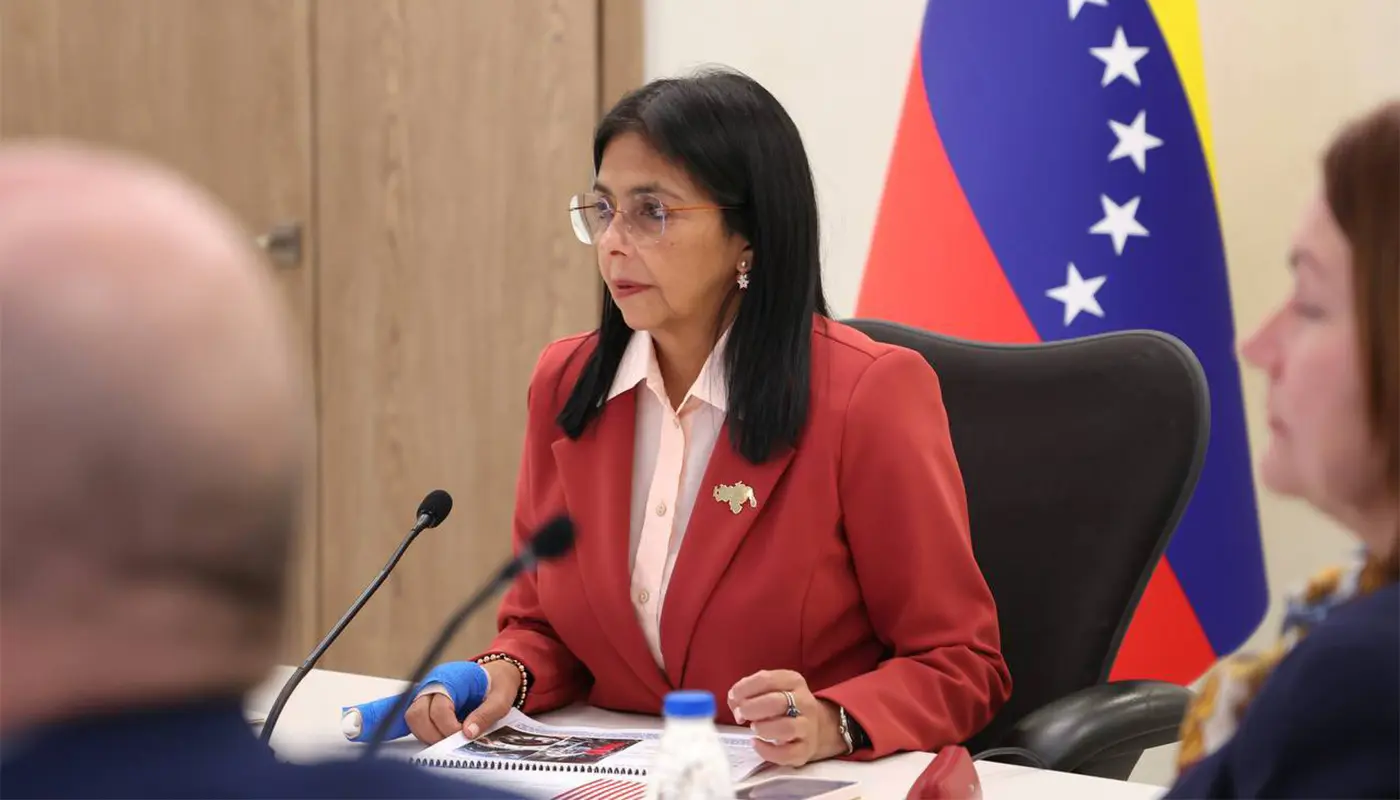
Venezuelan Supreme Court appointed current Vice President Delcy Rodríguez as the acting president. The decision came in the circumstances of President Nicolás Maduro’s imprisonment by the United States military forces in an early morning raid on Saturday, a move that has intensified international scrutiny of the South American nation’s political crisis.
The Constitutional Chamber of the Supreme Court issued a ruling instructing Rodríguez to assume “the office of President of the Bolivarian Republic of Venezuela” in order to guarantee administrative continuity and safeguard of national sovereignty.
The court emphasised that her appointment was necessary to maintain the functioning of the state during Maduro’s “forced absence”.
President Maduro was reportedly transported to New York following his capture, where he is expected to face trial. The development has sparked widespread debate both domestically and abroad, with questions raised about Venezuela’s political stability, sovereignty and the future of its leadership.
The court also announced that it would continue proceedings to determine the legal framework underlying Rodríguez’s interim presidency.
Rodríguez, 56, has long been a central figure in Venezuelan politics and is considered one of the most influential members of the ruling Chavista movement. She previously served as foreign minister and has been a vocal critic of U.S. sanctions and interventions.
In a statement following her appointment, Rodríguez condemned Washington’s actions, describing them as an affront to Venezuela’s sovereignty.
International reactions have been swift. While some governments expressed concern over the legality of Maduro’s detention, others welcomed the Supreme Court’s move as a step towards stabilising governance in Caracas.
Analysts note that Rodríguez’s leadership will be closely watched, as she navigates the delicate balance between maintaining regime continuity and addressing mounting pressure from both domestic opposition and foreign powers.
The appointment underscores the fragility of Venezuela’s political institutions, which have faced years of economic hardship, US sanctions, and internal divisions.
For ordinary Venezuelans, the uncertainty surrounding the presidency adds to the challenges of daily life in a country already grappling with inflation and shortages.
As Rodríguez assumes her new role, the Supreme Court’s ruling signals an attempt to project stability amid crisis.
However, with Maduro’s future uncertain and international tensions escalating, Venezuela’s political trajectory remains unpredictable.
Sources: EconoTimes, CNBC TV18, Daily Post, Sarawak Daily