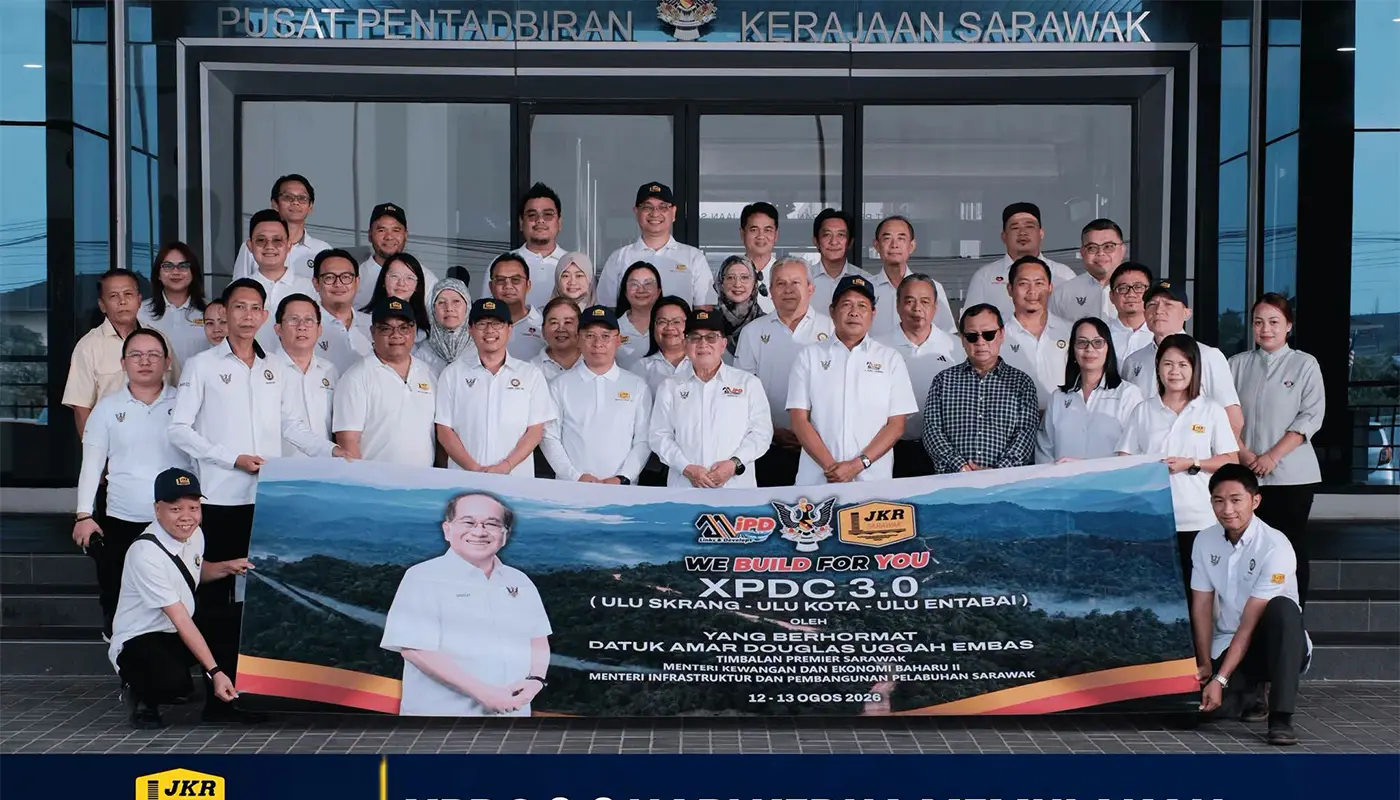





SARIKEI – The second day of XPDC 3.0 saw the Sarawak Deputy Premier and Public Works team continue its journey from Sarikei towards Nanga Ju, where an inspection was carried out at SK Nanga Ju.
The visit focused on examining the condition of the school and identifying infrastructure needs within the surrounding school area. The field assessment formed part of the team’s ongoing efforts to better understand the requirements of local communities in rural areas.
The journey to Nanga Ju marked the continuation of activities under XPDC 3.0 led by Sarawak Deputy Premier Douglas Uggah Embas, with the Sarawak Public Works team taking its work into the field to assess infrastructure conditions directly.
During the visit to SK Nanga Ju, the team looked at the existing condition of infrastructure in the school area. The inspection was intended to provide a clearer understanding of the needs that may require attention.
The field-based approach allows the team to observe conditions at the location rather than relying solely on information from elsewhere. Such inspections are part of efforts to understand the practical infrastructure requirements faced by communities in rural areas.
SK Nanga Ju was among the locations visited as the team continued its second-day journey. The inspection placed attention on the school environment and the infrastructure needs associated with the area.
The Sarawak Public Works team’s continued presence in rural locations reflects its efforts to remain aware of infrastructure conditions outside urban areas. Understanding local requirements is an important part of assessing where infrastructure attention may be needed.
The inspection also provided an opportunity for the team to gain a closer view of the conditions surrounding the school. Information gathered through such field visits can help improve understanding of the challenges experienced in local communities.
XPDC 3.0 therefore continued beyond the journey itself, combining travel with on-site assessment of infrastructure needs. The second day brought the team from Sarikei to Nanga Ju as part of this ongoing field activity.
Rural infrastructure remains an important consideration for communities located away from major centres, particularly where schools and other local facilities serve surrounding residents. Field inspections can help authorities understand the conditions and requirements of these areas more directly.
For the Sarawak Public Works team, the visit to SK Nanga Ju was part of its wider effort to maintain attention on infrastructure development in rural areas. The inspection was focused on understanding the current situation and identifying the needs present in the school area.
The continuation of XPDC 3.0 also demonstrates the importance of direct engagement with locations where infrastructure requirements may differ from those in more developed areas. By travelling to the areas concerned, the team can assess conditions within their local setting.
The second day of the programme thus centred on continuing the journey while carrying out a practical assessment at SK Nanga Ju. The visit formed part of the broader effort to understand community needs and keep rural infrastructure development under consideration.
As XPDC 3.0 progresses, the Sarawak Public Works team’s field activities provide an opportunity to examine infrastructure conditions at the locations included in its journey. The Nanga Ju visit was one such assessment, with the focus placed on the school area and its infrastructure requirements.
The programme’s activities highlight the role of field inspections in understanding the needs of rural communities. For locations such as Nanga Ju, direct assessments provide a way for the relevant team to gain a better picture of existing infrastructure conditions.
The second day of XPDC 3.0 therefore continued the Sarawak Public Works team’s efforts to assess rural infrastructure needs, with the journey from Sarikei to Nanga Ju culminating in an inspection at SK Nanga Ju.